Italian players can struggle for sustained opportunities in Serie A because the transition from youth football to a trusted senior role is narrow, while clubs make selection and recruitment decisions under immediate sporting and financial pressure. That concern is strongest for developing players; a league-wide foreign-player percentage cannot establish the cause on its own. The September 2026 debate becomes more useful when nationality, training history and meaningful playing time are examined separately.
Why the argument returned in September 2026
The frustration has an understandable starting point: supporters want Italian clubs to produce players who can take responsibility for Italy as well as for their own teams. A teenager learning to manage an away match, retain possession under pressure or recover after a mistake is accumulating experience that a national coach cannot create during a short international gathering. The disagreement is over how clubs should provide that experience while meeting their own competitive objectives.
A 26 September report in Il Fatto Quotidiano revived the discussion after the first five rounds of 2026–27. Its headline focused on foreign participation. However, the report moves between the number of players used and club participation percentages without making the denominator consistently clear. That prevents those figures from supporting a reliable new league table of opportunity. The underlying question deserves attention even when an eye-catching percentage needs more explanation.
The discussion around that report on r/soccer reveals several competing concerns. Some commenters criticise investment in Italian youth and suggest rewarding clubs that provide opportunities. Others ask for comparable figures from other leagues or question whether nationality accurately captures where players developed. Those are particular supporters' arguments, rather than a survey of Serie A fans, and the latter questions are essential to making the former criticism useful.
Official concern predates this September argument. In its April 2026 assessment of Italian football, the FIGC highlighted limited exposure for players eligible for Italy, including the younger group. That assessment describes an earlier snapshot and should not be mistaken for a measurement of the new season. It does establish that the issue is broader than a single disappointing lineup.
The useful question is consequently about decisions and development. Which players move from promising academy football to meaningful senior roles? How long does that transition take, and where do they gain experience? Answering those questions allows supporters to challenge a club's plan without assuming that every foreign signing is harmful or that every Italian footballer is an emerging prospect.
What counts as an opportunity for an Italian player?
Before judging a club, decide which outcome matters. The number of Italians in its squad, the number who enter a match and the share of minutes they play answer separate questions. A club could recruit several young Italian players and still provide very little senior experience. Equally, one established Italian goalkeeper could supply a large block of domestic minutes without indicating any improvement in the route from the academy.
Nationality, youth status and local training measure different things
An all-age nationality statistic includes experienced internationals alongside teenagers. A measure restricted to under-21 players needs a stated age definition and reference date; it cannot automatically be substituted for the entire national-team pool. Italy eligibility is another classification, particularly for players with more than one nationality. The label a database assigns to a player is consequently part of the measurement, rather than a detail that can be ignored.
Local training describes a different relationship. UEFA's explanation of homegrown status makes nationality irrelevant to whether a player was developed by a club or association for the required period. A non-Italian can therefore be a product of Italian training, while an Italian developed elsewhere need not qualify as locally trained in Italy. These categories are useful together: one concerns the national selection pool, the other the work undertaken by the football system.
A debut and a season of starts are different outcomes
Imagine a team giving ten youngsters a few closing minutes each. Another uses two youngsters regularly from the start. The first has the broader appearance count; the second gives more players a chance to learn how an entire match changes. Neither measure alone describes an ideal academy. Supporters need both the breadth of access and the depth of responsibility, including whether opportunities continue once an injury replacement is no longer needed.
A Football Benchmark analysis published in June 2026 offers a more useful dated reference than a bare nationality headline. In its 2025–26 domestic under-21 sample, 37 Italian players appeared, with 14 exceeding 1,000 league minutes. That is the study's completed-season observation, not a new calculation for September. Its value is that it asks how many young players received substantial exposure.
Even 1,000 minutes should be read as a research threshold, not a universal definition of success. A goalkeeper, centre-forward and substitute winger have different routes into a side. A player's task, the quality of the opposition and the continuity of selection help explain what those minutes actually contain. Without that context, an encouraging average can hide how few prospects were allowed through the door.
Why a club's recruitment priorities can clash with Italy's needs
A club selects players to meet its sporting objectives. The national team benefits from a wide pool of Italians who have been exposed to demanding football, but it does not bear the immediate cost of a club losing points while a prospect learns. That difference in responsibility helps explain the tension. An individual selection can be understandable for a coach even when many similar decisions, taken across the league, leave a generation with insufficient experience.
Consider the decision faced by a manager who has two players competing for one place. The younger option may have greater potential, while the more experienced one may be easier to integrate into the next match plan. The relevant judgement is how much risk the team can absorb and what support the prospect receives. This is a way to understand the choice, rather than evidence that every Serie A manager thinks alike. Nationality does not automatically tell the coach which player will execute a pressing trigger or protect a lead.
Financial pressure complicates the calculation. The FIGC's 2024 ReportCalcio presentation, using 2022–23 accounts, described costs exceeding revenues across Italian professional football. Those are historical aggregate findings, covering more than Serie A, rather than a diagnosis of every club's current balance sheet. They help explain why sustainable player development belongs in a discussion about club strategy as well as national pride.
Academy development can create sporting value, a future transfer asset or both. Selling a trained player can finance a team, but the buyer then decides whether he plays. Keeping him preserves continuity only if there is a plausible role. A productive academy measured by sale proceeds therefore need not be the same as a first team that regularly integrates graduates. Supporters should ask which objective their club is pursuing and how the next stage will be delivered.
It is tempting to conclude that imported players are simply cheaper or that Italian prospects are always overpriced. Neither claim explains a transfer without comparing fees, wages, age, contract length and role. The stronger criticism is specific: a club promises a pathway, retains a prospect and repeatedly blocks the position without explaining a development plan. The broader differences in league resources are explored in our Serie A and Premier League comparison; here, the question is how a club uses the resources it has.
Where the route from Primavera to senior football narrows
The difficult step is often between an encouraging youth career and a dependable role in adult football. Primavera can help a player develop within a club's methods, but the next environment introduces different problems: opponents who can punish a positional mistake, selection decisions driven by the league table and the physical demands of competing repeatedly with established professionals. A prospect needs a route through that change rather than an indefinite wait for someone else's place.
Youth tournament success does not guarantee a first-team role
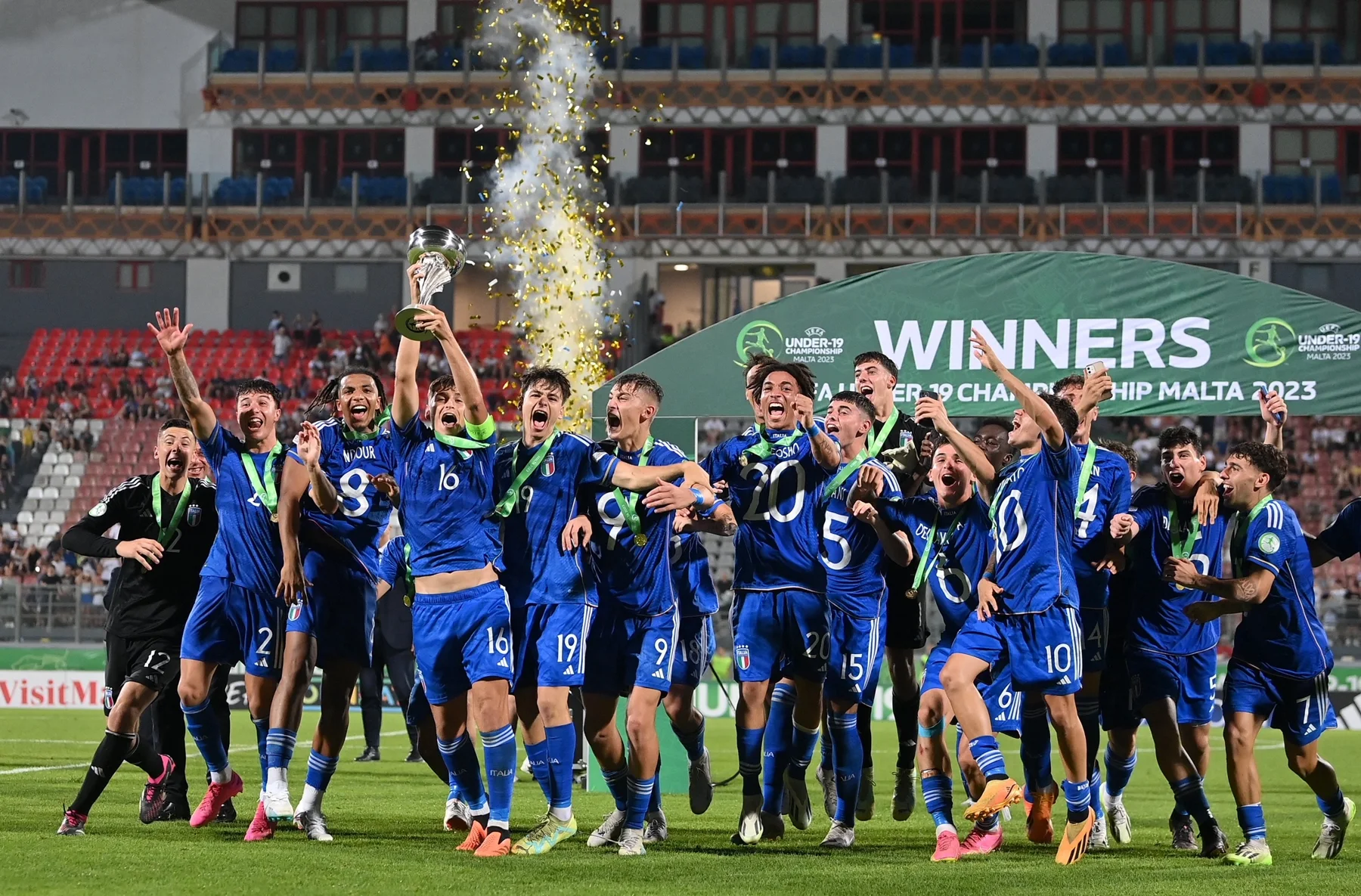
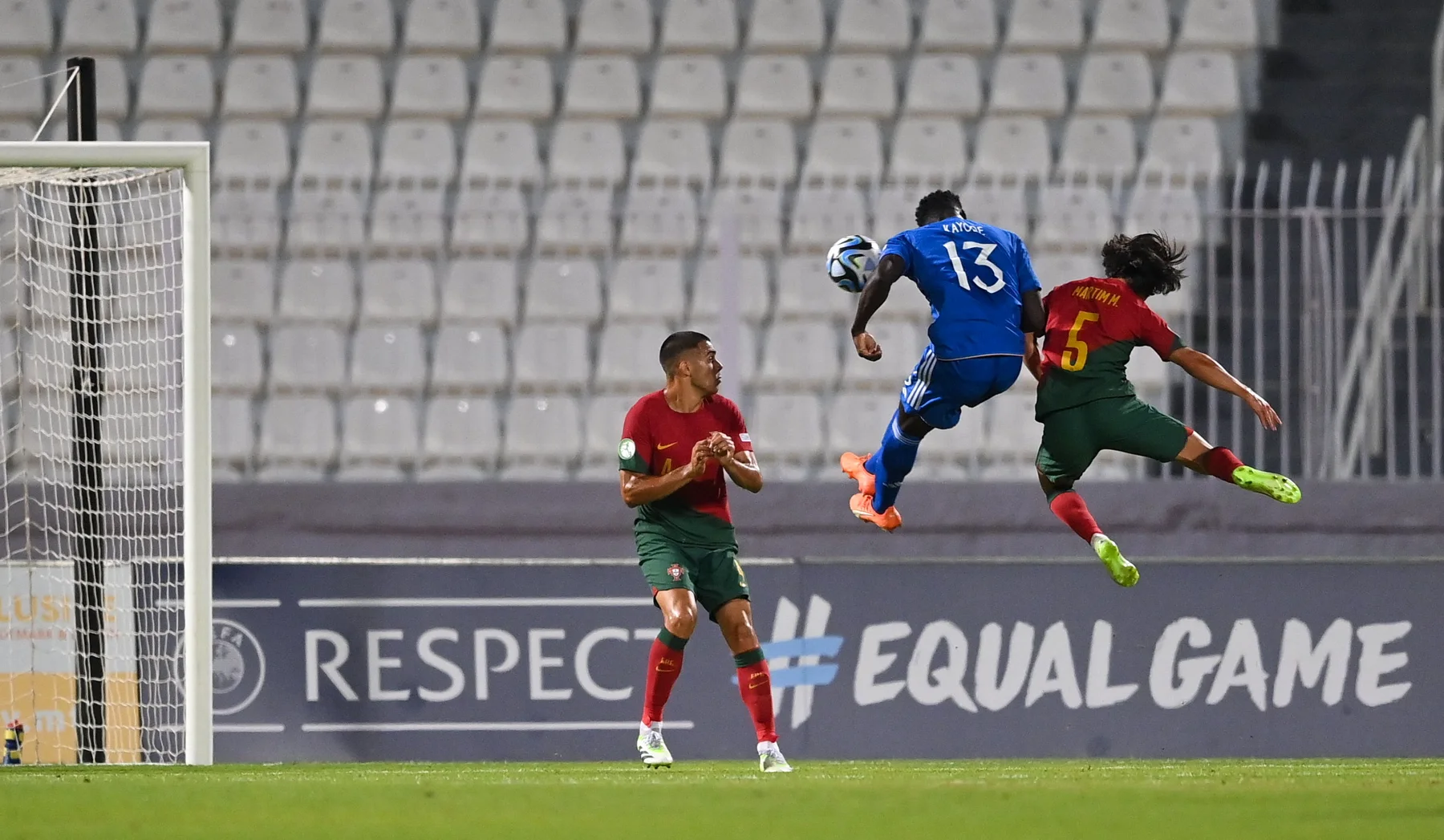
Italy's 2023 European under-19 title is a concrete reminder that the country can produce a competitive age-group team. Italy beat Portugal 1–0 in the final in Malta, with Michael Kayode scoring. That result provides grounds to question a blanket claim that there is no talent available. It does not prove that every member of the squad was immediately ready to start for a Serie A club.
A tournament tests players against a particular cohort over a short period. Club football asks them to solve changing problems throughout a season. The useful response to youth success is to examine what follows: the player's role, how frequently he plays and whether responsibility grows. A national youth medal establishes a starting point for that investigation. It cannot substitute for the club work needed to turn promise into repeatable senior performance.
Second teams and loans need a plan for the next step
Second teams offer one way to expose prospects to adult competition while keeping development inside the club. The FIGC's 2026–27 Serie C vacancy criteria include a formal route for second teams. That document concerns admission conditions; it does not promise every academy a place or every participant a Serie A future. The football benefit depends on the coaching and the link to the senior squad.
Juventus supplies a documented example of the stages connecting. In November 2023, the club confirmed Dean Huijsen and Kenan Yildiz's integration into its first team after their progress through the under-19 side and Next Gen. Yildiz was already a senior Turkey international, making this an example of a development route working across nationalities. The route's usefulness is separate from which national team ultimately benefits.
A loan can provide a comparable bridge, but only if the destination offers a suitable task. A midfielder asked to develop his receiving and decision-making needs more than a famous club badge or a place on the bench. The parent club should understand the receiving team's formation, competition for the position and likely use of the player. Supporters can then judge a loan against that plan. Lower-division experience can be valuable, while a sequence of moves without increasing responsibility deserves scrutiny.
Why moving abroad can be a useful route
Playing outside Italy can expand the national selection pool rather than weaken it. In a September 2026 interview reported by Football Italia, Claudio Ranieri welcomed the opportunities young Italians were finding abroad. That is an experienced coach's assessment of one possible route, rather than evidence that every overseas move is better than staying. The destination must still offer the player an appropriate job and the support to perform it.
Michael Kayode provides a useful example because his career contains several stages. Brentford's July 2026 contract announcement records his move from Fiorentina on an initial loan in January 2025, a permanent transfer that summer and a regular role during 2025–26. The new contract runs to 2032, with a further club option. The same account also records 49 Fiorentina appearances before he left, so his progress cannot accurately be described as an Italian player who never received a chance in Italy.
The destination matters less than the responsibility
The lesson in Kayode's route is the sequence of opportunities. Italian youth football, Fiorentina's first team and a later Premier League role all contributed different environments. His move does not settle whether another prospect should leave, nor can one successful career measure an entire league's policy. It does show why judging the pathway requires following the player after a transfer, rather than ending the story when an Italian club sells him.
For a player choosing a destination, the role should be specific. Is he expected to challenge immediately for a starting place, develop behind a senior player or move again on loan? Which parts of his game will the coach ask him to improve? A prestigious league offers little practical benefit if the player cannot reach the pitch. A less celebrated environment can offer demanding, sustained work. These are questions to examine before calling a move either an escape or a mistake.
There are two responsibilities to keep in view. Italy can benefit from nationals gaining experience abroad, while Italian clubs still need to demonstrate that their own academies lead somewhere. A healthy system can support both routes. Supporters have good reason to ask why a player succeeded elsewhere, but that answer needs the circumstances of his departure and subsequent role. A foreign club's confidence is evidence about that player, rather than proof that every domestic selection decision was wrong.
Would stricter rules solve the problem?
Rules can alter the choices available to a club, but the design matters. Reserving registration places, requiring particular starters and funding coaching are separate interventions. They affect different stages of a career and need different evidence of success. A supporter asking for more Italian talent should therefore ask what a proposed measure would actually change on the training ground and on matchday.
Homegrown places are not guaranteed playing time
The 2026–27 Champions League regulations provide a current European example. List A has a maximum of 25 players, with eight places reserved for locally trained players; no more than four of those eight may be association-trained rather than club-trained. If the required locally trained complement is missing, the permitted list size falls. These are Champions League registration rules, rather than a statement of domestic Serie A selection requirements.
A reserved place can encourage a club to value a graduate, but it does not ensure that he starts a match. The player still needs a role and a coach prepared to use him. Compliance and development should consequently be assessed separately. A club might retain enough trained players to complete its list while offering limited competitive responsibility. The practical question remains whether the rule changes who gains experience or merely who occupies a registration slot.
Nationality quotas and incentives raise different questions
Nationality restrictions also encounter legal constraints. In 2008, the European Commission rejected the proposed FIFA 6+5 approach as incompatible with EU law because it discriminated directly on nationality. That historical position helps explain why local-training rules use a different criterion. It should not be read as an approval of every modern development measure simply because it avoids the word nationality.
The Court of Justice's December 2023 Royal Antwerp ruling also found that homegrown rules could conflict with competition and free-movement law, leaving assessment of the rules and their justification to the national court. It did not announce that all homegrown requirements had disappeared. A defensible development objective still needs rules proportionate to what they are intended to achieve.
Funding offers another avenue. The FIGC's April 2026 assessment included proposed support for investment in young players, including tax-credit ideas. A proposal is not an adopted incentive scheme. From a football perspective, any reward would need to distinguish sustained development from a brief appearance made to satisfy a threshold. Better coaching, monitored loans and a credible senior role address the work behind the minutes. A useful reform should be judged by those outcomes alongside its legal and financial design.
What supporters should watch during 2026–27
The strongest test is whether opportunities become repeatable. After a young player makes his debut, follow the next run of selections. Does he remain involved when the regular starter returns? Does the coach trust him in a close match, or only when the result is settled? These circumstances reveal the role being built for him. A quiet, reliable performance followed by another start may matter more to development than an isolated highlight.
Compare responsibility as well as time. A defender might be asked to carry the ball through pressure, a midfielder to receive between opponents and a forward to lead the press. Those tasks should be assessed in the team's match plan. The question is whether the player is being helped to master them and trusted with increasing difficulty. It is possible to give someone minutes without giving him much influence, just as a substitute role can be meaningful when its purpose is clear.
Then widen the view beyond the most famous prospect. The distinction between participation and substantial exposure is useful when watching an entire season. One outstanding youngster can lift an average while most of his cohort remains outside senior football. Supporters can ask how many players are progressing, across which positions and through which routes. Injuries and squad needs belong in that assessment, rather than being ignored to make an argument stronger.
For loans and second teams, look for a destination beyond the intermediate stage. The documented Juventus under-19 to Next Gen to first-team progression illustrates what an identifiable sequence looks like. Each prospect's pace will differ, but a club should be able to explain what the next move is meant to achieve. Playing regularly elsewhere can be progress; returning to another season of limited involvement calls for an explanation.
The complaint about Italian opportunity is therefore worth taking seriously and worth making precisely. Academy quality, recruitment, senior selection and career planning all deserve scrutiny. Foreign teammates can provide competition and standards while a club still fails to create enough routes for its own prospects. During 2026–27, the clearest evidence of improvement will be more Italian youngsters earning sustained responsibilities, supported by identifiable development work. That is something supporters can observe match by match, long before another nationality headline claims to settle the whole debate.
Join the discussion
Comments
Sign in with Google to comment. Keep the conversation useful and football-focused. New comments are reviewed before they appear.
Loading comments…