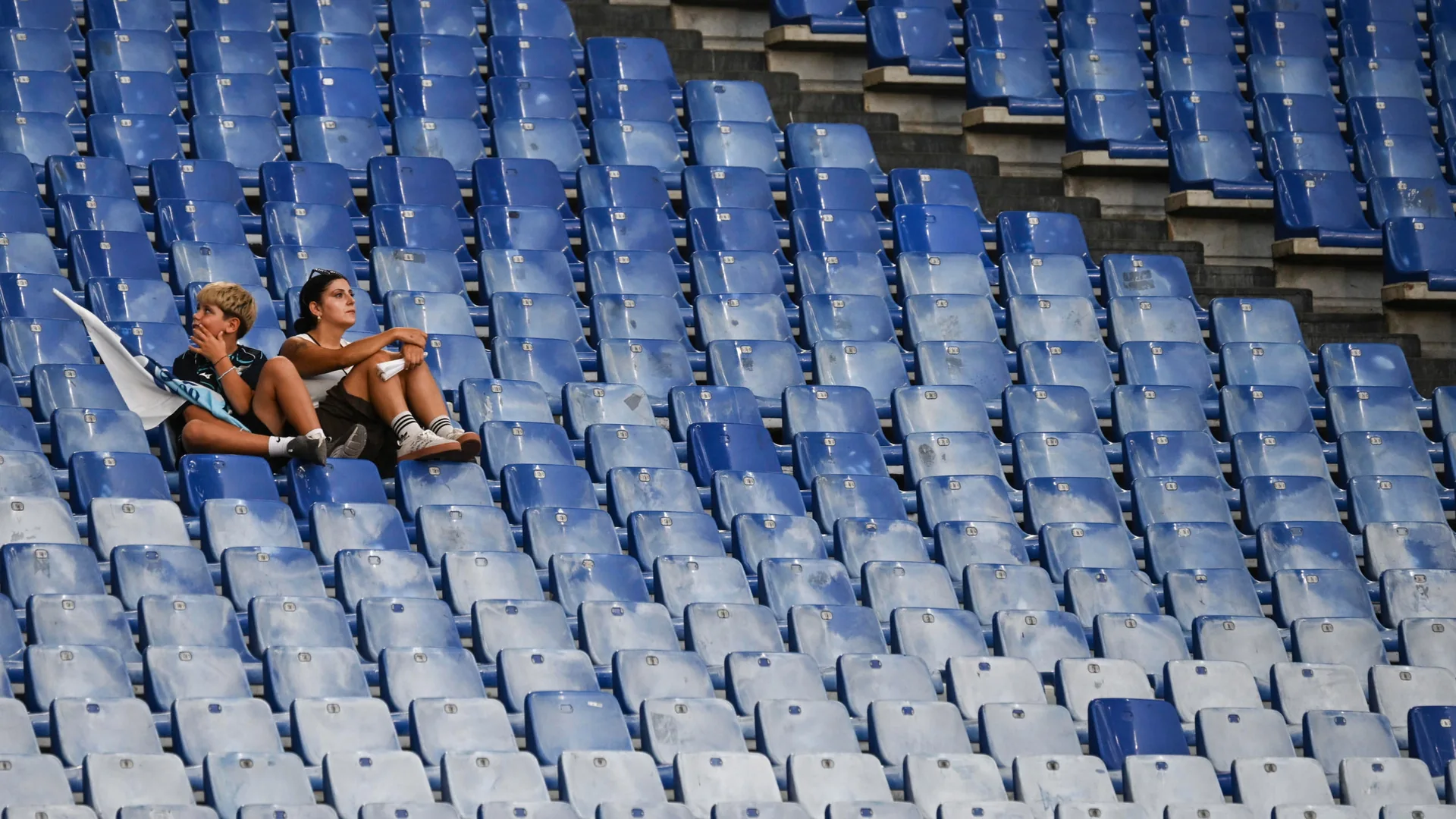
Lazio supporters are boycotting home matches in 2026 to pressure owner and president Claudio Lotito to sell the club. Organized groups say the conflict is about more than one poor window: they question Lazio's sustained ambition, the relationship between presidency and fan base, and whether their identity is respected. They continue travelling away and gathering around the team, making clear that the target is ownership rather than the players or colours.
The campaign began as an especially severe stadium protest in January, paused for one emotionally charged Milan match in March, then resumed and followed Lazio into 2026-27. Reported season-ticket sales collapsed, and visiting Milan supporters later became the noisy majority at the Olimpico even while Gennaro Gattuso's side started the league well.
This explainer separates supporter demands, reported facts, Lotito's defence, coach reactions and editorial analysis. It is current through ; individual-match exceptions and supporter plans can change after that cutoff.
Why Lazio fans are boycotting home matches
Many Lazio supporters are boycotting home matches to pressure the club's owner and president, Claudio Lotito, to sell. The organized groups leading the action argue that more than two decades of his ownership have narrowed the club's ambition, weakened their connection with supporters and left Lazio without a convincing sporting project. Their message is aimed at the owner, not at the shirt or the players.
The method makes that distinction visible. Supporters withhold their money and presence at the Stadio Olimpico, yet thousands still travel to away games. They gather near the team, escort the bus and watch home fixtures elsewhere. Before the September match against Milan, supporters met outside Lazio's training ground and rode in a convoy toward Ponte Milvio, then followed an organized-group statement by heading to pubs or homes instead of entering the stadium. That is a boycott of the home product under this ownership, not indifference to results.
The scale is significant even though “empty stadium” is a headline shortcut. A BBC Sport explainer from March listed crowds of 5,402, 3,400 and 5,000 for early protest fixtures. In September, the Guardian reported, citing Calcio e Finanza, that season-ticket sales had fallen from close to 30,000 a year earlier to fewer than 4,500. Some supporters still attend, but the organized absence has transformed the sound, appearance and economics of Lazio's home games.
The dispute cannot be reduced to one defeat or one disappointing signing. It combines years of complaints about recruitment and trophy ambition with anger over communication, supporter identity and decisions around the club. A 2025-26 transfer restriction intensified those doubts, as did major player sales, but the feud predates the embargo. The demand for Lotito to leave is the end point that binds otherwise different grievances together.
That precision matters because the team itself has sometimes performed well during the protest. A strong result does not automatically end a governance dispute, just as a boycott does not prove that every Lazio supporter agrees on every allegation. Through September 15, 2026, the safest summary is that organized supporters were sustaining a deliberate home-attendance campaign against Lotito while finding other ways to back Lazio.
How the 2026 boycott unfolded
The 2026 protest is best understood as a sequence, not six months of identical empty stands. A January escalation produced exceptionally low crowds; organized supporters then made a one-game return in March to back Maurizio Sarri's team against Milan; the boycott resumed and carried into the new season. Those changes do not show confusion. They show groups using attendance selectively to separate affection for the team from opposition to ownership.
January grievances became a stadium protest
The immediate stadium campaign formed in mid-January, when ultras invited supporters to stay away from the home game against Genoa. The call arrived after a difficult first half of the season and a transfer window that sharpened fears about the club's direction. Taty Castellanos and Matteo Guendouzi left, while goalkeeper Christos Mandas also moved. The return of transfer activity after an embargo did not feel like renewal to protesters when important players departed at the same time.
The response inside the Olimpico was stark. The Athletic's March account reported roughly 5,000 at Genoa, 3,400 against Atalanta and only a few thousand against Sassuolo. BBC Sport published a somewhat different sequence, including 5,402 and 3,400, which may reflect differing reported or announced totals. The reliable conclusion is the scale of the absence, not a false claim that one disputed count is exact.
Lazio condemned the Genoa action in unusually strong terms. The club called it an unacceptable attempt to exert organized pressure on the club, team and wider Lazio community. That statement clarified the stakes: the ultras treated an empty home end as legitimate leverage, while the club argued that it crossed the line from dissent into harmful coercion. Neither side was describing a temporary complaint about one result.
The movement also had a written foundation. An open letter launched in January accused Lotito of denying Lazio supporters the right to dream and pointed to a long trophy wait and a lack of emotionally significant recruitment. By September, the Guardian reported that more than 45,000 people had signed it. A petition cannot prove unanimous support for every allegation, but it shows that the home boycott grew out of a broader ownership challenge rather than appearing spontaneously on matchday.
The Milan exception was one match, not a settlement
After Lazio beat Sassuolo in March, La Voce della Nord announced that organized supporters would return for Milan's visit. Their language was deliberately double-edged: the night would be a “final act of love” for the team and coach, while dissent against Lotito would continue. The choice demonstrated what the boycott's organizers had insisted all along. They could fill the curva and lift the players without withdrawing their demand for change above them.
The stadium filled, the Curva Nord staged a choreography and Lazio won 1-0 through Gustav Isaksen. It was tempting to tell a neat story in which the twelfth player returned and immediately decided the match. The atmosphere clearly mattered to players and staff, but one result cannot measure its precise causal effect. What the night proved beyond doubt was the supporters' capacity to switch the Olimpico from near-silence to a recognisable Lazio home.
The boycott resumed the next day. Contemporary pre-match reports differed on whether another exception might be made for the Rome derby, so this guide does not turn an announced possibility into a completed event. The confirmed point is narrower and more important: Milan was a consciously limited return, not a peace agreement, and the ownership dispute remained intact after the win.
The boycott followed Lazio into 2026-27
A summer reset did not dissolve the conflict. Maurizio Sarri left and Gennaro Gattuso arrived; several senior players departed and Lazio recruited again after the restrictions eased. The team then opened the league strongly. Yet the organized groups continued to withhold home attendance, showing that neither a coaching change nor early points met their central demand.
Season-ticket sales made the continuation measurable. The Guardian cited Calcio e Finanza in reporting a fall from close to 30,000 in 2025-26 to fewer than 4,500 for 2026-27. Before September's home game against Milan, hundreds of supporters gathered at the training ground and escorted the team bus toward the stadium area on mopeds. They then followed their published plan to watch from pubs or homes. Physical proximity to the players and physical absence from the turnstiles operated together.
The resulting crowd looked more like an away takeover. A Football Italia report carried by Yahoo estimated about 10,000 Milan supporters and roughly 6,000 Lazio supporters after the original 5,500-seat away allocation sold out and further areas opened. Estimates are not audited attendance data, but the imbalance was the story: Lazio's opponent supplied the dominant noise in Rome.
By September 15, the campaign had therefore survived a one-match exception, the end of one season, a managerial change and an encouraging new start. Its form evolved, but its target did not. Any account that says supporters simply stopped going—or that they came back and ended the protest—misses the strategic rhythm of 2026.
What supporters want from Claudio Lotito
The shortest chant is “Lotito out,” but the case made by boycott organizers has several layers. It begins with the level of sporting ambition, extends to how the president communicates and treats supporter identity, and ends with a demand to sell if he cannot offer a different project. Those are claims and aspirations advanced by protesters; they should not be confused with an official finding that the club is mismanaged or with a vote of every Lazio supporter.
Sporting ambition and the transfer-market rupture
The clearest primary statement is the open letter addressed to Lotito. Its authors acknowledge that trophies have been won during his ownership, but argue that Lazio supporters have been denied a sustained dream: a team able to make a lasting step from a good season to regular contention in Italy and Europe. In their January wording, almost seven years had passed since the last trophy, and no recent signing had supplied the emotional lift they expected from an ambitious club.
That frustration has a longer player timeline. Ciro Immobile, Luis Alberto, Felipe Anderson and Sergej Milinković-Savić all left across recent windows, removing footballers strongly associated with Lazio's best modern sides. A club can make rational age, contract and value decisions in each case, but a fan judges the sequence as well as each transaction. When recognisable leaders depart without replacements who quickly assume the same status, prudence can look like retreat.
January 2026 turned that perception into a rupture. Lazio emerged from a transfer embargo but sold striker Taty Castellanos and midfielder Matteo Guendouzi; goalkeeper Christos Mandas also went to Bournemouth on an initial loan. Maurizio Sarri said he had opposed the Mandas move, a concern made sharper when first-choice keeper Ivan Provedel suffered a season-ending injury. To protesters, a reopened market that removed important pieces did not feel like the fresh start they had waited for.
The complete record is less simple than “Lazio sold and bought nobody.” Kenneth Taylor arrived from Ajax and earned positive early reviews; Daniel Maldini joined on loan, and Petar Ratkov was recruited. The club's prior embargo resulted from failing FIGC liquidity requirements, not from a formal ban imposed because supporters disliked recruitment. Lotito argued that the financial tests did not give enough weight to Lazio operating without major outstanding debts. Those complications matter, but they did not repair trust. Supporters saw the restriction itself, followed by sales, as evidence that cautious finances had begun to limit football decisions.
Communication, identity and respect
The petition asks for more than transfer spending. It demands respect for people who give the club their money, time and identity. That helps explain why apparently separate incidents appear in the same grievance list: they are interpreted as tests of whether the institution listens to its community.
One flashpoint was a leaked phone call between Lotito and a supporter in which the president appeared to criticize Sarri's use of the squad. Lotito said his words had been removed from context and insisted the coach retained his confidence. Whatever the full conversation, the episode deepened a familiar communication problem. A private explanation circulated publicly, the coach's position became part of a fan-owner argument, and the clarification arrived after suspicion had already formed.
The Vincenzo Paparelli remembrance carried still greater emotional weight. Paparelli, a Lazio supporter, was killed by a flare fired from the Roma end during the 1979 derby. Protesters accused Lotito of preventing Paparelli's niece from walking onto the pitch at a November memorial. Lotito disputed that version: he said the obstacle was a request for four representatives of organized support to accompany her. Both accounts concern the same event but assign responsibility differently. Presenting only the accusation would turn a contested episode into fact; ignoring it would miss why the relationship has become personal.
Fans also question whether Lotito's attention is divided among Lazio, politics and other football interests. He has served in the Italian senate since 2022. He previously controlled Salernitana before promotion to Serie A required a sale because of ownership-conflict rules, and he acquired fourth-tier Reggina in 2026. Those facts do not prove that Lazio is neglected. They explain why protesters interpret decisions through a wider image of an owner with several centres of power rather than a president wholly absorbed by one club.
The demand for a sale
The proposed solution is not a different sporting director or one large purchase. The open letter asks Lotito to build a sporting and economic project worthy of Lazio's history and supporters; if he cannot, it asks him to step aside. The petition had attracted more than 45,000 signatures by mid-September, according to the Guardian. That is substantial evidence of organized dissatisfaction, although it does not establish unanimity or identify a buyer capable of delivering the promised ambition.
The boycott is designed to convert that demand into leverage. Empty seats create a visual story broadcasters cannot ignore, reduce some matchday spending and deny the presidency the normal picture of a united home. Away crowds and gatherings outside the ground try to prevent the action being interpreted as apathy. The intended message is: the fan base remains available to Lazio, but not to an unchanged relationship with Lotito.
There is also a line legitimate protest must hold. Threatening graffiti and references to violence have appeared around the wider conflict and were condemned publicly. They are not necessary expressions of the boycott's argument, and they cannot be treated as the voice of everyone who stays home. A civil petition, a refused ticket and an intimidating threat are different acts even when they share an ownership target.
Finally, supporters can make a sale politically uncomfortable without being able to compel one. Club ownership changes require a willing seller, credible buyer, valuation and regulatory process. The absence of a completed deal at the September 15 cutoff is not proof that the boycott has failed; it shows why its organizers describe a war of attrition. Their goal is clear. Their mechanism is visible. The timetable remains outside their control.
Boycotting home games does not mean abandoning Lazio
A normal attendance collapse suggests people have lost interest. Lazio's pattern says something different. Supporters have removed themselves from the club's home turnstiles while remaining conspicuous everywhere around them: in away ends, outside gates, near the training ground and, for the March exception, back inside the curva. The visibility is essential to the argument. If fans simply vanished, Lotito could blame form, prices or changing habits; organized activity makes ownership the stated reason.
Away travel is the clearest counterexample to apathy. The Guardian reported thousands following Lazio on the road, even for unglamorous pre-season friendlies. An away ticket still supports the team in a practical sense, but it does not create the same image or direct matchday relationship for the home club. Singing for the players in another stadium allows protesters to insist that the eagle, colours and squad remain theirs even while the Olimpico is withheld.
The gatherings in Rome deliver the same message at closer range. Thousands remained outside the stadium during the March victory over Sassuolo. Six months later, hundreds met at Formello before Milan's visit, formed a convoy of mopeds behind the team bus and travelled toward Ponte Milvio. The organized statement then directed them to pubs or homes rather than through the gates. They had shown the players their faces and noise, then preserved the empty-seat protest where cameras would see it.
March's one-match return added another form of proof. The Curva Nord filled, unveiled a choreography and created the atmosphere associated with a major Lazio night. When the boycott resumed the next day, low attendances could not easily be explained as a fan base incapable of mobilizing. The groups had demonstrated the support they were choosing not to supply under normal home conditions.
This strategy operates on four levels. It can reduce season-ticket and matchday income; create a television image that embarrasses ownership; reassure the team through separate gatherings and away followings; and keep the dispute in national and international news. None guarantees a sale. Their combined purpose is to make normality impossible while Lotito remains.
There is a painful contradiction. A home boycott also deprives Lazio players of encouragement and may make occasional supporters feel caught between loyalty and collective discipline. Coaches have said the silence hurts, while organizers themselves call the decision painful. The tactic asks the team to understand that a short-term sporting disadvantage is being accepted for a longer-term vision of the club. Whether that trade is fair is a legitimate debate among Lazio fans; it does not erase the logic behind it.
How Lotito, Sarri and Gattuso responded
Owner and coaches respond from different positions. Lotito has defended the financial logic and record of his presidency while conceding that the relationship with supporters needs work. Maurizio Sarri and Gennaro Gattuso have focused on the human and sporting absence inside the Olimpico. Neither coach can negotiate a sale, and neither has treated a few good results as a substitute for reconciliation.
Lotito's defence of his ownership
Lotito's fullest conciliatory response came in an open letter published in Il Messaggero in June. He addressed supporters who felt distant, disappointed or bitter and argued that Lazio must remain master of its destiny: competitive and ambitious, but also solid, independent and protected for the future. His basic defence is stewardship. A president should not chase one day's applause if doing so places tomorrow's club at risk.
The letter did not claim perfection. Extended reported excerpts show Lotito acknowledging that decision-makers make mistakes and saying the supporter relationship must improve significantly. He denied any lack of respect and thanked people who give time, money, travel and family sacrifice to Lazio. He proposed more listening, engagement and shared responsibility without dividing the fan base into good and bad camps.
There is a substantive sporting case behind that defence. Lotito took control when Lazio faced financial danger, and the club has won silverware during his presidency, including the emotionally enormous 2013 Coppa Italia final against Roma. Lazio have recruited modern icons, finished second in Serie A as recently as 2022-23 and operated without the debt-loaded spending model seen elsewhere. Plans to redevelop the Stadio Flaminio and commercial appearances such as a Nasdaq visit are intended to signal a sustainable future beyond the next transfer window.
Those points explain the owner's position; they did not persuade boycott organizers. Their reply called the letter late and abstract, disputed its account of past relations and said earlier proposals for closer club-supporter contact had been rejected. They then restated a detailed 2026-27 campaign: no season tickets, no ordinary home league or cup attendance, continued away travel, derby exceptions, subscription cancellations and pressure on commercial or political relationships linked to Lotito. The distance between “improve dialogue” and “sell the club” remained too wide for the letter to bridge.
The club's earlier response had been harder. When ultras called the Genoa boycott, Lazio described organized pressure on the club and team as unacceptable. Taken together, the January statement and June letter show a shift in tone—from condemnation toward an invitation to listen—but not agreement on the premise. Lotito asks that his full financial and sporting record be judged. Protesters argue that 22 years of that record are precisely why they no longer want another reset under him.
Two coaches, one plea for the supporters
Sarri spoke from inside the first phase of the crisis. After the March Sassuolo match, he described playing in an empty stadium as depressing and said something had to be done. In a longer post-match comment, he noted that he had stayed at Lazio in part because of the fans and now wondered why he had stayed when they were absent. It was an expression of isolation, not an endorsement of Lotito's rebuttal or a claim that organized supporters lacked reasons.
The one-night return against Milan showed Sarri what had been removed. Lazio won with a full, choreographed Curva Nord behind them. Yet he could not convert that emotional evening into a political settlement, and the boycott restarted. The coach's predicament was structural: he could ask both sides to act, but the terms belonged to owner and supporters.
Gattuso inherited the same contradiction in the new season. Lazio's encouraging opening made the quiet home ground even stranger: a team giving supporters competitive reasons to attend was still playing inside an ownership protest. After surrendering a two-goal lead in September's 2-2 draw with Milan, Gattuso said bluntly that football without fans was not football worth enjoying. He wanted 50,000 or 55,000 people back inside.
He also recognized what happened outside. Gattuso thanked the supporters who had gathered at Formello and accompanied the bus, interpreting their presence as respect for players who kept fighting and wore the shirt with pride. Captain Mattia Zaccagni wondered whether a Lazio crowd might have helped protect the lead, then conceded that the draw was fair. That caveat matters: atmosphere may alter emotion and momentum, but it cannot be assigned two lost points like a refereeing decision.
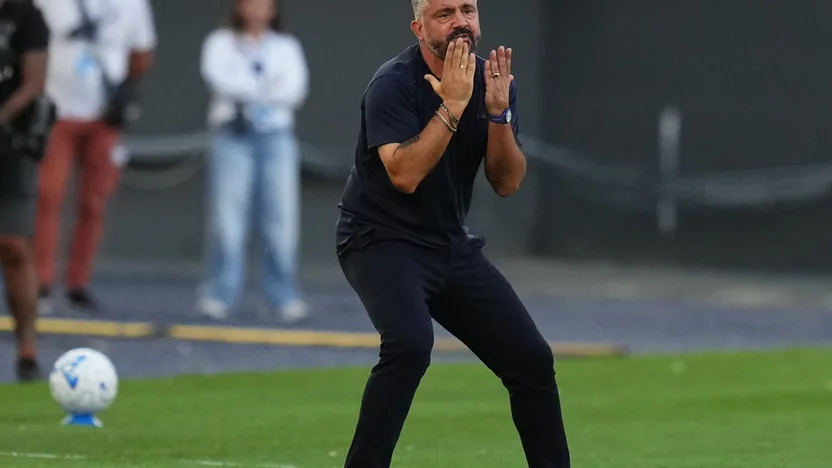
Sarri and Gattuso therefore arrive at the same plea through different seasons. Give the players a home, and resolve the conflict that has made the Olimpico feel detached from its own team. Their words document the cost of the boycott. They do not determine whether supporters should end it before Lotito goes.
What an empty Olimpico changes on matchday
The boycott changes a home fixture before the ball moves. Players walk into a familiar dressing room and onto a familiar pitch, but the soundtrack, colour and emotional reference points can belong to the visitors. A stadium built to amplify a major Roman crowd instead advertises the conflict between that crowd and its own president.
September's Milan match supplied the clearest new-season example. The initial 5,500-seat away allocation sold out, extra sections were opened, and Football Italia estimated about 10,000 Milan supporters against roughly 6,000 for Lazio. Those numbers are estimates rather than audited turnstile data. Their significance is the reversal: the nominal away team had the louder, more numerous active support in Lazio's home.
The game sharpened the temptation to credit atmosphere with results. Lazio led 2-0 after repeated danger from Mattia Zaccagni's left side. Milan made three substitutions at half-time, and Diego Moreira scored twice for a 2-2 draw. Zaccagni suggested afterward that Lazio might have held out with their supporters present, but also called the final result fair. His first thought captures a player's sense of the missing push; his second keeps it from becoming evidence that an empty curva conceded two goals.
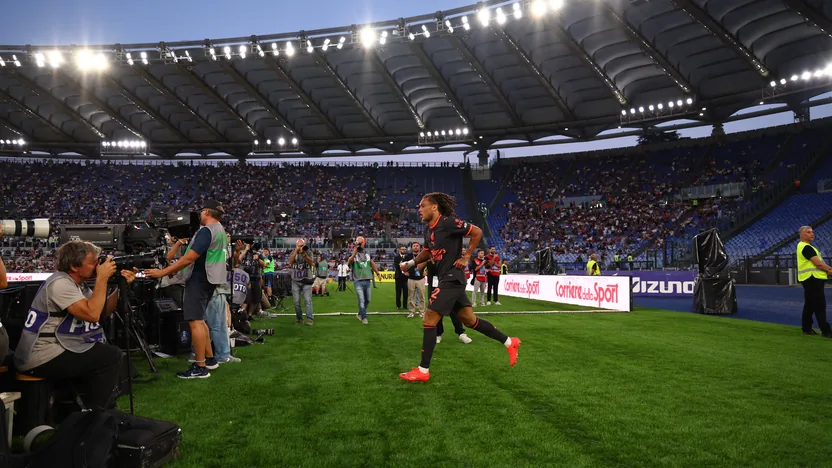
Home advantage cannot be isolated cleanly. Noise can energize a defender after a clearance, unsettle an opponent or influence the emotional temperature around a decision. It cannot repair poor spacing, stop a well-executed cross or replace tired legs. Milan also changed personnel and execution. The responsible conclusion is that Lazio operated without one normal home resource, not that the boycott mechanically turned a win into a draw.
The economic effect is more direct but still needs care. Fewer than 4,500 season tickets compared with close to 30,000 a year earlier means a major loss of committed home customers. One June report estimated the wider campaign could cost €20 million, but the accessible report did not publish an audited calculation, and some matchday spending may shift rather than disappear. It is safer to describe obvious downward pressure on ticket, hospitality and in-stadium sales than to present a forecast as booked loss.
Symbolically, every broadcast supplies the boycott with free distribution. Empty blocks sit behind highlights; commentators explain why Milan fans dominate in Rome; coaches answer questions about silence instead of only tactics. Sponsors and league partners appear within those images even if they have no role in the dispute. That reputational spillover is part of the organizers' leverage and part of the club's objection that the protest harms the wider Lazio community.
The players live inside both arguments. They can feel deprived of support while also seeing crowds gather outside specifically to praise their effort. Gattuso's comparison with Covid-era football captured the emotional cost, but the pandemic analogy has a limit: in 2026 the absence is voluntary and communicative. Silence is not merely a missing atmosphere. It is the message.
Will Lazio's home boycott end?
There was no agreed end to Lazio's home boycott by September 15, 2026. Organized groups had carried it into the new season, and a summer appeal from Lotito had not changed their stated demand for him to leave. The team's results, coaching change and new arrivals altered the football context; they did not produce a supporter-owner settlement.
The clearest published plan came in June. The groups said they would not buy season tickets or attend ordinary Serie A and Coppa Italia home matches, while travelling away and making specified derby exceptions. They also proposed cancelling paid viewing subscriptions and pressuring sponsors or political relationships connected to Lotito. September's low home presence was consistent with that plan, not an unexplained drop in enthusiasm.
A sale would meet the movement's central demand, but it is not the only event that could change attendance tactics. Concrete governance concessions, credible supporter dialogue, a formal sale process or a new group vote could all produce a pause or revised campaign. Lotito's June letter showed that the presidency recognized the relationship problem. The organized rejection showed that recognition alone was insufficient after years of accumulated distrust.
One crowded match is the wrong test. The March return for Milan was explicitly limited and was followed by renewed absence. A derby or another exceptional night could follow the same pattern. To say the boycott has ended, look for more than a busy curva: groups would need to withdraw or suspend their call across normal home fixtures, or the underlying ownership dispute would need a durable outcome.
Individual supporters remain free to make different choices. Some attend despite the boycott, some stay away for reasons unrelated to Lotito, and others may support the demand while disagreeing with commercial or political extensions. Crowd estimates therefore cannot function as a referendum. They show whether collective action is visible, not exactly what every person believes.
For the next match context, use the verified Lazio schedule and Serie A fixtures this week. Then check the latest communiqués from organized Lazio groups, because attendance exceptions can be announced closer to a game than league scheduling. Fixture pages tell you when and where Lazio play; they do not certify whether the curva will enter.
The durable answer remains the one visible throughout 2026: supporters have tried to make home absence compatible with loyalty to Lazio and incompatible with normality under Lotito. Until that equation changes publicly, a temporary return should be read as a tactical choice, not the end of the revolt.
Join the discussion
Comments
Sign in with Google to comment. Keep the conversation useful and football-focused. New comments are reviewed before they appear.
Loading comments…