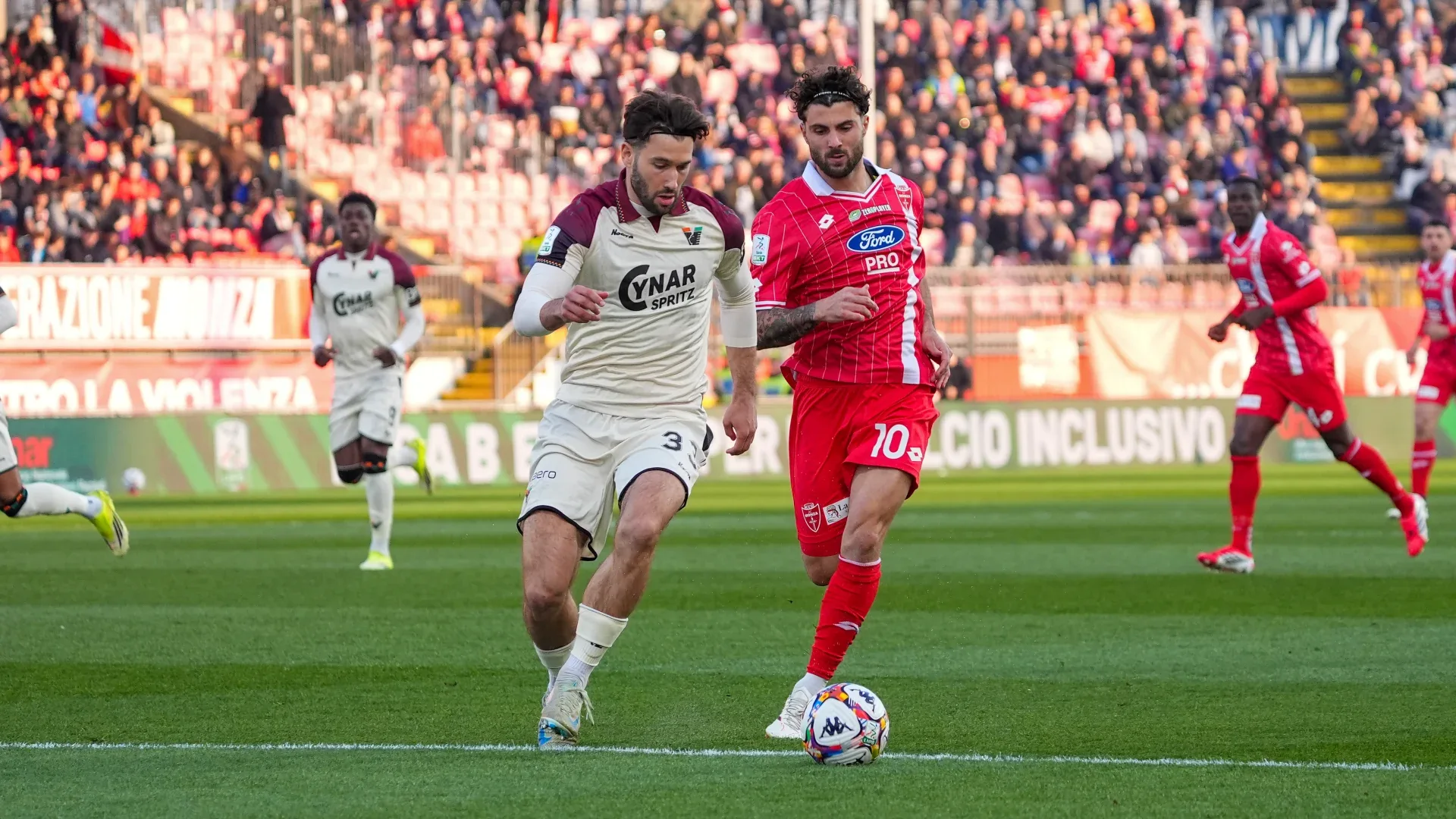
The Serie A promoted teams for 2026-27 are Venezia, Frosinone and Monza. Venezia came up as Serie B champions, Frosinone took the second automatic place, and Monza won the play-offs after finishing third. All three are returning to the top flight rather than arriving for the first time, but they bring sharply different footballing identities and levels of continuity.
That difference is the real story. Venezia dominated the ball and both penalty areas; Frosinone relied on vertical attacks, away strength and set pieces; Monza spread responsibility across the squad before changing coach and refreshing the group. This guide traces those routes, tests what may translate to Serie A, and offers a survival outlook fixed at . Results and positions will move, so live links are provided wherever current data belongs.
Who were promoted to Serie A for 2026-27?
Venezia, Frosinone and Monza are the three promoted teams in Serie A for 2026-27. Venezia went up as Serie B champions, Frosinone claimed the other automatic promotion place, and Monza completed the group through the play-offs. They replaced Cremonese, Hellas Verona and Pisa, the three clubs relegated from Serie A at the end of 2025-26.
That one-line answer hides three very different projects. Venezia reached the top flight by controlling games with the ball. Frosinone made intensity, quick forward play and set pieces central to their campaign. Monza were more balanced across phases, but their promotion was followed by a larger technical reset than either rival faced. Promotion tells us how a place was earned; it does not tell us whether the same football will keep a side up.
The structure of the challenge is familiar. Serie A has 20 clubs, each playing every opponent home and away for a 38-match season. A promoted team therefore has to turn a successful second-tier model into points against faster pressure, better individual attackers and opponents that punish unstable possession. The objective is not to “win” a private league among the newcomers. It is to finish clear of the bottom three after all 38 rounds.
This guide uses facts available through . It explains the promotion routes and the footballing case for each club, while treating the opening matches as a small sample rather than a verdict. For live positions and records, use the continually updated Serie A teams directory and Serie A standings; the analysis here is designed to explain the story behind those moving numbers.
Three different routes out of Serie B
Serie B offered three promotion places, but it did not offer three equivalent journeys. The top two positions brought automatic promotion; the final place came through the play-offs. That distinction matters because the regular-season evidence tells us what each club could repeat in Serie A, while the play-offs reveal how a team handled concentrated pressure.
Venezia won promotion through control
Venezia did not merely edge the title on a favourable final day. Giovanni Stroppa's side clinched promotion with one round remaining, finished as champions and built their rise around sustained command of territory and the ball. Lega Serie A's promoted-club review credits them with a league-best 77 goals and league-best defensive record of 31 conceded, alongside 64% possession and 86.5% passing accuracy. It also lists Venezia first for expected goals produced, xG difference and big chances created.
Those numbers are important together. High possession can describe harmless circulation, but elite chance creation and the division's best scoring return show that Venezia converted control into pressure. An eight-match winning run accelerated the title charge, while Andrea Adorante's 17 goals and John Yeboah's 11 gave the structure decisive attackers. They earned the most convincing route: a body of work that combined process, consistency and results.
Frosinone secured the second automatic place
Frosinone reached the same destination by taking a more direct road. Massimiliano Alvini's team did not try to dominate possession in Venezia's manner. They attacked vertically after regains, pushed the tempo and carried their threat into away grounds. The league review records the most away points in Serie B, only three defeats, six shots on target per match and 22 set-piece goals—the competition's highest total.
The automatic place was formally secured with a 5-0 victory over Mantova. A dated Lega B report confirms that Frosinone defended second position and returned to the top flight two years after relegation. Their promotion therefore rested on two useful survival traits: performance away from home and the ability to score when open-play patterns were blocked. Neither guarantees Serie A points, but both can travel across divisions better than a model dependent on overwhelming weaker opponents.
Monza survived the play-off pressure
Monza finished third, so their higher-pressure route continued after the regular season. In the final against Catanzaro, they won the away leg 2-0 before losing the return by the same score. Under the play-off rule, Monza's superior regular-season finish broke the aggregate tie and delivered the last Serie A place. That is not a technicality that diminishes promotion; it is the reward the format gives to performance over the longer league schedule.
Their broader numbers explain why they had earned that protection. Monza recorded Serie B's second-best defence and had 20 different goalscorers, more than any other club. The first figure suggests a stable floor; the second shows that promotion was not carried by one hot finisher. Yet the tense final also provides a warning. Monza could control enough of a season to finish third, but not every decisive tie. Their Serie A prospects would depend on preserving that collective base while improving the team around it.
Venezia: can possession survive the step up?
Venezia have the clearest attacking identity of the promoted trio, but also the sharpest translation question. A team that owned the ball in Serie B will spend longer without it against Italy's strongest sides. Survival may depend less on abandoning Giovanni Stroppa's principles than on choosing when to apply them.
The promotion identity
Stroppa's Venezia built from the back, pushed numbers into midfield and tried to recover the ball quickly after losing it. The league's data paints a rare picture of across-the-board dominance: 64% possession, 86.5% passing accuracy, 77 goals scored and only 31 conceded. They also led Serie B for expected goals, xG difference and big chances created. Three of the competition's four leading players for completed passes wore orange, black and green, while the team ranked second for regains in the attacking third.
The important mechanism was the relationship between control and threat. Centre-backs and midfielders circulated the ball until a passing lane opened, but wide players and attacking midfielders gave that circulation a destination. Andrea Adorante finished with 17 league goals, while John Yeboah supplied both scoring and creation. The team could squeeze opponents into their own half, win the second action and restart an attack before the defensive block had escaped.
Early in 2026-27, the shape showed signs of adjustment rather than retreat. In the Coppa Italia win over Modena, Lega Serie A's tactical review judged the average positions closer to a 3-4-2-1 than the 3-5-2 used through the promotion campaign. Simon Sohm connected behind Akor Adams, while Gianluca Busio and Kike Pérez advanced from midfield. That arrangement can place more receivers between lines without giving up the three-player first line.

The Serie A test
The risk comes when an opponent breaks the first pressure. Serie A forwards make faster runs into the channels behind wing-backs, and its midfielders are more likely to play through an aggressive counter-press. Venezia cannot assume that possession itself protects them. The distances between the outside centre-backs, central midfielders and wide players must remain short enough for the team to stop a transition before it becomes an open-field sprint.
Personnel change makes that coordination harder. The official league preview noted 13 summer arrivals as well as the departures of Michael Svoboda and Issa Doumbia. Adams immediately offered power and finishing with two Coppa Italia goals against Modena, while Bella-Kotchap and Sohm added top-flight experience. Yet five new starters in that tie also illustrated how much live-game learning Stroppa had to compress into August.
Venezia's best survival version will therefore be selective. Against direct rivals, sustained pressure and wide overloads can still make them the proactive side. Against title contenders, a lower starting position and quicker exits may protect the space that their Serie B opponents rarely reached. The historical warning is severe—Venezia had not survived a Serie A season since 1998-99—but the promotion data gives them a genuine footballing foundation. The issue is not whether possession “works” in Serie A; it is whether Venezia can preserve its attacking value while reducing the cost of each turnover.
Frosinone: continuity, verticality and set pieces
Frosinone may be the least fashionable of the three newcomers, but their promotion game contains practical tools for a relegation fight. They were comfortable without majority possession, carried results away from home and could turn restarts into goals. Those qualities reduce the need to control every phase before creating danger.
Why their direct game travelled
Massimiliano Alvini asked his side to recover the ball and look forward quickly. Frosinone ranked only 12th in Serie B for possession, yet took more away points than anyone, suffered only three defeats and averaged six shots on target per match. That is a better description of controlled aggression than of hopeful long-ball football. The first pass sought to unsettle a defence before it reset, and runners provided several forward options rather than leaving a centre-forward isolated.
The right side remained especially productive in their early Coppa Italia evidence. Against Juve Stabia, full-back Anthony Oyono and winger Farès Ghedjemis exchanged 19 passes, while new midfielder Romano Schmid recorded four key passes. Ten different Frosinone players attempted a shot. The pattern suggests that verticality was organised: combinations on one flank pulled the block toward the ball, and midfield support helped attacks end with more than a low-percentage cross.
Set pieces supplied another route. Frosinone scored 22 of them in the promotion season, the best total in Serie B. Giacomo Calò's 15 assists and crossing volume made him central to that edge. For a promoted club, dead balls can equalise matches in which the opponent owns territory. A corner or wide free kick does not care how much the other side's starting eleven cost; delivery, movement and first contact can turn a narrow defeat into a draw.

What gives them a survival route
Continuity is Frosinone's clearest advantage over Monza and a useful contrast with Venezia's larger recruitment class. The promotion core remained substantially intact, while arrivals such as Schmid, Sebastiano Desplanches, Oussama El Azzouzi, Luis Hasa and Alessio Zerbin were designed to add options around an existing identity. That reduces the number of relationships Alvini must teach while matches already carry points.
There is also evidence at the defensive end. Giorgio Cittadini led Serie B for defensive actions, interceptions, tackles and clearances, and goalkeeper Lorenzo Palmisani led the division in save percentage. Those statistics do not ensure the same ranking against Serie A shooters, but they identify players accustomed to defending decisive moments. Combined with an away-tested structure, they offer a plausible floor.
The warning is discipline under pressure. In the cup victory over Juve Stabia, Frosinone still allowed 17 shots, lost 60% of their aerial duels and committed 22 fouls. Better opponents can turn those fouls into the very set-piece advantage Frosinone want for themselves. The club has never survived any of its previous three Serie A campaigns, so continuity cannot mean refusing to adapt. Their path is to retain the speed and clarity of the direct game while defending their own box with fewer emergency actions.
Monza: the highest-reset project of the three
Monza reached Serie A with a broad collective base and then changed more of that base than either fellow newcomer. Paolo Bianco left after promotion, Ivan Jurić arrived, senior contributors moved on and new players entered every line. That makes Monza difficult to judge through their Serie B identity alone: the qualities that earned third place still matter, but the mechanisms intended to keep them up are new.
The promotion side had two valuable forms of distribution. It produced Serie B's second-best defensive record, spreading the work of control across the team, and found goals from 20 players, the competition's highest number. Andrea Petagna led with nine, but Colpani, Dany Mota, Giuseppe Caso, Hernani and Patrick Cutrone also contributed. For a play-off campaign, that variety mattered. One injury or cold streak did not erase every route to goal.
Then the context shifted. Ravanelli, Paulo Azzi, Hernani and Pedro Obiang were among the departures identified in the league's summer review, while Kevin Mangas, Etienne Kouadio, Ebenezer Akinsanmiro, Foe Ondoa and Gustavo Varela joined the rebuild. Jurić inherited potential, not a finished set of relationships. His football asks defenders to step out assertively, wing-backs to cover enormous vertical distances and nearby players to follow pressure together. If one player jumps and another hesitates, the opponent can escape into the space that the first movement creates.
The opening Coppa Italia evidence showed both sides of that bargain. Monza used a 3-4-2-1 with five new recruits in the starting side against Avellino. The press generally restricted the opponent, though the league's tactical review noted some counters. Forson and Birindelli rotated effectively around the attacking midfield line, Varela scored twice, and young midfielder Mout completed 10 ambitious switches of play. This was a promising sketch against lower-level opposition, not proof that the system was ready for Serie A speed.
By the September 14 cutoff, Monza had one point from four matches and sat in the relegation places on the site's live team page. The sample is far too small to declare a new project broken, especially with Matchday 4 still incomplete across the league. It does, however, identify the cost of the reset: Venezia and Frosinone could refine promotion structures, whereas Monza had to build shared pressing and possession decisions while points were already at stake.
The survival case rests on whether Jurić can shorten that learning period. Monza possess players with Serie A experience, a squad that demonstrated collective scoring capacity, and a coach whose intensity can make opponents uncomfortable. Their danger is coordination rather than a complete lack of talent. Until the pressing distances and rest defence become automatic, this is the most volatile project among the three newcomers—capable of rapid improvement, but also of losing matches through small timing errors.
Survival outlook through the opening four rounds
Points already won cannot be dismissed, but four matches cannot settle a 38-match survival argument. At the September 14 cutoff, Frosinone had seven points from four games, Monza one and Venezia none. Three Matchday 4 fixtures across the league were still to be played, so even the surrounding table contained clubs on different numbers of matches.
What the early table says—and does not say
The opening sample says Frosinone converted their readiness into immediate value. Seven points are banked, not theoretical, and reduce the number still required to reach a likely survival total. Venezia's zero creates the opposite pressure: a coherent model must now produce results before confidence and game state make patient buildup harder. Monza's single point fits the concern that a large tactical reset needs time the fixture list does not grant.
It does not say that the three teams will continue at these rates. Four games represent only a little over one tenth of an individual club's league programme. Strength of opposition is uneven; a penalty, red card or excellent finishing night has outsized influence. Promoted teams also tend to learn quickly where their second-tier habits break. A coach who changes pressing height or protects one flank can alter the next ten matches without abandoning the underlying project.
Preseason evidence offers a useful counterweight. Opta's August 18 supercomputer projection ran 10,000 simulations using market odds and power rankings. Monza were relegated in 42.9% of them, Frosinone in 40.7% and Venezia in 33.7%. The model therefore rated Venezia's starting survival case highest even though the first four results produced the reverse order. Neither snapshot should erase the other: the model predates competitive evidence, while the table sample remains tiny.
Our dated ranking of the three survival cases
| Rank | Club | Best reason | Largest risk |
|---|---|---|---|
| 1 | Frosinone | Banked points, continuity and set-piece threat | Defensive pressure and no prior Serie A survival |
| 2 | Venezia | Strongest promotion process and clear possession identity | Zero-point start and extensive integration |
| 3 | Monza | Top-flight experience and collective scoring base | New coach, new press and early coordination cost |
Frosinone lead this editorial ranking because they combine actual points with several repeatable routes to a tight result. Their vertical attack need not monopolise the ball, and Calò's delivery can rescue matches from corners and free kicks. The caveat is substantial: the club has never survived in three previous Serie A appearances, while the cup evidence showed how fouls and lost aerial duels could expose them defensively.
Venezia remain second rather than falling automatically to third. Their Serie B season offered the best evidence of a team controlling both boxes, and the 3-4-2-1 adjustment can make their possession more incisive. But zero points turn tactical adaptation into an urgent task. Stroppa needs to find a less expensive rest-defence structure without draining the attackers of support.
Monza sit third because their moving parts are the least settled. Jurić may yet build the most uncomfortable pressing team of the trio, and Patrick Cutrone plus other Serie A-experienced players can steady it. For now, however, the team is learning new movements after losing pieces of the promotion group. That combination creates greater short-term variance than Frosinone's continuity or Venezia's established framework.
This ranking is analysis, not an official forecast, and its date matters as much as its order. Revisit it after ten or 12 matches and the evidence will be richer: chance quality, defensive repeatability and response to losing positions will mean more than a handful of August and September scorelines. The live standings page should remain the source for today's order; this snapshot explains why the three survival cases currently look different.
How to follow the promoted clubs all season
A survival picture changes every weekend, so use this analysis as a dated baseline and the site's live pages for the moving evidence. The individual Venezia, Frosinone and Monza pages collect each club's full league schedule, recent results, table position and calendar feed in one place.
For the immediate view, today's fixtures answers who is playing and when, while the results page separates completed matches from upcoming ones. Check the live table after the round has settled rather than relying on an article's frozen points total. That is especially important when teams have played different numbers of matches.
Kickoff information also matures in stages. A fixture can be present in the season list before its exact date or broadcast slot is final. The fixture-confirmation tracker explains what has been confirmed, and the calendar tools help carry subsequent updates into a personal calendar.
The most revealing checkpoints will come after roughly ten matches, at the winter break and entering the final ten rounds. Look beyond the bottom-three label: track whether Venezia reduce dangerous turnovers, whether Frosinone preserve set-piece and away value, and whether Monza's press becomes coordinated. Those signals will tell us more about sustainable survival than any single dramatic score.
Join the discussion
Comments
Sign in with Google to comment. Keep the conversation useful and football-focused. New comments are reviewed before they appear.
Loading comments…