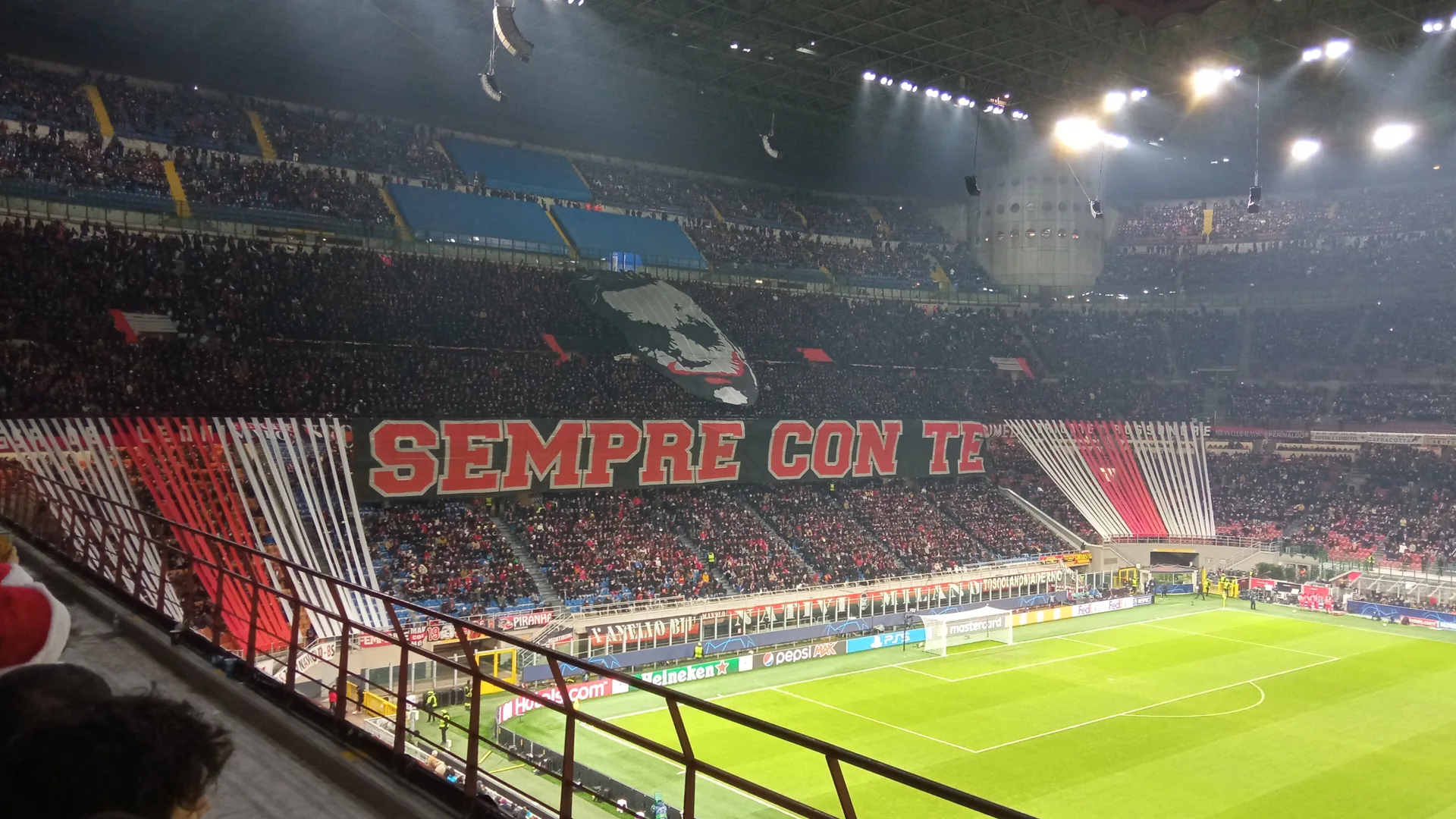
The Premier League has the stronger overall case on money, squad depth, global reach and recent collective European performance; Serie A's case rests on tactical variety, elite competitiveness and a distinctive football culture. That is a more useful answer than naming one league “better” without defining the test.
Both competitions use 20 teams and a 38-match double round-robin, yet the experience around that framework differs. England's larger revenue base reaches further down its table and gives more clubs expensive solutions for injuries and congested weeks. Italy cannot match that financial scale, but its leading teams can challenge English opposition and its weekly games reward close attention to formations, pressing references and in-game adjustments.
This comparison fixes financial, competitive and viewing facts at . It separates measurable advantages from personal taste, uses recent UEFA evidence with its limits, and avoids the old shortcut that Italy only defends while England only runs. Read it by the criterion you value—or use it to choose a match in each league.
Which league is better: Serie A or the Premier League?
The Premier League has the stronger overall case in 2026 if “better” means financial power, squad depth, global reach and sustained results across UEFA competitions. Serie A can still be the more rewarding league for a particular viewer—and its best clubs can beat English opponents—because football quality is not a revenue table and entertainment is not a single statistic.
The measurable evidence favours England. Premier League clubs operate from a much larger combined revenue base, can retain deeper squads and sit first in UEFA's current five-year association ranking. Italy sits second in that same ranking, which is an important correction to any claim that Serie A is no longer close to the European elite. The gap exists, but “Premier League first, Serie A second” is a more accurate starting point than treating the contests as different sporting levels.
Style requires a different answer. Serie A often exposes a viewer to sharp structural contrasts from one match to the next: aggressive man-oriented pressure, compact mid-blocks, back-three buildup and opponent-specific adjustments can coexist within the same round. The Premier League combines an enormous concentration of athletic and technical talent with the resources to repeat high-intensity actions deep into matches. Neither description belongs exclusively to one country, and neither makes every game in that league good.
A fair verdict therefore depends on the question being asked. Which league can place more expensive, proven players on a lower-half bench? England. Which currently has the broader global media machine? England. Which might give a tactically curious fan more visible variation in defensive structures? Serie A has a persuasive case. Which produces the “best” atmosphere, title race or Sunday evening? That turns on clubs, fixtures and personal taste rather than nationality.
The sections below compare like with like: format with format, revenue with revenue, tactical mechanisms with mechanisms, and European performance in the same UEFA environment. Dates and samples matter. This is a 2026 assessment, not a replay of Serie A's 1990s peak or a promise that the Premier League's financial advantage makes every transfer intelligent.
Same basic league format, different calendar pressures
The competitions look remarkably similar before tactics, budgets or branding enter the conversation. Both have 20 clubs and a double round-robin league. The more meaningful structural difference is what surrounds those 38 matches: domestic cups, winter rhythm, broadcast slots and European obligations change how much training and recovery time a coach can protect.
Twenty teams and 38 matches in both leagues
Every club faces 19 opponents once at home and once away, producing 38 matches per team and 380 across the league. Both competitions award three points for a win and one for a draw, crown the team that finishes top, and relegate the bottom three. That common architecture makes the comparison unusually clean. An English side does not face a larger league programme merely because the Premier League is richer, and an Italian side does not receive extra preparation weeks from a smaller division.
| Feature | Serie A | Premier League |
|---|---|---|
| Clubs | 20 | 20 |
| League matches per club | 38 | 38 |
| Total league matches | 380 | 380 |
| Points for a win | 3 | 3 |
| Relegation places | 3 | 3 |
The identical totals also expose weak arguments. More goals in one season would not result from playing extra league fixtures. A tighter title race cannot be explained by a playoff format, because neither league uses one to decide the champion. Differences in scoring, pressing or parity have to be sought in teams, resources and decisions—not in a hidden mismatch in schedule size.
Cups, winter scheduling and European load
England creates a higher possible domestic load because Premier League clubs enter two knockout cups: the FA Cup and EFL Cup. Italy's top-flight clubs have Coppa Italia as their primary domestic cup. Possible is the important word. A club eliminated at its first hurdle may gain free weeks, while a finalist carries rounds deep into spring. European qualification then adds the same UEFA league-phase and knockout demands on both sides of the comparison.
The winter rhythm differs more visibly. Lega Serie A's official 2026-27 dates include a Christmas break on the weekend of December 27, plus league rounds on October 28 and January 6. English football traditionally makes the festive period part of the spectacle. Its fixture planners must fit league games around both domestic cups, UEFA matches and international windows, a problem the Premier League itself describes when explaining how 380 fixtures are compiled.
Calendar pressure affects football indirectly. Less recovery can lead a coach to rotate full-backs, lower the press or protect a lead earlier. More training days can improve complex opponent-specific plans. Yet it would be wrong to attribute every fast English match to congestion or every structured Italian match to preparation: elite clubs in both leagues often face dense European weeks. The honest comparison is at club level—how far it advances, how deep its squad is and how effectively the manager uses the available days.
The money gap changes squad depth
Money does not make a pass accurate or a defensive line coordinated, but it changes how many solutions a club can afford. The Premier League's advantage is not limited to one superstar at Manchester City or Liverpool. It reaches clubs outside the traditional elite, increasing the price of competing for players and allowing English benches to contain starters from other major leagues.
Broadcast and commercial income
The Deloitte Football Money League 2026, based on the 2024-25 season, gives the clearest club-level picture. Six English clubs occupied places five through ten in the global revenue ranking: Liverpool, Manchester City, Arsenal, Manchester United, Tottenham and Chelsea. Aston Villa, Newcastle and West Ham also appeared in the top 20. Italy placed Inter 11th, Milan 15th and Juventus 16th, with Roma 27th.
The individual scale is striking. Deloitte reported €836 million for Liverpool, €829 million for Manchester City and €793 million for Manchester United. Its report also said Serie A's new domestic live and non-live rights deals reduced average annual value by roughly 3%, before any possible revenue-share element. That is a difficult environment in which to close a gap: English leaders are expanding commercial and matchday income while the Italian domestic media base has faced pressure.
League-level estimates point in the same direction, although their currencies must not be subtracted casually. A 2026 business analysis reported £6.8 billion of Premier League club revenue in 2024-25 and €3 billion for Serie A. The first number is pounds and the second euros; they are scale markers, not a mathematically exact difference without a dated exchange rate and aligned accounting definition. What survives that caution is the order of magnitude and distribution: more English clubs operate at globally elite revenue levels.
That advantage compounds. Broad international distribution creates audiences; audiences support higher rights and sponsorship values; clubs use the proceeds to acquire recognisable players; those players attract more viewers. Serie A is distributed widely too, and Italian clubs retain enormous historic brands, but the Premier League has spent decades strengthening this feedback loop.
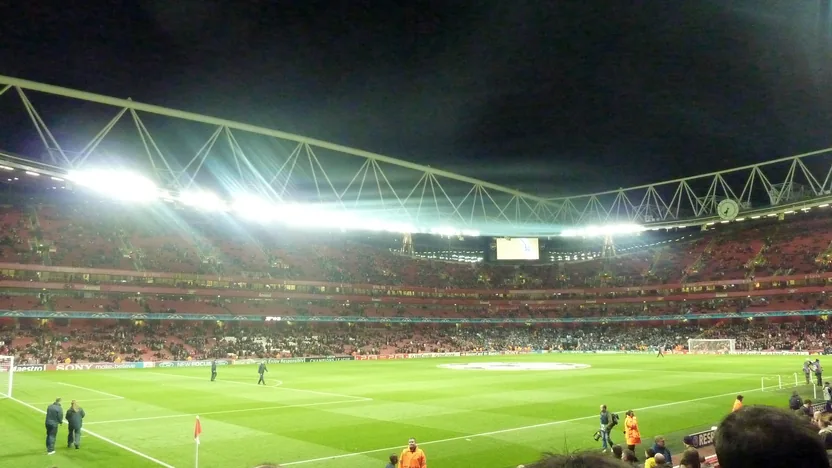
What richer benches change on the pitch
A transfer-window snapshot makes the difference tangible. On August 28, 2026, AFP reported that Serie A had spent more than €1 billion and ranked second among Europe's Big Five. That was significant Italian investment. The Premier League, however, stood at €3.2 billion—more than the other four leagues combined at that point. Because deals include bonuses and the window was still open, those numbers describe a dated moment rather than final audited totals.
The sporting consequence is resilience. A wealthy club can carry two credible players for the same specialist role, replace an injured winger without changing shape, and rotate through a three-match week without asking every starter to repeat 90 minutes. It can also keep a young prospect who would otherwise be sold. At league level, that raises the intensity of competition for places and means a lower-table opponent may introduce an international forward after an hour.
Deloitte's ranking demonstrates this depth beyond England's headline clubs. Brighton, Everton, Crystal Palace, Bournemouth, Wolves and Brentford all appeared between 23rd and 30th among global revenue generators; Roma sat within that same band. This does not say those English clubs are historically “bigger” than Roma or tactically better. It says their recurring business resources can resemble those of a major Italian European contender, a fact that affects recruitment markets and bench construction.
There are two necessary brakes on the argument. First, spending can be inefficient: an expensive player in the wrong role is not depth, merely cost. Second, coherent scouting and coaching can produce more from less. Atalanta, Napoli and other Italian clubs have repeatedly built teams whose collective value exceeds a simple wage ranking. Money raises the range of available options and the tolerance for mistakes; it does not select the right option or teach it where to stand.
That is why the financial edge becomes most visible across a season rather than in one tie. Serie A's best-coached eleven can outplay an English opponent on a given night. Over 50 or 60 matches, injuries, rotation and failed transfers accumulate. The Premier League's deeper revenue base makes it more likely that clubs can absorb those shocks without lowering the level of every position.
Tactical comparison without the stereotypes
“Serie A is tactical” and “the Premier League is fast” are observations so broad that they often hide more than they reveal. Every professional match is tactical, and Serie A contains explosive transition teams. The useful comparison asks how clubs build, press, protect space and change a game—not whether one nation has brains and the other has legs.
Build-up and pressing are league-wide, not league-owned
Data immediately complicates the caricature. In Opta's 2024-25 comparison of Europe's Big Five, both Serie A and the Premier League sat closest to the “slow and intricate” end of the possession spectrum. Italian teams averaged slightly more passes per sequence, but English and Italian possession habits were more similar to each other than the popular contrast suggests. Patient construction from goalkeeper and centre-backs has become a shared elite language.
High pressing is shared too, though the English frequency was greater in the measured period. Premier League matches averaged 15.9 high turnovers over the four seasons through 2024-25; Serie A averaged 13.5. That difference supports a league tendency, not a rule. Inter led Serie A in 2025-26 with 16.6 attacking-third recoveries per game, and Roma followed at 15.3—numbers entirely compatible with aggressive front-foot defending.
Team identity can overwhelm league identity. Manchester City may spend long spells circulating until the opponent shifts; an English lower-table side may send goal kicks directly toward a target. Juventus can be patient, while an Italian opponent attacks the second ball. Once styles are averaged into one national label, precisely the matches that make each competition interesting disappear.
Where Serie A's structural variety stands out
Serie A's tactical appeal lies in visible changes of reference points. A back three can become a four when one wing-back drops. A nominal midfielder may follow his opponent across zones in a man-oriented press. Two strikers can pin centre-backs and create a platform for runners, rather than serving only as penalty-area finishers. Coaches are often willing to alter those relationships for a specific opponent or game state.
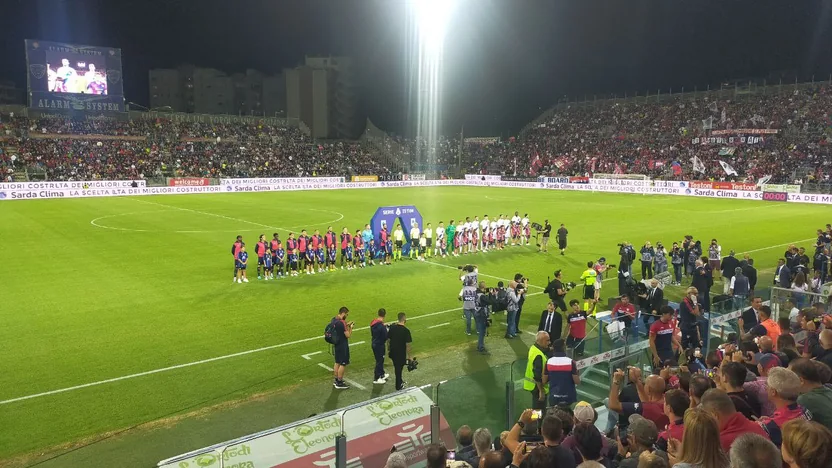
Inter's 2025-26 meetings with English opposition offered a concrete example. Their front two, Lautaro Martínez and Marcus Thuram, repeatedly received line-breaking passes against Arsenal before connecting with each other or releasing a runner. UEFA counted 11 such receptions for the pair, plus seven for Pio Esposito from the bench. That posed a problem less familiar to centre-backs accustomed to one central forward: follow Martínez into midfield and open depth, or hold the line and let him turn.
The same Inter could change the source of danger. Against Como in Serie A, they accepted more pressure after taking the lead. Lega Serie A's analysis recorded their field tilt falling from 52% in the first half to 22% in the second, as they drew Como forward and attacked the vacated lanes. That is not passive defending for its own sake. It is a decision to exchange territory for transition space.
Juventus supplied a different in-game example against Benfica. They began with a 4-2-3-1 in possession, struggled to run behind the line, then shifted closer to 4-4-2 after Weston McKennie moved centrally. UEFA's analysis recorded second-half expected goals of 1.02 after only 0.37 before the interval. The lesson is not that Italian coaches always out-think opponents; it is that role and spacing changes are central to how the league is discussed and played.
Where Premier League intensity becomes visible
Arsenal's 3-1 win at Inter in January 2026 demonstrated the English league's strongest case without reducing it to running speed. UEFA's observers saw Arsenal high-press, drop into middle and low blocks, counterpress, counterattack and build patiently in the same match. Inter still won 52% of the duels, so this was not a physically superior side brushing aside a passive one. Arsenal's edge was the ability to perform several phases at speed and retain control while switching between them.
The defensive adjustment was particularly revealing. Arsenal initially left their centre-backs man-to-man against Inter's two forwards as the rest of the team pressed. After 64 minutes, Mikel Arteta replaced an attacking midfielder with Declan Rice. The nominal 4-3-3 remained, but Rice supplied recovery runs and protection around the two centre-backs. Intensity here meant the press, duel capacity and a bench player capable of changing the risk calculation.
The Premier League's 2025-26 trend also moved away from the idea that English modernity means endless short buildup. After 210 matches, Opta found fewer passes per game than in 2024-25, more long balls and 28.3% of goals arriving from non-penalty set pieces. Long throws returned as a genuine weapon. High turnovers rose after an early dip, but direct restarts and second balls became a larger part of the competition's texture.
That blend is what makes English intensity difficult to face. Opponents must defend a sophisticated short buildup, then compete for a long goal kick, then survive a rehearsed corner, then react to fresh elite attackers from the bench. But tempo is not identical to technical quality. A frantic turnover can be a tactical failure, and a slower Italian possession can be purposeful control. The strongest teams in both leagues know when to accelerate and when to deny the match its chaos.
Competitive balance is more than the title race
Fans use “competitive” to mean several different things. It can describe how many clubs win titles across a decade, how close first and second finish in one season, how many teams chase Europe, or how uncertain an ordinary match feels. A league can score well on one definition and poorly on another. Unless the metric is named, arguments tend to select the evidence that flatters a preferred competition.
Title variety is closer than the branding suggests. Football Benchmark's 2026 report found four different champions in each of Serie A and the Premier League over the previous ten seasons. England's set included Chelsea, Manchester City, Liverpool and Arsenal; Italy's included Juventus, Inter, Milan and Napoli. Serie A's recovery from Juventus's nine-title run therefore created genuine turnover, while the Premier League's wealth did not produce a different champion every year.
Change the window and the picture changes. Arsenal's 2025-26 title made them England's third different winner in three seasons, after Manchester City and Liverpool. Serie A's 2025-26 champion Inter also won 2023-24, with Napoli between those seasons. Change the question to margin and it changes again: Inter won 2025-26 by 11 points. Four winners across ten campaigns does not prove that every spring delivered a final-day Scudetto race.
Depth below first place is where the Premier League's strongest claim emerges. English clubs outside the historic title elite can pay fees and wages that compete with Italian European qualifiers. That financial floor makes squad quality less concentrated at the very top and can turn an away trip to a lower-half side into a demanding physical and technical test. Still, revenue is not an upset statistic. It cannot prove that 15th in England would beat 15th in Italy, especially when styles and individual seasons change.
Serie A offers a different form of uncertainty. Clubs with contrasting budgets can specialise: an organised mid-block, an elite goalkeeper, set-piece work or player development can close the match-level gap. The Italian league has also produced fluid races for European positions even when the champion pulls clear. That is competitive value, but it should not be confused with equal resources or identical squad depth.
| Question | What it measures | Main caution |
|---|---|---|
| Who wins? | Different champions over a defined period | Hides winning margins |
| How close? | Points gaps within one season | One season can be unusual |
| How deep? | Quality/resources beyond elite clubs | Money is not performance |
| How uncertain? | Match and relegation unpredictability | Needs many games, not anecdotes |
The best conclusion is deliberately narrower than “most competitive league in the world.” Both competitions have delivered four champions in the cited decade. England currently has the stronger resource depth and a recent run of different winners; Italy has restored title variety and remains capable of open European and survival races. To compare unpredictability rigorously, we would need aligned seasons and measures such as points dispersion, betting uncertainty or upset frequency—not a montage of memorable results.
European competition is the best common test—with limits
UEFA competition gives the comparison something domestic statistics cannot: Italian and English clubs facing opponents in the same tournaments under the same scoring rules. The evidence currently favours England. It also places Italy second over five years, which makes Europe an argument for a gap—not for dismissing Serie A as irrelevant.
What recent UEFA results and coefficients show
At the September 2026 cutoff, UEFA's five-year men's association ranking listed England first on 119.519 points and Italy second on 99.946, ahead of Spain and Germany. UEFA builds that ranking from club results in the Champions League, Europa League and Conference League. It is broader than counting only the last Champions League winner because it tests several clubs from each country across five seasons.
The single-season 2025-26 coefficient widened the recent difference. England led with an average of 28.680; Italy ranked fifth on 19.000. English teams also converted the campaign into two trophies and one near miss. Arsenal reached the Champions League final, drawing 1-1 with Paris before losing on penalties. Aston Villa beat Freiburg 3-0 in the Europa League final, while Crystal Palace defeated Rayo Vallecano 1-0 for the Conference League.
The head-to-head knockout evidence was uncomfortable for Italy. Villa eliminated Bologna 7-1 on aggregate in the Europa League quarter-finals, and Palace beat Fiorentina 4-2 over two Conference League legs. Those are meaningful results because clubs met directly at decisive stages. They demonstrate the strength available beyond England's Champions League qualifiers: its Europa and Conference entrants could overpower strong Italian opponents and win the competitions.
Yet the Champions League result supplies a useful correction. An English champion did not automatically become European champion; Paris retained the trophy after taking Arsenal to penalties. The honest 2025-26 summary is not “England won Europe.” It is that English clubs delivered the strongest collective association season, won the two lower UEFA competitions and reached the premier final.
Why Europe cannot settle every weekend argument
Coefficients answer a defined question: how successfully did an association's participating clubs perform across UEFA tournaments? They do not tell us whether a neutral viewer enjoyed Parma–Lecce more than Everton–Brentford, nor do they test every team in each league. European qualifiers are selected from the top of domestic tables, so the lower half enters the comparison indirectly.
Knockout football is also a small and uneven experiment. Draws produce different paths; injuries arrive at different moments; a red card or penalty shootout can decide a season's trophy count. Arsenal's tactical success at Inter tells us a great deal about those two elite teams on that night, but it cannot prove that every English structure defeats every Italian one. Even a 7-1 aggregate result is evidence about Villa and Bologna before it is evidence about nations.
Domestic depth complicates the causal story. Relentless league matches can prepare players for European intensity, but they can also drain them. Richer squads can rotate through both demands, which brings the financial advantage back into view. Conversely, a coherent Italian club may devote preparation to a specific tie and neutralise a more expensive opponent. Tournament success measures the combined outcome of squad, coaching, draw and moments.
Use Europe as the best available common test, then respect its boundaries. England's five-year lead and exceptional 2025-26 season strengthen the Premier League's overall-quality case. Italy's second place across five years shows sustained breadth, not a nostalgic reputation. The evidence supports “England ahead, Italy competitive,” a conclusion less dramatic but more defensible than either fan extreme.
Which league should you watch?
The useful answer depends on what makes you return every weekend. The Premier League is the easier choice for a globally shared conversation and for seeing expensive squads tested deep into the table. Serie A is a rewarding choice for viewers who enjoy reading tactical match-ups, club identities and the changing geography of Italian football. Neither recommendation requires declaring the other competition unwatchable.
Choose the Premier League for reach and relentless depth
Choose England if access, communal viewing and star concentration rank first. The Premier League says its matches are available in 920 million homes across 189 countries. That reach feeds highlights, fantasy games, international supporter groups and a constant English-language discussion. It is easier to find another person who has watched the same match and easier to follow transfer and injury news between rounds.
The financial evidence also makes the lower part of an English weekend unusually relevant. Clubs outside the Champions League places can recruit internationals, retain costly substitutes and punish an elite side whose press or rest defence slips. “Relentless depth” does not mean every fixture is a classic. It means money and talent extend further down the list, so a title contender often meets an opponent with enough speed, bench quality and specialist coaching to expose a bad afternoon.
Global distribution should not be confused with universal convenience: broadcasters, blackout rules and subscriptions still vary by country. Nor does popularity settle the aesthetic argument. It simply makes the Premier League the lower-friction recommendation for a new viewer who wants broad access, familiar players and a season discussed across many markets at once.
Choose Serie A for match-up variety and Italian football culture
Choose Italy if the puzzle inside the match matters as much as its headline. One round can ask a possession team to dismantle a compact back five, then show an aggressive man-oriented press pulling a rival into duels, followed by a side changing its buildup shape to free a wing-back. Those ideas exist in England too. Serie A's attraction is the frequency with which contrasting structures and opponent-specific adjustments become the story a viewer can follow.
The setting adds another layer without needing romantic exaggeration. Milan's two giants share San Siro but carry different histories; Turin, Rome, Naples, Florence, Bologna and smaller provincial centres attach matches to distinct places. Rivalries, ultras, old grounds and new ownership models make the league a tour through Italian cities as well as a table. Atmosphere varies by match and stadium, but that local identity is a legitimate reason to watch.
Access is workable rather than invisible. At the September 14, 2026 cutoff, our US Serie A TV guide lists Paramount+ for every league match, with selected CBS and Golazo placements; rights can change, so check the guide rather than relying on an old platform name. Use the Serie A fixtures this week page to choose a game by time and opponent.
The best practical answer may be both. Follow the Premier League for its enormous shared stage, then add Serie A when a tactical contrast, derby or European contender catches your eye. A comparison is most useful when it improves your viewing choices—not when it turns two complex competitions into rival brands that demand exclusive loyalty.
Join the discussion
Comments
Sign in with Google to comment. Keep the conversation useful and football-focused. New comments are reviewed before they appear.
Loading comments…