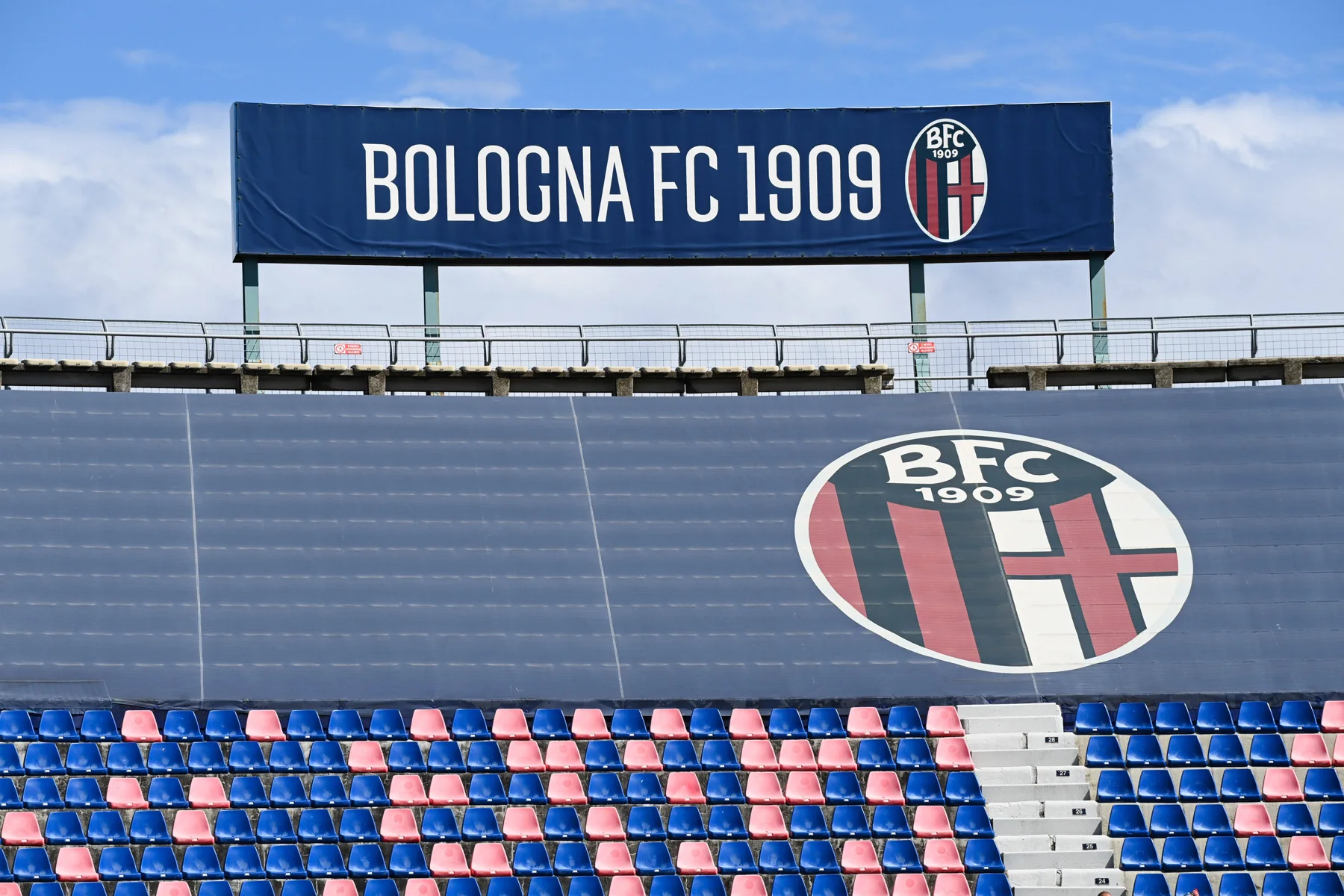
Bologna’s new stadium proposal is a 35,000-seat, approximately €300 million arena planned for the northern BolognaFiere district, with completion targeted for spring 2031. The September 30, 2026 agreement gives the project a clearer shape, but further investors and the authorisation process still matter. Supporters are debating the long-term opportunity, the team’s immediate needs and the future of the Dall’Ara. Here is what the latest proposal establishes, what remains unanswered and why the disagreements go beyond simply liking or disliking a new building.
What Bologna actually announced on September 30
Bologna and BolognaFiere have agreed on a proposed 35,000-seat stadium in the northern part of the exhibition district, with an estimated investment of approximately €300 million. The joint announcement published on September 30, 2026 sets spring 2031 as the target for completing construction and identifies the 2031–32 season as the intended start of Bologna's football tenancy. Those are substantial details. They are also project targets, rather than a promise that supporters can already book an opening-day seat.
The latest announcement builds on an earlier stage. On August 1, the partners presented a letter of intent to mayor Matteo Lepore, proposing a multifunction venue on BolognaFiere-owned land between the railway and motorway. That statement described the need to assess technical, planning, infrastructure and financial conditions. September's agreement moves the conversation towards an operational project, giving fans a capacity, a location and an intended delivery timetable to judge.
It also makes clear that this is a different proposition from simply renovating Bologna's current football home. The arena is intended to accommodate exhibitions, congresses and major live-music events alongside matches. Architect Eloy Suárez of SHESA and structural specialist Massimo Majowiecki of MJW Structures are named in the first design phase. A movable roof and playing field are part of the announced concept. These are features of a proposal; they should not be confused with photographs of a finished building or old images of another redevelopment scheme.
For supporters, the strongest reason to take the news seriously is that the two organisations have publicly attached themselves to a shared project. The strongest reason to remain cautious is that their own language acknowledges the difficult work ahead. BolognaFiere president Gianpiero Calzolari stresses economic viability, coordinated institutional work and the authorisation process. Bologna chief executive Claudio Fenucci explicitly says additional investors will be needed alongside BolognaFiere and owner Joey Saputo.
The useful question therefore changes from whether someone has floated a stadium idea to whether these partners can deliver this particular one. A credible announcement establishes the intended destination. Funding agreements, planning decisions, construction and a working football operation establish whether the club can reach it. Treating those stages separately gives the project credit for its progress while preserving the scrutiny a €300 million undertaking deserves.
Why the BolognaFiere site changes the stadium model
The location explains much of the project's character. The new arena would stand in the northern BolognaFiere area, on land already earmarked for exhibition development under the relevant programme agreement. Bologna would be joining an existing events district rather than trying to make a football stadium support an entire commercial neighbourhood by itself. The earlier letter of intent described land between the railway and motorway, emphasising its relationship with major transport infrastructure.
A movable pitch and roof make the arena more than a football ground
The announced movable roof and playing field are central to that model. Moving the football surface would free the arena's middle for exhibitions, conferences, concerts and large live productions. For BolognaFiere, the attraction is an additional space within its wider events business. For the club, the attraction is a home whose economic activity could extend beyond the afternoon when the turnstiles open for a league match.
That combination also creates a football question. A stadium can look excellent in a design presentation and still need careful management to accommodate competing users. Match priorities, preparation after a concert, pitch maintenance and responsibility for operating costs all influence how well the arena serves a team. The announcement does not publish those contractual arrangements. They belong among the details to examine as the proposal develops, rather than among the benefits supporters should assume have already been secured.
Multifunctionality should consequently be judged by the quality of the football experience as well as the number of events a building could theoretically host. Players need a dependable playing surface; spectators need clear sightlines and an atmosphere that carries around the stands. Concert promoters have different requirements. None of those needs necessarily conflict, but combining them successfully demands more than adding a roof to an architectural image. The partners' stated ambition is plausible as a business concept; delivery will depend on the eventual design and operating agreement.
Transport promises need to work on a matchday
The proposal identifies a dedicated motorway exit and railway stop, two nearby ring-road exits, a new tram stop and substantial parking provision. BolognaToday's September 30 report sets those connections within the city's wider development plans. These are the links described for the project. The statement should not be read as confirmation that every component is already operating or that a complete matchday transport plan has been published.
Supporters will judge access through ordinary routines: whether a child can get home after an evening game, whether queues clear safely, and whether people can arrive without needing a car. The exhibition district also has its own visitors, so the practical question includes how a match and another major event would coexist. Good access on a map does not answer how services handle a concentrated crowd leaving at the final whistle. That distinction makes transport a central part of the stadium discussion, rather than an optional benefit attached to the construction bill.
The €300 million question: cost is not secured funding
The figure attracting attention is approximately €300 million. It is the estimated overall investment identified by the partners, not an announcement that the club has €300 million sitting in an account ready to spend. The clearest funding statement comes from Fenucci himself: the project requires other investors alongside BolognaFiere and Saputo. Corriere dello Sport's September 30 report places that requirement directly beside the stadium announcement.
This distinction matters when comparing recent coverage. Earlier reporting discussed possible contributions, public assistance and borrowing. Those were descriptions of a developing financing model. They should not be turned into a final allocation simply because the partners have now reached an agreement on the stadium concept. The September 30 club statement does not publish a complete investor list, equity percentages, loan terms or a detailed division of construction costs.
Mayor Lepore's comments, reported by Il Resto del Carlino, describe private management and an investment that still needs further examination. Private management is important context, but it does not by itself answer every question about public infrastructure, land, financing or long-term obligations. Equally, institutional involvement does not prove that the municipal budget will pay the entire stadium bill. Supporters should examine the published arrangements as they emerge rather than fill those gaps with assumptions.
Ownership and operating income matter as much as the construction bill
For the football club, the crucial economic question is what it will control and earn after opening. Owning land, owning a share of an arena company and holding the right to use a stadium are different positions. The announced partnership does not make Bologna the sole owner of every future income stream. A shared venue could bring the club useful resources, but its value would depend on the eventual division of income, expenditure and responsibilities.
The same distinction applies to a busy events calendar. Concerts and exhibitions can generate receipts while also requiring staffing, maintenance, equipment and preparation. Gross event revenue is not the amount left for the football team. Fenucci's stated aim of strengthening sporting competitiveness is therefore a reason to follow the business model closely, rather than a forecast of how much money will become available for players.
That is also why the popular comparison between a stadium and a transfer budget needs care. A construction project can involve long-term investors and financing arrangements that would not exist for player recruitment. It can still create risks or commitments for the club, so scrutiny is justified. The useful test is whether the agreement protects Bologna's football operation while producing sustainable additional income. The €300 million headline tells supporters the scale of the undertaking; it does not yet answer that test.
Why the 2031 target and Euro 2032 bid are separate tests
Bologna's proposed timetable has two audiences. The club wants to begin the 2031–32 football season in its new home. The city also wants a venue capable of hosting Euro 2032 matches. The joint statement places construction completion in spring 2031, providing an intended interval before the football season and the international tournament. It does not announce that Bologna has been selected as a Euro host.
The latest relevant selection update comes from FIGC's September 30 announcement. The federation submitted dossiers covering thirteen Italian cities and fourteen stadiums, including Bologna. UEFA must assess compliance before the final five Italian venues are selected. Its checks extend across eleven thematic areas and 120 operational requirements, including supporter services, accessibility, security, hospitality and facilities for broadcasters.
Those requirements explain why a capacity announcement is only part of a tournament bid. A football ground has to function as a complete venue, with appropriate access, services and event operations. A building that can hold a crowd still needs to accommodate the particular demands of an international tournament. That is a different test from whether Bologna can stage its normal home matches successfully.
UEFA awarded Euro 2032 to Italy and Türkiye in 2023, envisaging five venues in each country. That national hosting decision does not automatically give every candidate city a place. For Bologna, progress through the current dossier process is meaningful, but describing the city as a confirmed host would jump ahead of the official selection.
There is a similar distinction within the construction timetable. Completion of works, readiness for a first full season and readiness for a major tournament are linked milestones. They require different kinds of preparation. Supporters can reasonably ask how the eventual programme allows for testing access systems, seating, pitch operations and the stadium's multiple uses. The announcement sets an objective, rather than publishing a complete schedule for all of those tasks.
Euro 2032 can help focus institutions on delivery, but the arena needs a convincing purpose beyond a few tournament fixtures. If selected, it would still have to serve Bologna and the exhibition district for years afterwards. If not selected, the project's football and commercial case would still need to stand up. The strongest version of the proposal is consequently one whose long-term usefulness can survive the outcome of the host-city decision.
What supporters are arguing about
The debate contains support, impatience and doubt. Those reactions should be distinguished from a claim that Bologna's fanbase has reached a single verdict. The comments attached to CalcioBologna's September 24 report include readers urging construction and others arguing that the team should come first. They provide genuine examples of disagreement, although a small online discussion cannot establish the balance of opinion across the whole stadium.
A better home versus money for the team now
The sharpest objection in that discussion concerns sporting priorities. Some commenters want investment in a team capable of competing for Europe, or worry about maintaining top-flight status. Others welcome a new arena after a prolonged stadium debate. The disagreement reflects two timescales: what supporters want from the next match and what the club might need to sustain ambition across the next decade.
A modern home could support that longer ambition, especially if the club obtains worthwhile operating income. It cannot score a goal this weekend. Conversely, a successful transfer window would not settle the question of Bologna's facilities for the following generation. It is reasonable for fans to expect attention to both. The mistake would be to assume that every euro attracted to a shared infrastructure project was necessarily available for signing players, or that a stadium announcement excuses shortcomings in football decisions.
The civic debate is broader than recruitment. The same report describes a public meeting promoted by Prospettiva Comune to discuss the project's consequences and the relationship between private interests and community benefit. That concern is relevant even to someone who welcomes the move. A stadium changes how land is used, how crowds travel and what happens in surrounding areas. Support for Bologna and scrutiny of a large urban development can coexist.
Capacity, prices and atmosphere are questions the design must answer
A visible comment in the contemporary Reddit discussion asks why the proposed capacity is not 40,000. That is one person's challenge, rather than evidence that demand would fill a larger venue every week. It nonetheless identifies a useful design question: how many supporters should the building accommodate, and what balance should it strike between regular attendance and exceptional fixtures?
The headline capacity does not answer affordability or atmosphere. Supporters will need details of ordinary seats, the curva, accessible provision and the relationship between hospitality and the rest of the crowd. The current proposal does not announce future season-ticket prices. It would therefore be premature to describe either an inevitable price rise or guaranteed cheap admission as an agreed outcome.
A persuasive football design should explain those choices in public. Fans need to understand how the home end will work, whether friends and families can keep attending together, and how the club intends to retain the identity of a Bologna match. A roof, a digital service or a premium lounge may improve an experience, but none can substitute for the supporters whose noise makes the building feel like home. This is where a technically ambitious project will eventually face its most recognisable football test.
What the plan means for the Dall’Ara today
The Dall'Ara remains Bologna's home. The club's current Bologna–Monza match listing, for example, still identifies the Renato Dall'Ara as the venue. September's announcement does not instruct supporters to travel to BolognaFiere for their next league game. It describes a proposed move years ahead. Anyone attending now should follow the current club notice, with the existing match-ticket guide providing the general purchasing context.
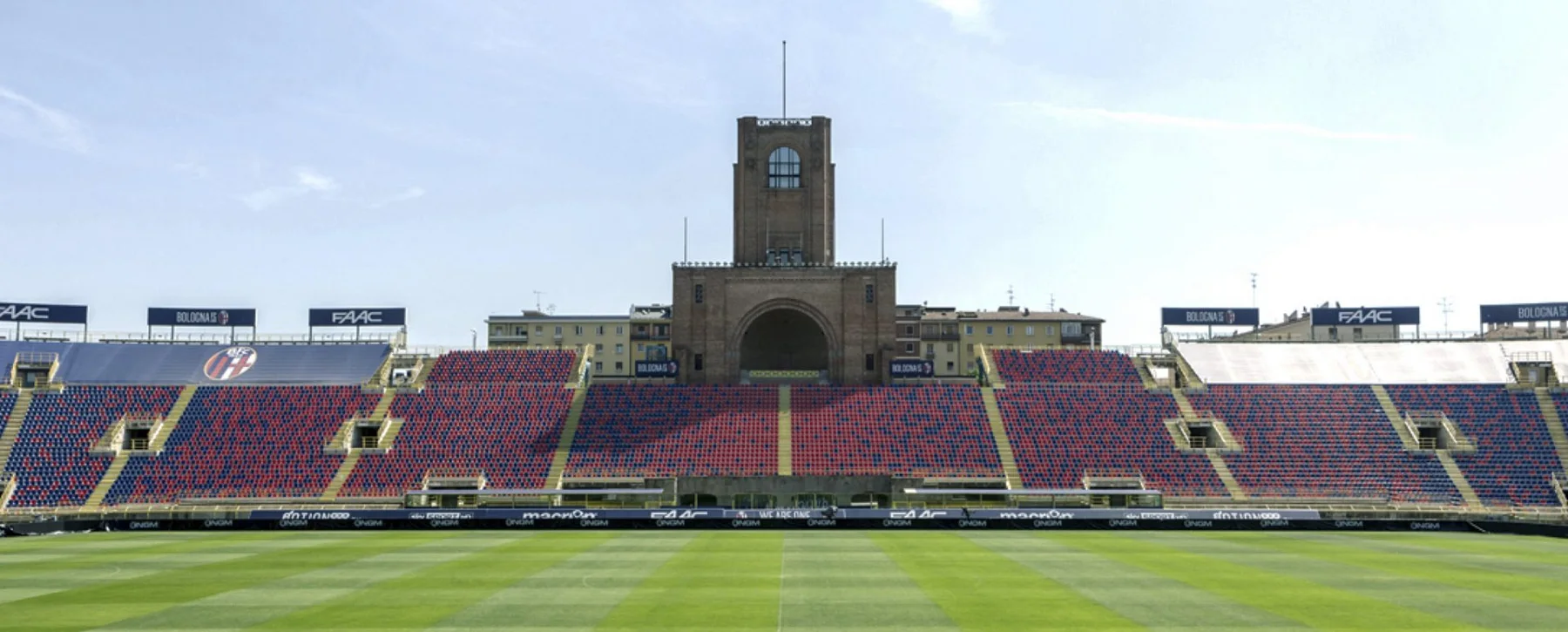
The distinction between moving and rebuilding is especially important here. Bologna's October 2024 announcement with Webuild concerned renovation of the Dall'Ara and envisaged a temporary stadium elsewhere while work took place. That earlier scheme belongs to the project's history. Its drawings should not be presented as the final appearance of the new BolognaFiere proposal. A reader can otherwise understand the correct cost headline while imagining the wrong building.
The historic ground still needs a future of its own
The reason this matters extends beyond nostalgia. The club's stadium history traces the football opening to May 29, 1927. Its brick architecture and Maratona Tower connect the ground with Bologna's urban identity. Generations of matchdays have made it more than an address at which the team happens to play. Leaving such a building would create a separate question about its maintenance, use and relationship with the surrounding neighbourhood.
Mayor Lepore has spoken about promoting public discussion of the Dall'Ara's future and conversion, as reported by BolognaToday. That is an intention to debate the outcome, rather than an approved final reuse. The September stadium announcement does not authorise readers to conclude that the historic arena will be demolished, abandoned or given a particular new function. Its future should be assessed on its own evidence.
Moving football to the exhibition district could change the practical challenge of delivering a modern home, because the proposal is not simply construction around an active Dall'Ara tenancy. It would still leave Bologna with two responsibilities: making the new venue work and giving the existing one a viable next chapter. Resolving only the first would leave an important part of the city's football story unfinished.
For now, the proposal deserves a serious hearing and specific scrutiny. The next convincing developments would be published financing arrangements, a design that explains the football experience, a workable transport plan and clear decisions about the old ground. Supporters do not need to choose between enthusiasm and asking those questions. They need a project whose answers become stronger as the proposed opening approaches.
Join the discussion
Comments
Sign in with Google to comment. Keep the conversation useful and football-focused. New comments are reviewed before they appear.
Loading comments…