
What “biggest” means in this ranking
Juventus are the biggest Italian football club in our all-time framework, with Inter second and AC Milan third. That is an editorial ranking, not an honour awarded by Serie A. Inter's stronger position in 2026 lifts them narrowly above Milan here; give European Cups more than one quarter of the score and Milan would move second. The point of the exercise is not to end an argument that football will never end. It is to make the argument inspectable.
“Biggest” can mean most successful, most supported, richest, strongest today or most culturally important. Those answers overlap but are not identical. FootballDatabase's current Italian rating after 13 September 2026 put Como above Juventus, Napoli and Milan. That can be useful evidence about present performance, yet it plainly does not establish Como as a bigger all-time institution than those clubs. At the other extreme, Genoa's nine championships cannot by themselves describe the club's national reach or competitive power today.
The five dimensions and their weights
We score five dimensions out of 100. Domestic achievement is worth 30 points: official top-flight championships lead this category, with cups and the ability to win across eras adding context. European and world achievement is worth 25: the European Cup/Champions League is the strongest signal, while other UEFA trophies still matter. That makes continental performance important enough to reward Milan's seven European Cups without turning an Italian-club question into a Europe-only list.
Supporter reach is worth 20 points. The best comparable public evidence we found is Bocconi's 2025 policy brief, based on an SWG survey of a representative sample of Italian adults. It measures preference inside Italy, not every overseas follower. Staying power and cultural footprint are worth 15: Lega's published Serie A season counts, relevance across generations, city identity and rivalries all contribute. Modern relevance is worth the final 10, using recent elite performance and commercial scale as a check on whether history still connects to the present.
The weighting is intentionally conservative. A club cannot become one of Italy's biggest because it peaks for two seasons, and a famous club cannot retain a top position entirely through sepia photographs. Domestic history leads because this is an Italian hierarchy; Europe can separate clubs whose national cases are close; support prevents a trophy cabinet from standing in for lived scale; continuity rewards institutions that remain part of the weekly national story; current relevance keeps the ranking dated and honest.
What the score cannot measure cleanly
No dataset counts identity. Bocconi's percentages describe declared fans in one representative Italian survey and should not be inflated into worldwide supporter totals. Its finding that Juventus held 23%, Inter 16%, Milan 12%, Napoli 10% and Roma 7% is comparable within that study; it does not prove exactly how many people would buy a shirt, attend away games or name the club as a second team in another country.
Money needs similar restraint. Deloitte's 2026 Money League measures revenue from matchday, broadcasting and commercial activity, mainly for the financial year ending in 2025. It explicitly excludes transfer fees and warns that club reporting differs. A deep European run can move broadcast income; a stadium arrangement can change matchday capacity. Revenue shows commercial scale at a date, not moral worth or permanent support.
History also resists a perfect conversion. Lega's count of Serie A seasons begins with the league-era framework, so it is not the complete story of clubs that won championships before 1929. European competitions changed format and access. City influence cannot be reduced to one survey share. We therefore publish category scores as editorial judgements anchored to evidence, rounded enough to avoid fake scientific precision. Readers can dispute the points; the underlying trophies, survey scope and dates should remain fixed.
The top 10 biggest Italian clubs in one scorecard
This is the Serie A Schedule editorial model, frozen on 14 September 2026. Every total is the visible sum of the five category ratings defined above; none is a league coefficient. The category ratings translate verified facts into judgement, so they are not presented as raw statistics. A reader who believes seven European Cups should overwhelm every other measure can change the weights and produce a different order without changing a single historical fact.
| Rank | Club | Domestic | Europe/world | Reach | Staying/culture | Modern | Total |
|---|---|---|---|---|---|---|---|
| 1 | Juventus | 30 | 19 | 20 | 14 | 8 | 91 |
| 2 | Inter | 26 | 20 | 18 | 15 | 10 | 89 |
| 3 | AC Milan | 24 | 25 | 15 | 15 | 7 | 86 |
| 4 | Napoli | 16 | 8 | 14 | 12 | 9 | 59 |
| 5 | Roma | 14 | 8 | 11 | 15 | 8 | 56 |
| 6 | Lazio | 11 | 6 | 5 | 13 | 7 | 42 |
| 7 | Fiorentina | 10 | 6 | 5 | 14 | 5 | 40 |
| 8 | Torino | 15 | 1 | 5 | 13 | 3 | 37 |
| 9 | Bologna | 15 | 1 | 5 | 12 | 4 | 37 |
| 10 | Atalanta | 7 | 7 | 3 | 9 | 9 | 35 |
The first conclusion is stronger than the exact order: there is a Big Three. Juventus, Inter and Milan all clear 85, while Napoli and Roma sit in the high fifties. Juventus take the maximum domestic rating because 36 official championships are far ahead of Inter's 21 and Milan's 19. They also receive the maximum reach rating because the Bocconi/SWG survey placed them first nationally at 23%. Inter's 2026 advantage is balance—second in domestic championships and survey reach, three European Cups, 94 Serie A seasons and the strongest current performance/commercial evidence among Italian clubs.
Milan receive the only maximum European rating. UEFA records seven European Cup/Champions League wins and eleven final appearances, figures no Italian rival matches. But their domestic and Italian survey positions trail Juventus and Inter, while recent competitive and revenue evidence does not fully erase that gap. This is the central sensitivity: add five points to Europe's weight and remove them from modern relevance, and Milan challenge Inter for second.
Napoli edge Roma because the framework rewards a larger national supporter share and stronger recent championship relevance. Roma counter with 93 Serie A seasons—level with Juventus in Lega's 2026–27 guide—and a broader continuity score. The three-point margin is therefore a judgement about present reach added to four league titles, not a claim that Napoli possess more top-flight history in every sense.
Places six through ten are less stable. Lazio's mixture of domestic trophies, a European honour, capital-city scale and recent relevance gives them sixth. Fiorentina's 88 Serie A seasons and place among Italy's European Cup finalists move them seventh. Torino and Bologna tie on 37; Torino receive eighth on the cultural weight of Grande Torino and the Derby della Mole, a disclosed tie-break rather than a hidden extra point. Atalanta's modern performance and 2024 Europa League win earn tenth despite a much lighter domestic-title history.
Genoa are the most important omission. Nine championships make them fourth in the official title order, but the latest came in 1924; this model's reach, Serie A-era staying power and modern categories pull them below tenth. Parma present the reverse case: major European success in the 1990s with less championship and long-duration weight. In a “most historic champions” list Genoa rise; in a “best Italian clubs of the last 35 years” list Parma rise. Their exclusion demonstrates what the weighting is doing rather than proving either club is small.
The Big Three: three different claims to supremacy
Juventus, Inter and Milan are not merely the first three names in our table; they occupy a different scale. Each combines national championships, European victories, support beyond one city and relevance across generations. UEFA makes the continental distinction especially clear: they are the only Italian clubs to have won in both the pre-1992 European Cup era and the Champions League era. The argument inside the trio remains intense because their best evidence points in different directions.
1. Juventus — domestic scale and the broadest Italian reach
Juventus' claim begins with a number nobody can weight away: 36 official Italian championships. Inter have 21 and Milan 19. The gap is large enough that a domestic-first definition ends the debate immediately. The titles also span eras rather than one owner, coach or generation, from early national success through the long post-war history and the unprecedented run of nine consecutive Scudetti from 2011–12 to 2019–20. Readers who want the exact seasons and disputed-count context can use our Juventus title history.
Scale is not only silverware. Bocconi's 2025 SWG survey found Juventus supported by 23% of respondents who declared a club, seven percentage points ahead of Inter. The brief calls Juventus the club with the widest territorial diffusion. That matters in a country where several great sides are strongly tied to a city or macro-region: Juventus function as both Turin institution and nationwide identity. Their prominence in the survey's dislike question is not scored, but it reveals the same phenomenon from the opposite direction—clubs rarely become nationally polarising without being nationally present.
Europe prevents a clean sweep. UEFA records two European Cup/Champions League wins from nine finals. Reaching nine is evidence of repeated elite capacity; losing seven is why Juventus cannot match Milan's continental authority. In our model, domestic dominance and reach still outweigh that deficit. Ninety-three Serie A seasons add continuity, while a place among Deloitte's 2026 global top 20 confirms that the institution remains commercially large even outside its strongest sporting cycle.
2. Inter — the strongest all-round position in 2026
Inter finish two points behind Juventus because they score highly everywhere and lead the modern column. The 2025–26 title raised the official total to 21 and restored a clear second place domestically. Lega's 2026–27 club guide credits Inter with 94 Serie A seasons, one more than Juventus and Roma and two more than Milan. That staying power gives the club a unique league-era continuity: Inter's story is not dependent on returning from long spells outside the top flight.
The European case is deeper than the raw difference between three wins and Milan's seven. Helenio Herrera's Inter retained the European Cup in 1965 after winning in 1964, and José Mourinho's 2010 side completed an Italian treble. UEFA's records list seven final appearances through 2025–26. That does not make Inter Europe's bigger Italian club, but it supplies a continental pillar strong enough to sit beside the domestic and supporter evidence rather than leaving a one-competition profile.
The reach score rests on a defined population. Bocconi/SWG reported 16% among declared Italian fans and placed Inter second in every age bracket. Deloitte's 2026 Money League ranked Inter eleventh globally, above Milan in fifteenth and Juventus in sixteenth, while FootballDatabase's dated strength table had Inter first in Italy after 13 September. Those rankings measure different things—revenue and current results—and neither is permanent. Together they explain the maximum modern score: Inter entered this snapshot as defending champion, a current elite performer and Italy's leading revenue-ranked club.
Why not first? Because modern form is capped at ten points. Allowing one financial year and one strong cycle to neutralise fifteen extra Juventus championships would make an all-time ranking unstable by design. Inter can overtake in a future version by continuing to close the domestic gap, adding European success and maintaining reach. For now, their strength is balance rather than category domination.
3. AC Milan — Italy's unmatched European case
If the question is “Which Italian club is greatest in Europe?”, Milan are first. UEFA records seven European Cup/Champions League victories, more than Inter and Juventus combined, and eleven final appearances. The list runs from 1963 and 1969 through the Sacchi/Capello teams that reshaped elite football, then to Champions League wins in 1994, 2003 and 2007. It is both volume and era-spanning relevance. Milan did not simply enjoy one continental dynasty.
That record explains the maximum 25 in our Europe/world column and keeps Milan close despite ranking third. Nineteen Scudetti remain an enormous domestic haul, and 92 Serie A seasons provide nearly continuous league-era presence. But those figures sit behind both rivals. Bocconi/SWG's 12% Italian share also trailed Juventus and Inter in the same survey, while Deloitte put Milan fifteenth in the 2026 revenue table—still global top-20 scale, but behind Inter's current commercial position.
The fan evidence contains an important generational clue rather than a verdict. Bocconi found Milan at 11% among supporters older than 45 and 13% among ages 25–44, cohorts shaped by the club's great late-1980s-to-2000s visibility. Among ages 18–25, the reported share was 9%, below Napoli's 16%. A single survey cannot prove a permanent trend, but it shows why historic success and current winning cycles both matter to reach.
Third is therefore not a demotion from greatness. It is what happens when a deliberately Italian, multidimensional model gives 55 points to domestic achievement and support, compared with 25 to Europe. Raise Europe's weight and Milan pass Inter; ask only who carried Italian club football furthest on the continent and the answer is Milan without arithmetic. The published ranking keeps them third because “biggest Italian club” asks more than that one, spectacular question.
Napoli, Roma and Lazio: scale built through city, identity and eras
The gap after the Big Three does not mean the next clubs are merely local. Napoli and Roma command national followings, while Lazio combine the capital with significant cup and European history. Their scale is shaped differently from Juventus' cross-regional reach: city, family and region are more visible in the identity. That intensity can be enormous even when a national survey produces a smaller percentage.
4. Napoli — the strongest challenger to the northern three
Napoli rank fourth because their domestic story has acquired both a second golden era and contemporary force. The club's four Scudetti arrived in 1986–87, 1989–90, 2022–23 and 2024–25. The first pair is inseparable from Diego Maradona's transformation of what Napoli could expect; the newer pair prove the institution can reach the summit in a different century, ownership context and tactical age. This is not one nostalgic dynasty carrying the full score.
Europe adds a defining triumph. UEFA's 1988–89 UEFA Cup history records Napoli beating Stuttgart 5–4 on aggregate after eliminating Juventus and Bayern. It does not equal Milan's European Cup collection, but it shows Napoli's greatest side could convert its domestic power on a continental route, not only produce famous individuals.
The supporter evidence is the category separator. Bocconi/SWG found Napoli at 10% among declared Italian fans, fourth nationally. In southern Italy, Napoli's 25% even exceeded Juventus' 22%; among 18-to-25-year-olds, the survey placed Napoli at 16% and Milan at 9%. Those results should not be universalised beyond the sample, yet they capture a club whose city identity scales far beyond the city. Eighty Serie A seasons trail Roma's 93, so Napoli's edge in our model comes from championships, present-era relevance and reach—not greater continuity.
5. Roma — enormous staying power without matching trophy volume
Roma expose the weakness of ranking only by medals. Three Scudetti are fewer than Napoli's four and far fewer than Genoa's nine, but Lega credits Roma with 93 Serie A seasons entering 2026–27. That equals Juventus and trails only Inter. For generations of Italian supporters, Roma are part of the league's permanent architecture: a capital-city club, an Olympic Stadium presence and one half of the Derby della Capitale.
The major European breakthrough arrived in 2022. UEFA calls the 1–0 win over Feyenoord the first major UEFA trophy in Roma's history and the inaugural Conference League title. Roma had already reached the 1984 European Cup final, losing to Liverpool on penalties in their home stadium, and later reached the 2023 Europa League final. Finals are not trophies, but they demonstrate recurring continental relevance across very different eras.
Bocconi/SWG put Roma at 7%, fifth among the explicitly listed national preferences. Deloitte placed the club 27th worldwide in its 2026 revenue table at €216.3m. Neither number is a full measurement of devotion, and the financial figure belongs to 2024–25 accounts. Together with the 93-season record, they show an institution much larger than a three-title summary while also explaining the distance from the Big Three's national and commercial scale.
Roma sit behind Napoli because our framework rewards the latter's larger survey reach, fourth Scudetto and recent title-winning cycle. Increase staying power from 15 to 25 and Roma may reverse the order. That sensitivity is not a flaw: it identifies the real disagreement. Napoli have the stronger modern championship-and-reach case; Roma have the denser record of being present near the centre of Serie A life.
6. Lazio — a major capital club with a narrower national footprint
Lazio's league record is concentrated in two extraordinary teams: the 1973–74 champions and the 1999–2000 side. Yet their trophy depth extends beyond two Scudetti. UEFA's club facts list seven Coppa Italia wins, and the late-1990s team reached the 1998 UEFA Cup final before winning the last Cup Winners' Cup in 1999. A few months later, Marcelo Salas scored as Lazio beat European champions Manchester United for the UEFA Super Cup.
That run matters because it places Lazio in a category few Italian clubs reach: domestic champion, repeat cup winner and UEFA champion. Eighty-three Serie A seasons add substantial staying power. The club therefore ranks sixth even without the national supporter number available for the five leading clubs in the Bocconi headline. We do not turn the survey's separate “antipathy” percentage into a support estimate; dislike, recognition and committed support are different measurements.
Lazio's limitation is comparative scale. They share Rome with Roma, lack the latter's 93-season total and national survey share, and have not built Napoli's recent sequence of championships. Their European peak was brilliant but shorter than the Big Three's. Sixth recognises a major institution without pretending that every capital club automatically has the same national footprint. In an Italian Cup ranking Lazio rise; in a league-title or supporter-reach list they fall. Across all five dimensions, they lead the compact chasing group.
Fiorentina, Torino and Bologna: why historical weight still counts
The middle of an all-time ranking is where the definition works hardest. Current ratings place other teams above Fiorentina, Torino and Bologna, yet these clubs helped construct the competition readers now recognise. Their cases are not identical: Fiorentina combine longevity with European firsts, Torino carry one of football's most powerful team histories, and Bologna's seven championships reach back to the formation of the national elite.
Fiorentina's European firsts and long Serie A presence
Fiorentina rank seventh despite “only” two Scudetti because every other dimension adds weight. Lega records 88 Serie A seasons, more than Napoli, Lazio, Torino or Bologna. The championships of 1955–56 and 1968–69 establish domestic peaks, while six Coppa Italia wins show more routes to major national silverware. Florence's club has been present often enough, and successful in enough formats, that a league-title-only total understates it.
The continental record is historically distinctive. UEFA's club facts list Fiorentina as 1957 European Cup finalist, 1961 Cup Winners' Cup champion, runner-up in that competition in 1962 and UEFA Cup runner-up in 1990. UEFA also describes the 1961 victory as the first European trophy won by an Italian club. Milan, Inter and Juventus later built much larger collections, but Fiorentina were first through that door.
The 2025 survey placed Fiorentina around 2% with a group of clubs whose support is more geographically concentrated. That is lower national reach than Lazio's score assumes and far below Roma or Napoli, but it is not evidence of shallow identity. Florence and the Viola form a tight cultural pairing. Our model awards the durable connection through staying power rather than inflating a national fan figure.
Torino and Bologna: seven-title histories with different scars
Torino's official honours page lists seven recognised Scudetti and records the revoked 1926–27 championship separately. Five of the recognised titles belong to the extraordinary sequence around the Grande Torino: 1942–43 and four consecutive post-war championships through 1948–49. The Superga air disaster then killed the team in May 1949. That tragedy is not a bonus category; it is essential context for why Torino's sporting peak ended and why the team remains part of football's collective memory.
The 1975–76 side delivered the seventh title, an achievement Torino commemorated on its 50th anniversary in 2026. Lega credits the club with 82 Serie A seasons, and the Derby della Mole keeps its identity in direct conversation with Juventus' national giant. Bocconi/SWG placed Torino around 2% nationally, a useful reminder that intense city and regional support can coexist with a modest nationwide percentage.
Bologna share the seven-title domestic baseline and have 79 Serie A seasons. Their championships cluster even earlier, when Bologna were a central force in the pre-war and immediate post-war game. That reduces modern relevance in our dated model but does not reduce what the wins were when earned. An all-time ranking cannot treat 1930s football as though it never happened simply because television archives and global merchandising arrived later.
Torino and Bologna finish level on 37 points. Torino take eighth through a stated cultural tie-break: Grande Torino, Superga and a city derby against Italy's most decorated club give the identity unusual national resonance. Bologna take ninth because the same domestic trophy score is balanced by slightly fewer Serie A seasons and less recent presence near the elite. A model that removes cultural judgement or counts only official titles could reverse them, which is why the tie is shown rather than concealed behind false precision.
Fiorentina above both may seem counterintuitive when two championships meet seven. The explanation is European depth and duration: 88 Serie A seasons, Italy's first recognised European trophy and appearances in three different major European finals. That does not rewrite the Scudetto count. It answers a broader question with more than the Scudetto count.
Atalanta, Genoa and Parma expose the ranking's hardest trade-off
Tenth place is less a finish line than a choice between three kinds of greatness. Atalanta offer sustained modern excellence and a recent UEFA trophy. Genoa offer foundational domestic dominance. Parma offer one of the most concentrated European trophy runs any Italian club has produced. Our weighting selects Atalanta, but changing one category can change the name.
Why Atalanta take tenth in this weighting
Atalanta's case is not built on an old league championship; they have never won the Scudetto. It is built on transforming what a club from Bergamo could repeatedly do in modern Serie A and Europe. Lega records third-place finishes in 2018–19, 2019–20, 2020–21 and 2024–25. Four podium finishes across seven seasons look like an era, not one qualifying accident. Sixty-five Serie A seasons provide more continuity than the “newcomer” label sometimes suggests.
The decisive piece is Dublin. UEFA's 2024 final report records Ademola Lookman's hat-trick in a 3–0 victory over Bayer Leverkusen, ending the German champion's 51-match unbeaten run. Atalanta had already won 3–0 at Liverpool and eliminated Marseille 4–1 on aggregate. The trophy was not a favourable draw converted by caution; it was the finish to a route through elite opponents.
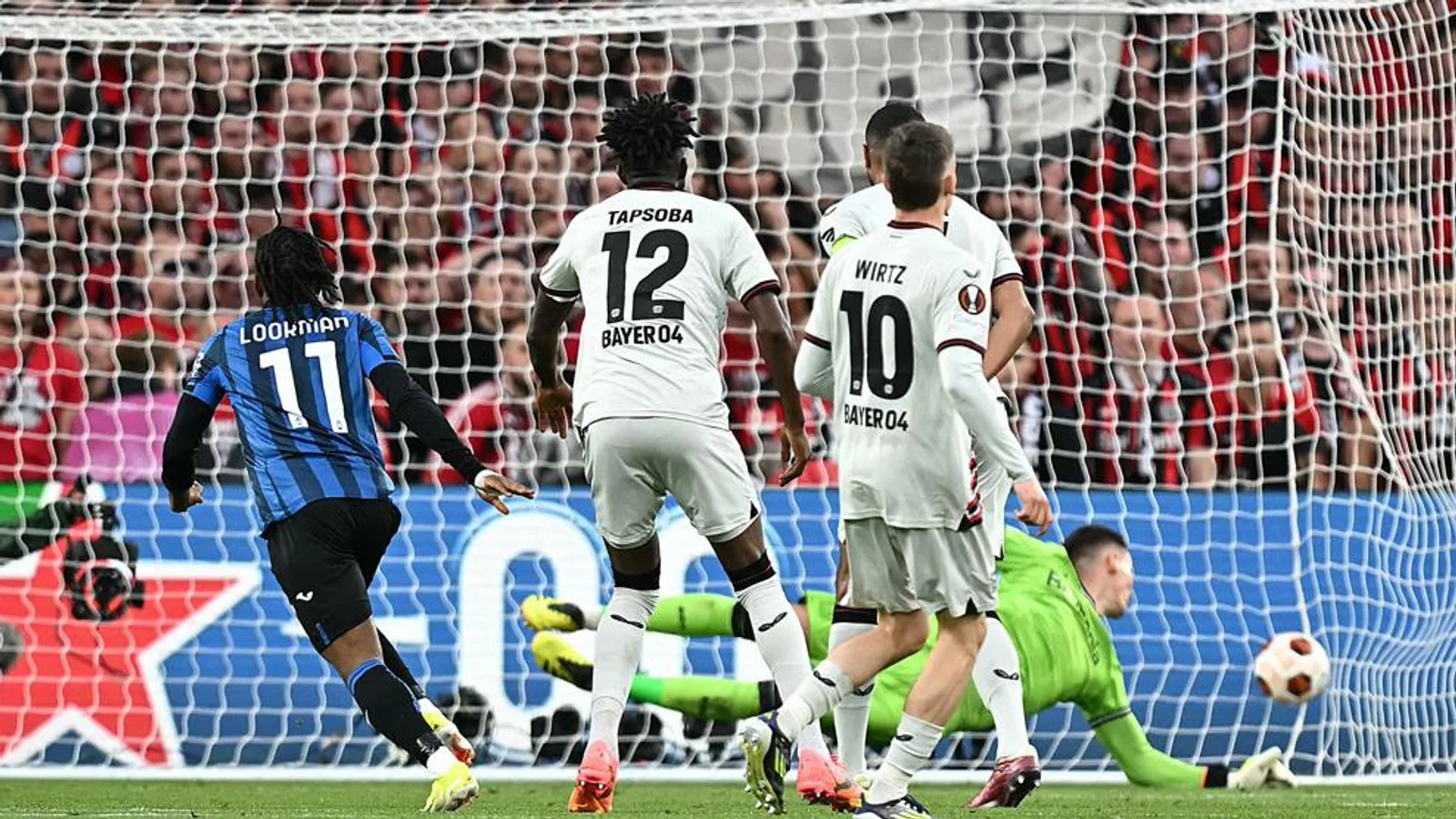
That achievement supplies the European score, while repeated high finishes and eighth place in FootballDatabase's Italian rating at the evidence cutoff support a nine-out-of-ten modern score. The current rating may change next week and is not a size ranking. Its role is simply to confirm that 2024 is connected to an ongoing competitive cycle rather than isolated museum history.
Atalanta make tenth because modern relevance is deliberately worth ten points. Reduce it to five and redistribute the difference to domestic championships, and they probably leave the list. That conditional is essential. The model does not declare Atalanta historically more decorated than Genoa or more successful in Europe across multiple seasons than Parma.
Why Genoa and Parma still have bigger single-dimension arguments
Genoa's nine championships rank fourth officially, behind only Juventus, Inter and Milan. The latest came in 1923–24, which produces the central dilemma: the honours are real, but almost all predate the single-division Serie A launched in 1929. Lega credits Genoa with 58 Serie A seasons, fewer than every club ranked sixth through tenth here. A domestic-foundation ranking would place Genoa high; a framework asking how strongly the institution connects history, national reach and current relevance produces a lower result.
It would be wrong to call those early titles easier or less valid simply because the competition looked different. They made Genoa the original giant of Italian football. The decision is about what an all-time “biggest” question should reward in 2026. Our answer requires more than the first quarter-century, so Genoa's modern and staying-power scores cannot keep pace with the title score.
Parma's case points in the opposite direction. They reached Serie A for the first time in 1990 and never won it, but UEFA documents a spectacular continental collection: the 1993 Cup Winners' Cup and Super Cup, then UEFA Cups in 1995 and 1999. The 1995 victory over Juventus completed a third consecutive European final. At the decade's end, Parma beat Marseille 3–0 in Moscow with Hernán Crespo, Paolo Vanoli and Enrico Chiesa scoring.
Twenty-nine Serie A seasons are the limiting number in this framework. Parma's European peak is more substantial than several clubs inside the ten, yet supporter reach and long-duration presence are not comparable. A ranking titled “greatest Italian teams of the 1990s” would move Parma dramatically upward. A ranking of permanent national institutions asks the club to carry the peak across more eras.
There is no embarrassment in these exclusions. Top ten is a format, not a border between big and small. Genoa and Parma are the audit test: if a list cannot explain why it excluded nine championships or four major UEFA-era trophies, its definition is probably doing hidden work. Here the work is visible, and readers are free to value a different type of greatness.
Change the question and the answer changes
Our answer—Juventus, then Inter, then Milan—is only as meaningful as the five-part question. Narrow the question and several cleaner answers appear. For domestic league success, Juventus lead with 36 official championships, followed by Inter on 21, Milan on 19 and Genoa on nine. No survey, revenue table or current result needs to enter that calculation.
For European Cup and Champions League greatness, Milan lead Italy with seven wins and eleven finals. Inter follow by victories with three, while Juventus have two wins but reached nine finals. Even that ordering depends on whether the reader values trophies, final appearances or all UEFA competitions. Parma's two UEFA Cups and Cup Winners' Cup, Atalanta's 2024 Europa League and Roma's 2022 Conference League become much more important once the question widens beyond Europe's premier competition.
For support inside Italy, the best comparable evidence used here is Bocconi/SWG's 2025 survey: Juventus 23%, Inter 16%, Milan 12%, Napoli 10% and Roma 7% among declared fans. It is a national-sample ranking, not a global count. A southern-only question changes the picture, with Napoli at 25% and Juventus 22% in that macro-region. Geography is not noise around support; it is part of how Italian support works.
For best team right now, history should mostly disappear. FootballDatabase's rating after matches on 13 September 2026 listed Inter first, Roma second and Como third in Italy, ahead of Juventus, Napoli and Milan. That is a perfectly coherent current-strength answer and a terrible all-time-size answer. Use the live Serie A standings and current teams directory when the question is changing performance, not institutional weight.
The practical way to disagree with this ranking is therefore to change a weight and follow the consequence. Make Europe 40 instead of 25 and Milan climb. Make domestic history 45 and Genoa enter the ten. Remove modern relevance and Atalanta give way; limit the period to 1990 onward and Parma surge. Those are intelligible arguments because they announce the value choice.
Facts still impose boundaries. A preferred weighting cannot turn three European Cups into seven, transform a 2025 Italian survey into a worldwide census or treat a current rating as timeless. Our Serie A winners list preserves the season record, while club title histories explain the championship paths in detail. This ranking asks a separate question: which institutions combine success, Europe, support, duration and present force most convincingly?
On that question, Juventus' domestic gulf and national reach hold first. Inter's balance and current strength take second by a narrow margin. Milan's continental supremacy keeps third extraordinarily close. Napoli and Roma form the next tier, then six through ten become sensitive to history versus the present. The order is debatable; the evidence and the definition should not be hidden.
Join the discussion
Comments
Sign in with Google to comment. Keep the conversation useful and football-focused. New comments are reviewed before they appear.
Loading comments…