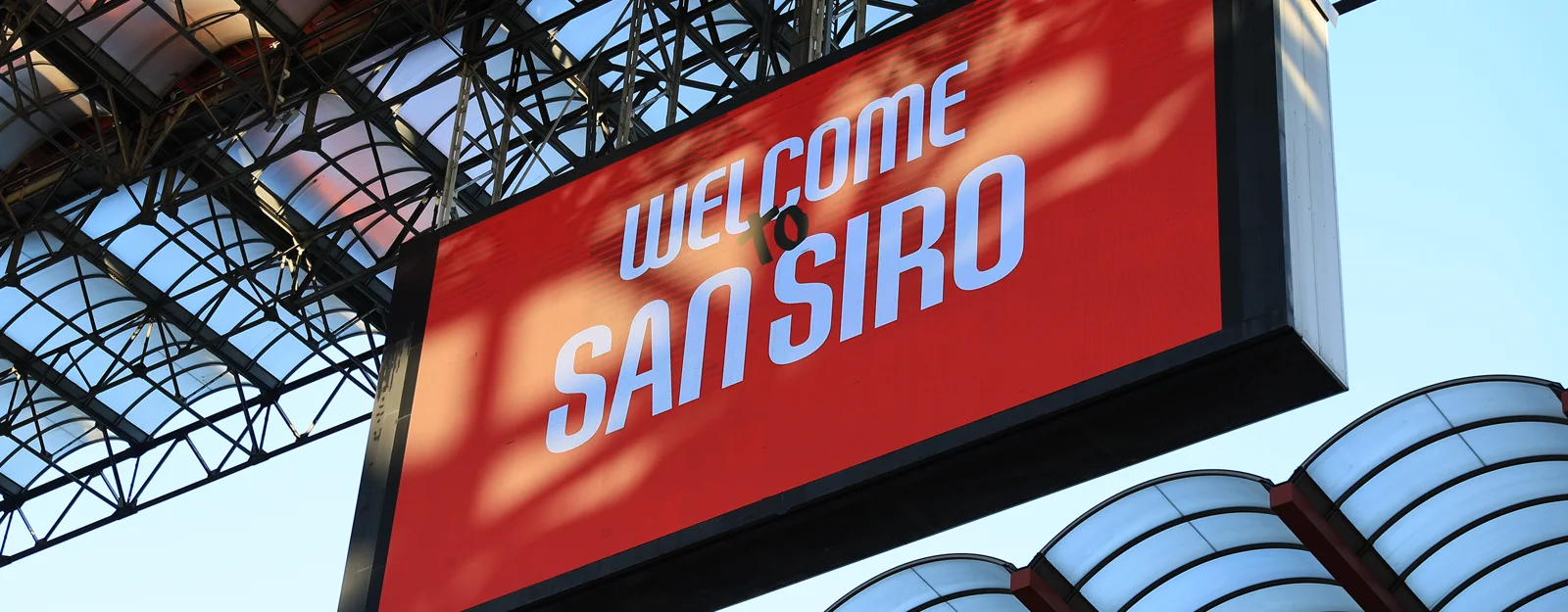
The 2026-27 Serie A map contains 20 clubs, from the crowded northern cities to Lecce and the island home of Cagliari. This guide locates every club, explains the stadium exceptions and shows what the geography adds to watching Italian football.
Reading the 2026-27 Serie A teams map
Serie A's 2026-27 field contains 20 clubs, representing 17 home cities and using 18 different stadiums. Those numbers describe different things. AC Milan and Inter represent Milan and share San Siro; Roma and Lazio represent Rome and share the Olimpico; Juventus and Torino represent Turin but play in separate grounds. A map that places one crest over another can conceal an entire club, while a stadium map can make the league look smaller than its actual membership.
The season label matters just as much as the pins. Venezia, Frosinone and Monza are the three promoted clubs identified in the league's 2026-27 introduction. They belong on this edition of the map. Older graphics containing Pisa, Cremonese or Hellas Verona describe a different top-flight season. Promotion changes more than the names on the fixture list: it moves the places where away supporters travel, creates new regional pairings and removes others.
The map below uses approximate city locations, with clubs sharing a city grouped together. Sassuolo receive an explicit distinction between the city the club represents and Reggio Emilia, where their home matches take place. These are geographical reference points, not stadium entrances. The accompanying ground list supplies the next layer of detail; a match ticket and the host club's matchday instructions supply the final one.
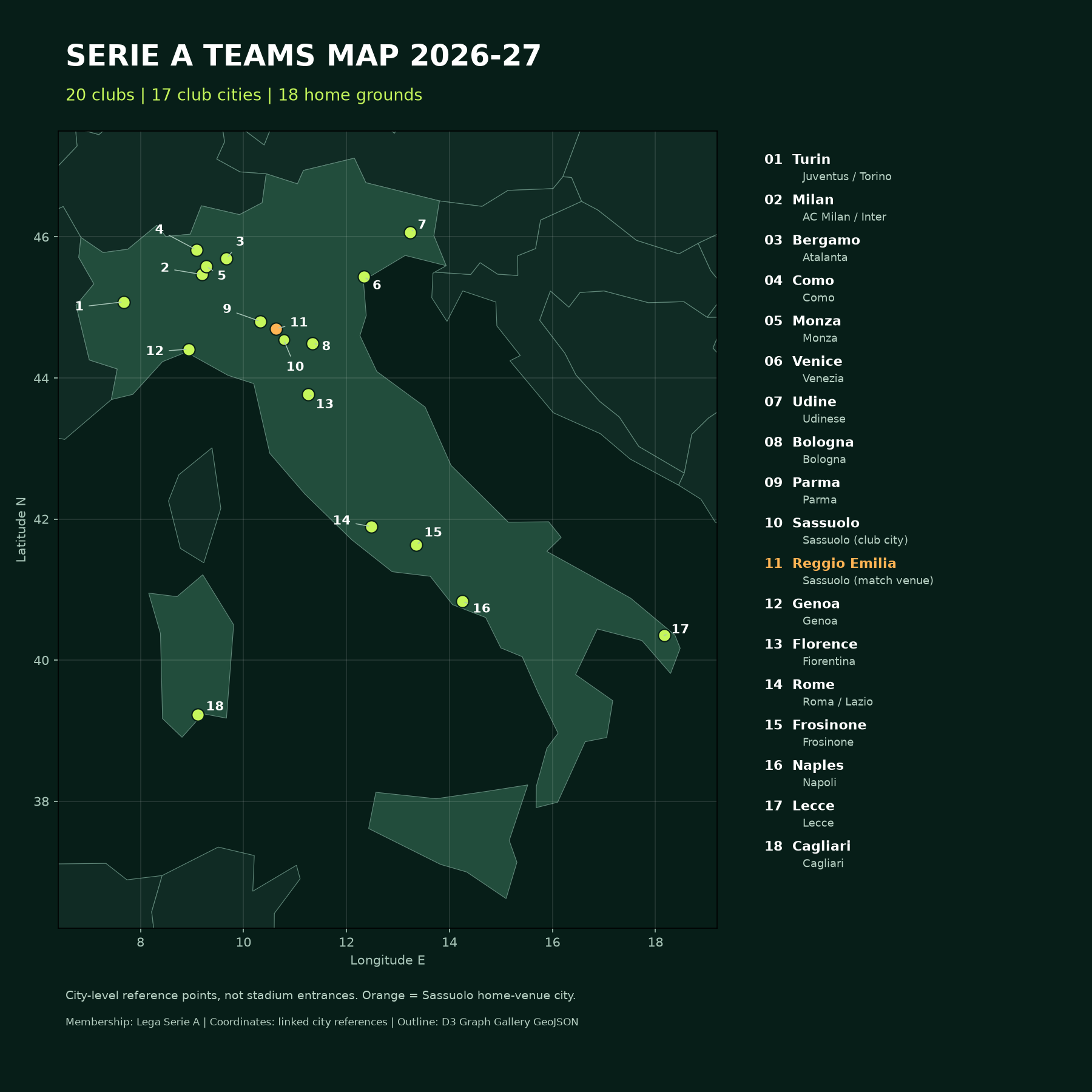
Read the concentration of markers as a picture of this season's competition, rather than a league table of Italian football culture. A region without a Serie A club has not stopped playing football. Historic teams can be in Serie B or lower divisions, and the size of a badge on a map says nothing about a club's support outside its home city. Geography explains proximity; results explain membership.
That distinction also makes the map useful for football watching. A meeting between nearby clubs may carry local context even when neither is challenging for the title. Conversely, two clubs separated by much of the country may sustain a major competitive rivalry. Start with the locations, then add the specific history of the fixture. The current team directory is the companion for squad and schedule information.
| Club | Club city | Home stadium |
|---|---|---|
| AC Milan | Milan | San Siro / Giuseppe Meazza (shared with Inter) |
| Atalanta | Bergamo | New Balance Arena |
| Bologna | Bologna | Renato Dall'Ara |
| Cagliari | Cagliari | Unipol Domus |
| Como | Como | Giuseppe Sinigaglia |
| Fiorentina | Florence | Artemio Franchi |
| Frosinone | Frosinone | Benito Stirpe |
| Genoa | Genoa | Luigi Ferraris |
| Inter | Milan | San Siro / Giuseppe Meazza (shared with AC Milan) |
| Juventus | Turin | Allianz Stadium |
| Lazio | Rome | Olimpico (shared with Roma) |
| Lecce | Lecce | Via del Mare-Ettore Giardiniero |
| Monza | Monza | Brianteo / U-Power Stadium |
| Napoli | Naples | Diego Armando Maradona |
| Parma | Parma | Ennio Tardini |
| Roma | Rome | Olimpico (shared with Lazio) |
| Sassuolo | Sassuolo | Mapei Stadium-Città del Tricolore, in Reggio Emilia |
| Torino | Turin | Olimpico Grande Torino |
| Udinese | Udine | Bluenergy Stadium / Friuli |
| Venezia | Venice | Pier Luigi Penzo |
Lombardy and Turin: the crowded north-west
Lombardy supplies a quarter of the division: AC Milan, Inter, Atalanta, Como and Monza. On a national map their markers crowd together, but calling them five interchangeable Milan-area clubs would miss the point. Bergamo, Como and Monza each have their own civic setting. The interesting feature is the compression of different football environments into a relatively small area, from the vast shared theatre of San Siro to Como's lakeside home.
Milan and Turin: two derby cities, different grounds
The clearest stadium contrast begins in Milan. San Siro and Stadio Giuseppe Meazza are two names for the same ground, not alternative venues for the city's rivals. Milan's stadium history dates its inauguration to 1926 and Inter's use to 1947-48. For the derby, the geographical distance between home and away grounds is therefore zero. The distinction lies in the supporters, club identity and match designation. That is a different experience from a derby requiring movement across a city to another stadium, even though both deserve the same local intensity.
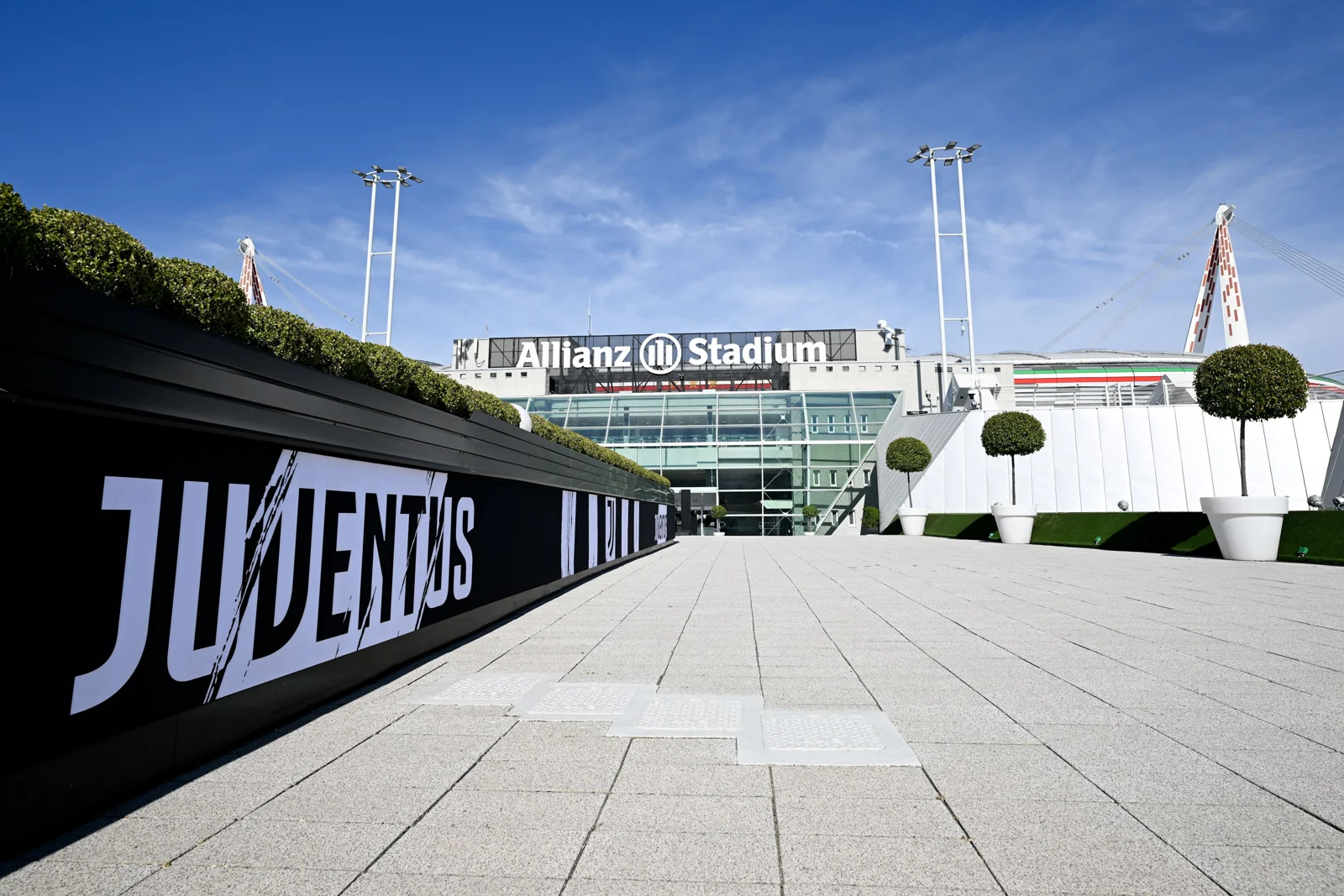
West of Lombardy, Turin provides that contrasting arrangement. Juventus play at Allianz Stadium, inaugurated in September 2011; Torino play at the Olimpico Grande Torino in the city's south. Juventus describe their ground as a purpose-built football venue with stands close to the pitch, while Torino's history connects their stadium with the 2006 Winter Olympics and an older municipal past. Two badges beside Turin therefore conceal two separate matchday destinations.
Beyond Milan: three distinct Lombardy identities
Bergamo, Como and Monza add three separate civic identities to the Lombardy cluster. Their stadium names can create unnecessary confusion. Atalanta's stadium is now the New Balance Arena; an older map may label it Gewiss Stadium. Monza's official ground page uses Brianteo and U-Power Stadium for the same venue. These changes do not mean the clubs have moved cities. Como's Sinigaglia remains beside the lake, a setting that makes the relationship between ground and city unusually visible.
For a supporter comparing weekends, this northern concentration creates options rather than guarantees. Milan might be a useful starting point for checking several nearby fixtures, but the clubs are not attractions operating interchangeable opening hours. Each match has its own kickoff, ticket release and access arrangements. The football reason to explore beyond one famous ground is stronger than simply collecting badges: each stop reveals how a local club occupies its own place within a region containing two global giants.
The north-east and Emilia-Romagna: five different settings
The eastern and Emilian clusters raise two different map-reading questions: what kind of city surrounds the ground, and whether that ground is in the club's own city.
Venice and Udine: lagoon and inland football
Venezia and Udinese pull the map eastwards, but they should not be folded into one generic northern itinerary. Udine sits inland in Friuli-Venezia Giulia; Venice occupies its distinctive lagoon setting in Veneto. The regional name Friuli-Venezia Giulia can itself confuse newcomers looking for Venezia. The football club Venezia are based in Venice, while Udinese represent Udine. Similar words in regional names do not make them clubs from the same city.
The Penzo makes this geographical distinction tangible. Venezia's official ground guide places it on Sant'Elena and describes arrival on foot or by vaporetto. This is football woven into a water city, rather than a stadium reached by following the usual road-and-car-park assumptions. The journey is part of the setting, but a picturesque approach still needs match-specific planning: the club distinguishes visiting-supporter services from general home-fan routes.
Udinese's Bluenergy Stadium offers another model, a redeveloped stadium associated with the older Friuli name. Its position near the north-eastern edge of this season's map helps explain why a supposedly all-northern away trip is not necessarily a short local journey. Milan, Turin and Udine occupy different parts of a broad northern arc. A television schedule can place their games beside each other on a screen much more easily than a traveller can combine them on the ground.
Emilia-Romagna: the Sassuolo venue exception
Turning to Emilia-Romagna shifts the question from contrasting city settings to the distinction between club identity and match venue. The region contributes Bologna, Parma and Sassuolo. Bologna's home is the Renato Dall'Ara, Parma's the Ennio Tardini. Sassuolo require the important extra line in any useful ground list: they represent Sassuolo but play at the Mapei Stadium in Reggio Emilia. The club dates that arrangement to 2013-14. A supporter who searches only for the town printed on the shirt can therefore plan the wrong final destination.
This cluster illustrates why club geography needs more than attractive markers. There is a geographical relationship between the three Emilia clubs, but home identity and home infrastructure do not always occupy exactly the same place. Sassuolo's case is especially useful because the discrepancy is real and easily explained. It is not an error to locate the club in Sassuolo; it is an error to leave a matchgoing reader unaware that the league fixture is played elsewhere.
Nor does closeness remove the need to read ticket conditions. Parma's February 2026 Bologna away notice included specific supporter restrictions. That notice is a historical example, not a rule to apply automatically to 2026-27. The wider lesson is that a regional pairing can be logistically convenient while still demanding careful attention to the designated away section and the instructions for that particular match.
Genoa, Florence and the clubs of Lazio
Moving down the map is not the same as following a single convenient transport corridor. Genoa lies on the Ligurian coast, Florence inland in Tuscany, and Rome much farther south in Lazio. Together they show how Italian club football belongs to cities whose identities extend well beyond their stadiums. For a visiting supporter, the ground is a way into the living city rather than simply another historic monument to photograph between sightseeing stops.
Genoa and Florence: read the neighbourhood as well as the city
At neighbourhood scale, Genoa and Florence show why a club label is only the starting point. Genoa play at the Luigi Ferraris, commonly associated with the Marassi neighbourhood. The name Genoa is the club's familiar English-language form; the city appears on Italian signs as Genova. Keeping both in mind makes a simple map more useful. A fixture list uses the club identity, while transport information usually uses the local place name. That same translation problem repeats with Firenze and Fiorentina, or Napoli and Naples, without implying any different destination.
Florence's Artemio Franchi is in Campo di Marte. The city's tourism service identifies Pier Luigi Nervi as its designer and dates construction to 1930-32. This gives the stadium an architectural story of its own, separate from the better-known Renaissance centre. For football fans, the important connection is how Fiorentina's home occupies a district with a sporting identity. The map should direct attention beyond a city's postcard image to where its weekly football life actually takes place.
Lazio is a region, not just a club
Farther south, Rome brings both shared-ground football and a regional naming distinction into view. Roma and Lazio use the Olimpico, which Roma's stadium guide locates in the Foro Italico to the north of the city. A pin at the Colosseum or the central railway station would locate Rome correctly at national scale while being useless for the last part of a matchday journey. This is why city markers should be read as an overview, followed by a separate ground-level check.
The regional label Lazio introduces another distinction: it is both an administrative region and part of SS Lazio's club name. Roma also belong to that region, as do Frosinone, whose return adds a third regional club to this season's division. Frosinone are their own city and football community, playing at the Benito Stirpe on Viale Olimpia. Treating them as another Rome club would flatten the very local differences that make the map worth studying.
A good geographical reading therefore works at two scales. From a distance, it reveals a run of clubs through the centre and western side of the country. Up close, it separates neighbourhood, city and region. That is also how rivalries should be approached: living in the same region establishes proximity, but the intensity and meaning of a fixture come from its particular history. A border line alone cannot manufacture a derby.
Naples, Lecce and Cagliari: distance changes the view
Three markers make the limits of a northern-cluster view especially clear: Napoli in Campania, Lecce in Puglia and Cagliari on Sardinia. They are not a single southern excursion. Naples lies on the western side of the mainland, Lecce towards the heel, and Cagliari across the sea on an island. A national map makes those differences obvious in a way that an alphabetical list of clubs cannot.
Napoli's home is the Diego Armando Maradona stadium in Fuorigrotta. The club's ground history explains its earlier San Paolo name and the December 2020 dedication to Maradona. For football readers, both names are worth recognising because older match reports naturally use San Paolo. This is continuity at the same venue, rather than a move to a different part of Naples. A historical reference and a present-day stadium listing can both be correct.
Lecce's home is the Via del Mare-Ettore Giardiniero, identified by the club as a symbol of both the city and Salento. On this season's map, Lecce extend the league into the south-eastern peninsula. That location offers a simple correction to loose talk about a southern derby: two clubs can both be southern without being neighbours. Distance, regional identity and a fixture's history all need to be considered before assigning it a local label.
Cagliari introduce a different logistical question because their home is on Sardinia. The club's Unipol Domus guide describes the stadium and approaches within the island. Getting to the island is a separate stage from reaching the ground. For a supporter planning several games, a line drawn across the sea represents a mode change, departure schedule and arrival buffer, rather than a continuation of the same road trip.
None of this proves that distance decides a match. A map cannot tell us how a team travelled, how many recovery hours its players had, or whether a particular performance suffered because of the journey. Those are questions for match preparation and performance evidence. The geographical insight is narrower but still valuable: the distribution of clubs creates very different away-day tasks for supporters, and those tasks should be understood before fitting fixtures into an ambitious weekend.
The empty space is informative too. Sicily has no club in this 2026-27 field, but that is a statement about the current division, not the island's football significance. The same applies to other absent regions. Promotion and relegation redraw the top-flight map each year. For a fan learning Italian football, noticing who is absent can be the beginning of a historical question; it should never become a shortcut for deciding where the country's football culture does or does not exist.
Turning the map into a match weekend
The strongest starting point is one match you genuinely want to see. Identify its host city and actual stadium, then look for another fixture that complements it geographically and chronologically. This keeps the football at the centre of the plan. Choosing five nearby badges first and hoping the schedule will cooperate is a much less reliable use of the same map.
Confirm the fixture before joining the dots
Once the anchor match is chosen, separate two calendar questions. First, who plays whom in that round? Second, on which date and at what time will the match actually be played? The league's opening 2026-27 television schedule spread the first round across Saturday, Sunday and Monday. It also flagged the possibility of selected later changes around European commitments. A round number or a provisional Sunday listing is not enough to promise an evening return journey.
Use the fixture-confirmation guide to understand that distinction, then compare the week's actual fixtures. For two games on different days, ask where you will sleep between them and how early you can realistically reach the next ground. For two games on the same day, include the end of the first match, crowd dispersal, the journey and entry to the second. A short line on a national map cannot answer those questions.
Check the ground-level arrival
With the dates established, change scale from the national map to the club's own ground instructions. Monza's access page advises arriving early and gives information about the parking arrangements near its stadium. Venezia's guide separates general approaches from visiting-supporter transport. These are examples of why the last mile deserves its own check. The appropriate entrance or approach can depend on your section, even when everyone is attending the same fixture.
Finally, keep the map's two meanings separate. For understanding the league, city locations reveal regional clusters, island representation and the difference between shared-city and shared-ground clubs. For attending a match, the ground name and current club instructions take over. Neither layer replaces the other: national geography helps choose a coherent journey, while local information makes the arrival work.
The reward is more than an efficient itinerary. Seeing Serie A through its places gives context to names that otherwise pass quickly through a table: Bergamo beside the Lombardy giants, Frosinone beyond Rome, Sassuolo's home fixtures in Reggio Emilia, Cagliari across the sea. The map is most useful when it turns a familiar badge into a specific football community, and a match on the calendar into an occasion whose setting you understand.
Join the discussion
Comments
Sign in with Google to comment. Keep the conversation useful and football-focused. New comments are reviewed before they appear.
Loading comments…