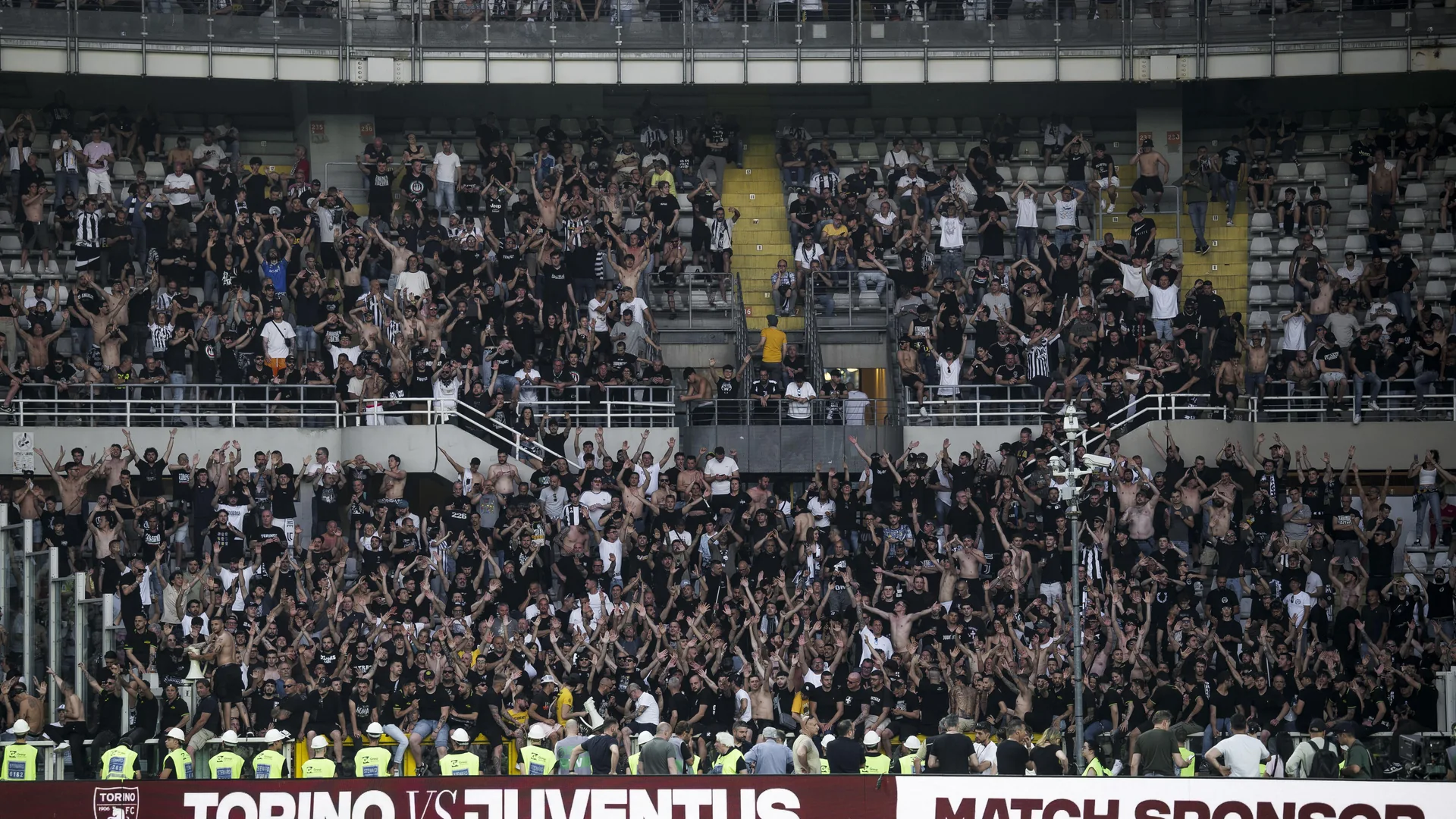
Serie A away fan bans in 2026-27 are not one league-wide rule. Juventus and Torino entered the season under a national order covering the opening ten matchdays. Separate single-match controls affected travelling support connected with Fiorentina, Genoa, Roma, Napoli and Monza. Each measure had its own authority, dates, geographic test and ticket scope.
The trigger was public-order risk, often connected to serious violence in or around earlier matches. Yet a headline saying “fans banned” can obscure the operative detail: an away sector may close, sales may be blocked for residents of a region or metropolitan area, or named domestic trips may be restricted while another competition or shared-stadium game is excluded. An individual DASPO is a different instrument again.
This guide tracks confirmed cases, explains who imposes restrictions, and separates Italy's orders from the European football initiative urging collective bans to be exceptional and proportionate. It is current through . Always verify the host club's latest official ticket notice before paying for travel.
Which away restrictions have affected Serie A in 2026-27?
Juventus and Torino entered 2026-27 under an Interior Ministry restriction covering away fixtures in the first 10 matchdays. Separate match-specific measures affected Fiorentina, Genoa, Roma, Napoli and Monza followings in the first four rounds. These were not copies of one league punishment: they differed by authority, duration, residence test, loyalty-card condition and whether the away section closed.
| Following / fixture | Authority | Reported scope | Status at cutoff |
|---|---|---|---|
| Juventus and Torino away fixtures | Italian Interior Ministry | Opening 10 matchdays, through November 3; away sectors closed, with fixture-level resident sales controls | Ongoing |
| Roma–Fiorentina, August 24 | Prefect of Rome, after CASMS evidence | No sales to Florence-province residents; away sector only for Fiorentina loyalty members resident elsewhere | Applied; match completed |
| Lazio–Genoa, August 30 | Prefect of Rome, after CASMS evidence | No sales to residents of Liguria | Applied; match completed |
| Lecce–Roma, August 31 | Prefect of Lecce | No purchases by Lazio-region residents; away section completely closed | Applied; match completed |
| Inter–Napoli, September 5 | Prefect of Milan, after CASMS determination | Campania and Genoa-province resident controls with dated Inter-card exceptions; Napoli card required for away sector | Applied; match completed |
| Lecce–Monza, September 13 | Prefect of Lecce | Lombardy residents limited to away sector, Monza card required, 200-ticket cap; tickets non-transferable | Applied; match completed |
| Torino–Roma, September 14 | Prefect of Turin, in line with CASMS | Rome metropolitan-city residents barred; away sector limited to Roma loyalty members resident in other provinces; tickets non-transferable | Applied; announced challenge did not change access |
The table is a dated operational summary, not a declaration that every person who supports those clubs was legally forbidden to travel. The Juventus and Torino order is often called a “10-match away ban,” but reports describe the first 10 league matchdays, not 10 road games for each club. Juventus had five away fixtures within that span. Ticket controls can also extend beyond the named away end through residence-based sales rules.
The official single-match orders reveal how wide the phrase “away fan ban” has become. Roma–Fiorentina paired a Florence-province sales ban with an away-sector loyalty requirement. Lazio–Genoa barred sales to Liguria residents. Neither order says every Fiorentina or Genoa supporter everywhere was personally banned.
The Inter–Napoli notice was more layered: it combined residence restrictions, exceptions for Inter cards bought before specified dates, and a separate Napoli-card condition for the away sector. Lecce–Monza was a capacity and channel restriction rather than a total closure: eligible Lombardy residents could use a 200-place away allocation with a Monza card.
Roma's cases differ from each other too. Lecce's prefectural order combined a purchase ban for Lazio-region residents with complete away-sector closure. For Torino, the Prefect of Turin barred Rome metropolitan-city residents and limited the away sector to Roma loyalty members from other provinces. The club's fuller sales implementation also restricted general stadium sectors for Lazio residents. Eligibility therefore depended on both residence and sector.
Only the Juventus–Torino measure remained open within this article's September 15 snapshot, and even it had a published November endpoint. Every single-match row had already been applied. Listing the completed measures remains useful because a headline can otherwise blur a one-night restriction into a season-long blanket prohibition.
Earlier calendar-year sanctions against Roma, Fiorentina and Inter are discussed below as previous-season context, not inserted into the 2026-27 table. Their expiry is as important as their imposition. A current guide becomes misleading if it keeps a completed four-month or three-match measure alive indefinitely.
Finally, this official-source snapshot is not guaranteed to capture a notice published after the cutoff. Italian public-order decisions can arrive close to kickoff, and a later prefectural act can narrow sales by province, region, loyalty-card status or sector. Use this overview to understand the documented cases; use the host club's final ticket notice to decide whether you personally can buy and enter.
Why Juventus and Torino received ten-matchday bans
Juventus and Torino began the season with the broadest continuing restriction in Serie A. The Interior Ministry's directive was a consequence of violence before the previous campaign's final Turin derby, and it carried across the summer. Its headline duration is simple; its operation is more precise than “all fans banned for 10 away games.”
The May derby violence behind the order
Torino hosted Juventus at Stadio Olimpico Grande Torino on May 24, 2026, with the Derby della Mole forming part of Serie A's simultaneous final round. Supporters clashed around the stadium before kickoff. One Juventus supporter was hospitalized in critical condition and later underwent surgery; contemporary reports said eight Juventus ultras were arrested.
The violence affected the sporting event immediately. Football Italia reported that Juventus ultras instructed the players not to take the field. The kickoff was significantly delayed, with other matches held back because the final-day schedule had been synchronized for competitive fairness. The derby eventually went ahead and finished 2-2, but the disorder and injury remained the defining public-order issue.
That distinction prevents two common errors. First, the punishment did not arise from something that happened during the opening weeks of 2026-27; it was the delayed consequence of the May incident in 2025-26. Second, the reported arrest count referred to Juventus ultras. It should not be doubled or reassigned to Torino supporters merely because the later collective order covered both clubs.
The Interior Ministry chose a forward-looking travel/ticket response rather than leaving the matter only to criminal cases against identified people. Gazzetta described the directive as applying to both the Granata and Bianconeri followings after violence involving the two sides. That collective reach is exactly what made the measure a test case in the later European debate about proportionality.
Ten matchdays and a November endpoint
Gazzetta's account of the ministry directive fixes the window at the first 10 matchdays of 2026-27, ending November 3. Away sectors are closed when either Turin club plays on the road. Host-province prefects implement the directive for each fixture, so the national decision is translated into local ticket instructions.
The resident rules are not identical. For Torino away matches, Gazzetta reports a sales prohibition covering residents of Piedmont. For Juventus trips, the restriction covers residents of Piedmont and Lombardy. That wider Juventus footprint matters because a ticket buyer may support neither club yet still meet the residence test, while a Juventus supporter living outside those regions may not be captured by that particular sales condition. The host notice, identity requirements and sector rules remain decisive.
“Ten-matchday ban” also describes time, not 10 trips. The Juventus schedule breakdown identifies five Bianconeri away games inside the window: Frosinone in Matchday 1, Sassuolo in Matchday 4, Cagliari in Matchday 6, Lecce in Matchday 8 and Genoa in Matchday 9. Home rounds count toward the November endpoint even though there is no Juventus away section to close in Turin.
The same principle applies to Torino, but supporters should not copy Juventus's five destinations and assume they describe the Granata schedule. Each club has its own home-away sequence, and each host prefecture publishes operational sales conditions. The shared facts are the 10-round window, November 3 endpoint and closed away-support sectors.
Summer friendlies exposed one remaining uncertainty. Gazzetta said it was unclear at publication whether the directive also covered away friendlies. This guide does not expand a clearly reported Serie A matchday order into every fixture carrying a Turin club's name. Competition, date, host authority and ticket notice all matter.
For travelling supporters, the practical takeaway is narrower than the headline: normal organized away support for Juventus and Torino is removed through the opening 10 league rounds, with additional residence-based sales controls implemented locally. For readers judging the policy, the important question is whether a broad preventive sanction after grave violence is sufficiently targeted—a question the September European initiative directly addresses but does not answer as Italian law.
Why Roma faced match-by-match restrictions
Roma's opening away problems were not a new four-month ban covering the whole season. They were separate public-order decisions for Lecce and Torino, with different residence tests. Reading them as one continuous punishment would hide both the authority behind each match and the supporters who remained legally able to buy.
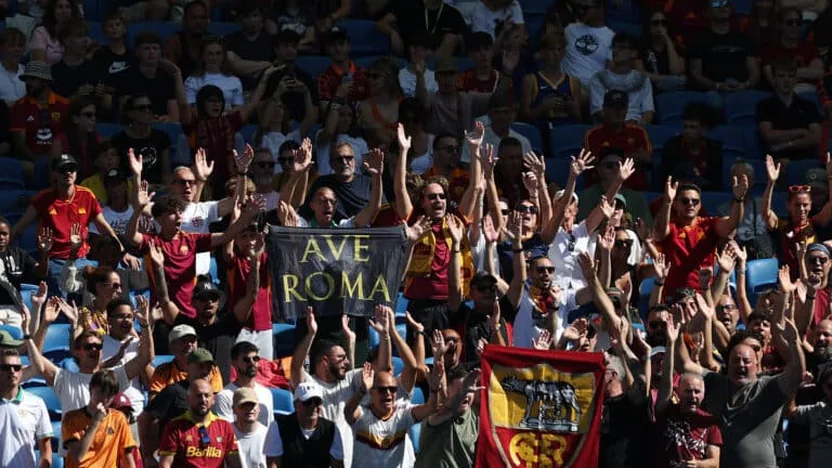
Lecce: Lazio-region ticket ban and a closed away end
On August 25, Lecce prefect Natalino Manno signed an ordinance for Roma's first road fixture of the league season. The prefecture's official notice records two simultaneous controls: nobody resident in the Lazio region could purchase a ticket, and the Stadio Via del Mare's away section was closed completely.
Those layers overlap but are not identical. Closing the settore ospiti removes the designated visiting enclosure regardless of where a buyer lives. A regional sales ban extends the restriction to other sectors for buyers whose identity document shows a Lazio-region residence. A Roma supporter from Tuscany, another country or elsewhere in Italy does not meet that particular residence condition, but cannot assume a general-admission purchase is permitted; host-club terms, loyalty requirements and named sector closures still apply.
The ordinance did not follow a newly reported clash at Lecce. Coverage placed it against the security background of Roma's previous away restrictions after January's motorway violence. That distinction matters. A risk assessment may consider a following's recent history without alleging that supporters committed a fresh offence in the destination city.
Lecce–Roma was played on August 31 and ended 0-4. The result closes the status line: this was a restriction applied to a completed match, not a ban still awaiting enforcement in mid-September. It also provides no simple verdict on sporting effect. Roma won emphatically without a normal away end, but one score cannot prove travelling support is irrelevant any more than a defeat would prove the opposite.
Torino: a Rome metropolitan-area restriction and an unfinished urgent challenge
The next case narrowed one part of the geography but added a card requirement. For the September 14 Torino–Roma match, the Interior Ministry's notice says Turin prefect Donato Cafagna acted in line with CASMS determinations. Residents of the Metropolitan City of Rome could not buy, while the away section was available only to AS Roma loyalty-program members resident in other provinces. Tickets were non-transferable.
Roma's official sales instructions make the implementation clearer. Lazio-region residents could not buy in the general stadium sectors. The away-sector exception required a Roma Fidelity Card and excluded Rome-province residents; cardholders in Lazio's other provinces could use that sector. A supporter outside Lazio was not caught by the regional general-sector condition, but still had to meet the host's inventory and sector terms.
Roma announced a challenge. Reporting before the match said the club could not complete the urgent route in time to alter access, so the restriction stood on matchday. That is a procedural outcome, not a judicial ruling that every argument against the measure failed on its merits. Torino–Roma went ahead on September 14 under the published conditions.
Roma's two trips consequently demonstrate why supporters should read every operative noun. “Lazio region” and “Metropolitan City of Rome” are not synonyms. “Away section closed” and “away section open only to qualifying cardholders” are not the same mechanism. “Club plans an appeal” does not mean the restriction has been suspended. The ticket office applies the condition that exists at purchase and entry, not the broadest newspaper headline.
Both matches were complete by the September 15 cutoff. They belong in a 2026-27 record because they affected this season, but they should not be displayed as a continuing ban on Roma's next unspecified away fixture. A new restriction would require a new decision or notice.
The earlier 2026 bans that shaped the debate
The collective-ban argument did not begin with 2026-27. Two major cases from the second half of the previous season—Roma and Fiorentina after a motorway clash, then Inter after a flare was thrown—established the language, geographic tools and legal tensions now surrounding new restrictions. Both cases are finished. Their value here is precedent, not current travel advice.
On January 18, groups travelling in opposite directions met on the A1 motorway: Roma supporters were heading toward Torino and Fiorentina supporters toward Bologna. Reports described a running battle involving hundreds in the emergency lane. Two days later, ANSA reported an Interior Ministry order barring both followings from domestic away travel through the end of 2025-26. The ministry also cited serious precedents in Italy and abroad.
Roma supporter organizations challenged that measure. In March, the Council of State refused their appeal, accepting that public-order prevention fell within administrative discretion and outweighed the interest in attending matches in the circumstances. The ruling referred not only to January 18 but also to other incidents, including alleged attacks on businesses during earlier travel. That broader reasoning helps explain why a court could uphold a collective season-end restriction even though any criminal responsibility still belonged to individuals.
The order ended with the season. Saying Roma and Fiorentina remain under the same four-month ban in September would be wrong. However, RomaPress explicitly placed the later Lecce ordinance against that recent security history. An expired measure can influence a new risk assessment without legally continuing.
Inter's case was shorter and more precisely enumerated. During a 2-0 victory at Cremonese, a flare landed beside goalkeeper Emil Audero in the 49th minute and appeared to explode. Play stopped for medical checks; Audero was not seriously hurt and completed the game. The Interior Ministry then prohibited Inter away support until March 23 and barred Lombardy residents from buying tickets for three Serie A trips: Sassuolo on February 8, Lecce on February 21 and Fiorentina on March 22.
The exemptions are as informative as the ban. Inter's Champions League visit to Bodø/Glimt was outside the measure. The March 8 Milan derby also remained open to Inter supporters even though the fixture listed them as the away team, because both clubs share San Siro and the match required no away travel. “Away” in a fixture database and “away travel” in a security order were not treated as identical.
Authorities reportedly identified the suspected flare thrower, and further legal action was possible. Inter also received a €50,000 sporting fine. Those parallel tracks matter: an identified individual can face investigation, a club can face competition discipline, and a wider group can lose travel access at the same time. One does not automatically replace the others.
These completed cases sharpen both sides of the policy dispute. Authorities point to a dangerous motorway confrontation and an explosive projectile near a player as reasons preventive action cannot wait. Supporter advocates ask why thousands with no role in either incident lose access when suspects may be identifiable. A useful 2026-27 guide preserves that debate while keeping the calendar honest: neither the Roma/Fiorentina order nor Inter's three-match ban was active on September 15.
Who can impose a fan ban—and what the wording means
Serie A does not press one red button labelled “away ban.” Public-order authorities assess risk, national or local measures set a framework, and host-side ticketing turns that framework into sales and entry conditions. Sporting bodies may separately fine a club. Police and courts may separately deal with individuals. Reading the decision-maker and operative wording is the only reliable way to know what a headline means.
Interior Ministry, prefectures and security bodies
Italy's Interior Ministry sits at the centre of the broad 2026 orders covered here. It announced or was reported as ordering the season-end Roma/Fiorentina restriction, Inter's three domestic trips and the 10-matchday Juventus/Torino window. Those are public-order measures, not points deductions or closed-doors sanctions handed down from the Serie A standings.
CASMS supplies an important analytical link. The official decree establishing the committee gives its full name as the Committee for Analysis of the Safety of Sports Events and places it inside the Department of Public Security. Its inter-force membership evaluates significant information about sports violence, especially high-risk fixtures and violent supporter elements, so the department can adopt measures and direct useful information to provincial authorities.
That role is not the same as being a league appeals panel. The decree also distinguishes CASMS's information and technical-operational coordination from the National Observatory on Sports Events. In public reporting, the acronyms may sit beside one another and beside the Interior Ministry. A careful article should identify which body assessed or recommended and which authority's act created the ticket restriction, rather than credit everything to “Serie A.”
Prefects provide the local layer. Lecce prefect Natalino Manno signed the ordinance governing Lecce–Roma. Gazzetta says prefects in the provinces hosting Juventus and Torino away fixtures implement the national directive case by case. This arrangement explains why operational details can arrive in a host-city notice close to the match even when the broad policy was announced months earlier.
Collective restrictions are not individual banning orders
A collective restriction controls access by category: a club's away section may close, residents of a region may be unable to purchase, or an organized following may be prohibited from travelling. It can affect a person who committed no offence and may miss a supporter who lives outside the named area. Its purpose is preventive public order, not an individualized declaration of guilt.
A person-specific stadium banning order is different. The Italian acronym DASPO refers to a prohibition on access to sporting events issued against an individual under the relevant process. State Police examples describe a Questore imposing different-duration orders on identified people for conduct such as unlawful entry, assault or lighting pyrotechnics. The subject, factual basis and consequences are individual rather than a blanket ticket category.
The Inter flare case shows how several tracks can coexist. The Interior Ministry restricted three trips and sales to Lombardy residents. Media reported that the suspected thrower had been identified and could face further legal action. Inter also received a €50,000 sporting fine. The collective following, suspected individual and club were not one legal subject, even though all consequences arose from the same 49th-minute incident.
This distinction does not settle the fairness debate. Authorities may argue a broad restriction is necessary to prevent immediate recurrence or rival contact. Supporter groups may argue identified offenders should bear the consequence instead of thousands. It does prevent a factual mistake: somebody blocked from one ticket because of residence has not thereby received a personal DASPO or criminal conviction.
Residence, ticket sales and away sections create different scopes
Residence rules are administratively convenient because identity documents can be checked in the purchase and entry process. They are also blunt. A Piedmont resident may support Napoli; a Juventus supporter may live in Sicily. When a notice says no sales to residents of Piedmont and Lombardy for a Juventus trip, geography is the operative test even though the security concern concerns a following.
Away-section closure answers a different question: which part of the ground can open. Lecce combined a closed away enclosure with a Lazio-region purchase ban, closing both the obvious destination and a geographic route into other inventory. Torino–Roma reportedly used Rome province rather than the whole region. A person eligible under the residence clause still needs a ticket category the host has actually placed on sale.
Competition and venue matter too. Inter's ministry measure named three domestic trips, excluded the Champions League journey to Bodø/Glimt and allowed supporters at a nominally away Milan derby because no travel from their shared San Siro was involved. A schedule's “home” and “away” columns are essential football labels; they do not automatically reproduce the language of a public-order directive.
Other ticket terms may sit on top: supporter cards, sales windows, ID matching, transferability rules and sector-specific conditions. That is why a news story can explain a decision but cannot function as your admission document. The host club's latest official sales notice and the relevant authority's order determine eligibility.
This guide explains the operational categories, not an individual's appeal rights. If a notice is unclear or a purchase has been refused, seek confirmation from the host ticket office or the named authority. Do not rely on a social-media graphic that shortens “no sales to residents of one province” into “all fans banned.”
What Europe's anti-blanket-ban initiative changes
A continental policy shift arrived while Italy was still using collective restrictions. On 3 September 2026, four major football stakeholders published a shared position designed to make whole-group bans exceptional, more transparent and more tightly justified. It changes the standard against which decisions can be debated. It does not, by itself, erase an Italian order.
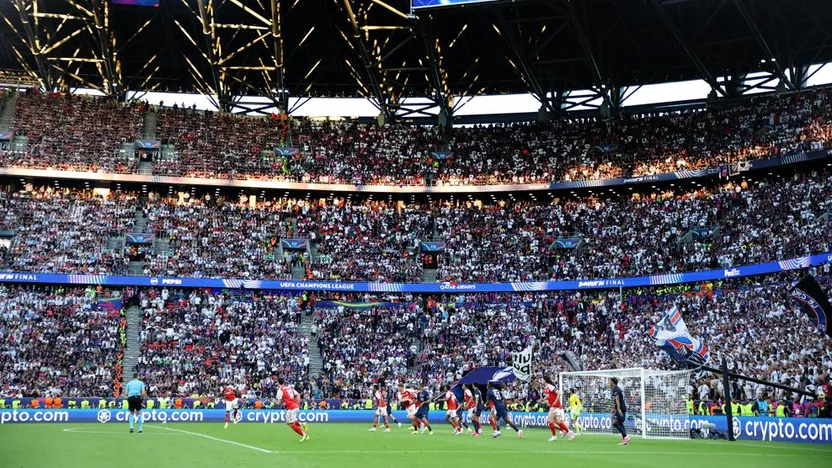
What football bodies agreed in Madrid
UEFA's official statement followed a Safety and Security Conference held in Madrid on 1–2 September. UEFA, European Football Clubs, Football Supporters Europe and European Leagues took part, alongside a conference audience the statement put at more than 500 representatives from football, supporter groups, police, governments and international organisations. The four stakeholder bodies endorsed the Council of Europe's Saint-Denis Committee Recommendation Rec(2025)1 and adopted a joint position on 3 September.
The position starts with individual accountability. Measures against violence or disorder should focus on the people responsible instead of treating an entire following as one offender. That principle connects directly to the distinction in the previous section: identify and sanction an individual where the evidence permits, rather than automatically using place of residence as a substitute for conduct.
It does not demand that authorities ignore a grave risk. Collective bans remain available in exceptional circumstances, but the statement says the evidence should be clear, objective, documented and current. Decision-makers should be able to show that a less restrictive measure cannot control the serious public-order problem and that the response is necessary and proportionate.
Three process principles complete the package. Authorities, organisers, clubs and supporter organisations should share information and be meaningfully consulted. Decisions should be communicated early and clearly enough for supporters to change plans and, where the legal framework allows, seek redress. Reasons should emerge from a fair, transparent and evidence-based process. These details matter to a traveller: a late or vague notice can cause a financial loss even if the supporter never approaches the stadium.
The matching Football Supporters Europe version also stresses the cultural and operational value of away crowds. Its case is not simply that travelling support improves noise. Away allocation, transport, policing, supporter liaison and host operations all work better when the relevant groups receive a clear risk assessment and enough time to plan.
Why this is not a new Italian law
The word “agreed” needs a boundary. The Madrid document is a joint statement by football stakeholder organisations endorsing a Council of Europe committee recommendation. It is not an act of the Italian parliament, a new Interior Ministry decree or a UEFA competition regulation that automatically overrides national public-order measures.
Nor does it say that every collective restriction is illegitimate. The exceptional-circumstances test expressly contemplates one when serious risk is documented and no narrower option works. That is more demanding than a routine, unexplained ban, but it is not an absolute prohibition.
For the 2026-27 Serie A cases, the immediate legal and practical question therefore remains the wording of the Italian measure and the host's ticket notice. A club or supporter group can cite the Madrid principles when asking for evidence, proportionality, consultation, early notice or review. Only the competent authority or a successful legal process can amend or disapply the operative Italian decision.
The initiative still matters. It gives leagues, clubs and supporter representatives a common European baseline against which they can assess broad measures, and it puts senior football institutions behind alternatives that target individuals. Its real test will be observable practice: earlier decisions, narrower geographic or sector restrictions where sufficient, reasons that the public can understand, and a workable path to challenge an error. Until those changes appear in a specific order, supporters should treat the statement as a policy commitment—not as permission to buy or enter.
How to check an away trip before buying tickets
An away restriction can arrive after the fixture is drawn and before the gates open. Treat schedule confirmation and admission eligibility as two separate checks. The first tells you when and where the game happens. The second tells you whether the ticket can legally be sold to you and which sector you may enter.
- Lock down the match details. Find the opponent, venue and current kickoff status on the Serie A fixtures this week page. Then use the fixture-confirmation tracker to see whether the exact day and time are final. A numbered matchday is not a travel guarantee.
- Open the host club's official sales notice. Search the ticket page for the away sector—usually settore ospiti—and read every condition, not just the availability badge. Note the sales deadline, named sales channel, ID requirement, supporter-card rule, transferability and entry instructions.
- Identify the operative restriction. Look for the issuing authority, decision date, match or date range and the club notice that implements it. A report that “Roma fans are banned” may actually mean no sales to residents of one province for one match. A ten-matchday order may cover a defined opening window without creating ten separate away fixtures.
- Test each condition against your circumstances. Residence, sector, supporter-card status, venue and competition can produce different answers. Do not assume nationality is relevant unless the notice actually says so. Do not assume living outside a named region makes every ticket category available. Eligibility under one clause is not inventory.
- Recheck before spending money you cannot recover. Read the official sources again before booking non-refundable transport and shortly before departure. Appeals can fail, measures can be narrowed, sales windows can close, and an initially provisional kickoff can move. The site's calendar tools help track schedule updates; they do not certify ticket eligibility.
- Keep records and ask the host when wording is unclear. Save the sales terms, receipt and the identification or supporter-card evidence the notice requires. Ask the host ticket office for a written answer if two official pages conflict. A reseller, social post or general news article cannot waive a public-order condition.
Never try to work around an away-sector closure by purchasing a home-sector ticket contrary to the notice. Besides possible refusal at sale or entry, mixing rival groups can create the safety problem the restriction is intended to manage. Follow the published sector and identity rules even if an unofficial marketplace will accept payment.
This tracker is current through 15 September 2026. It is a dated explanation of reported measures, not a permanent blacklist of clubs or supporters. Before every journey, start the checks again from the current fixture and current host notice.
Join the discussion
Comments
Sign in with Google to comment. Keep the conversation useful and football-focused. New comments are reviewed before they appear.
Loading comments…