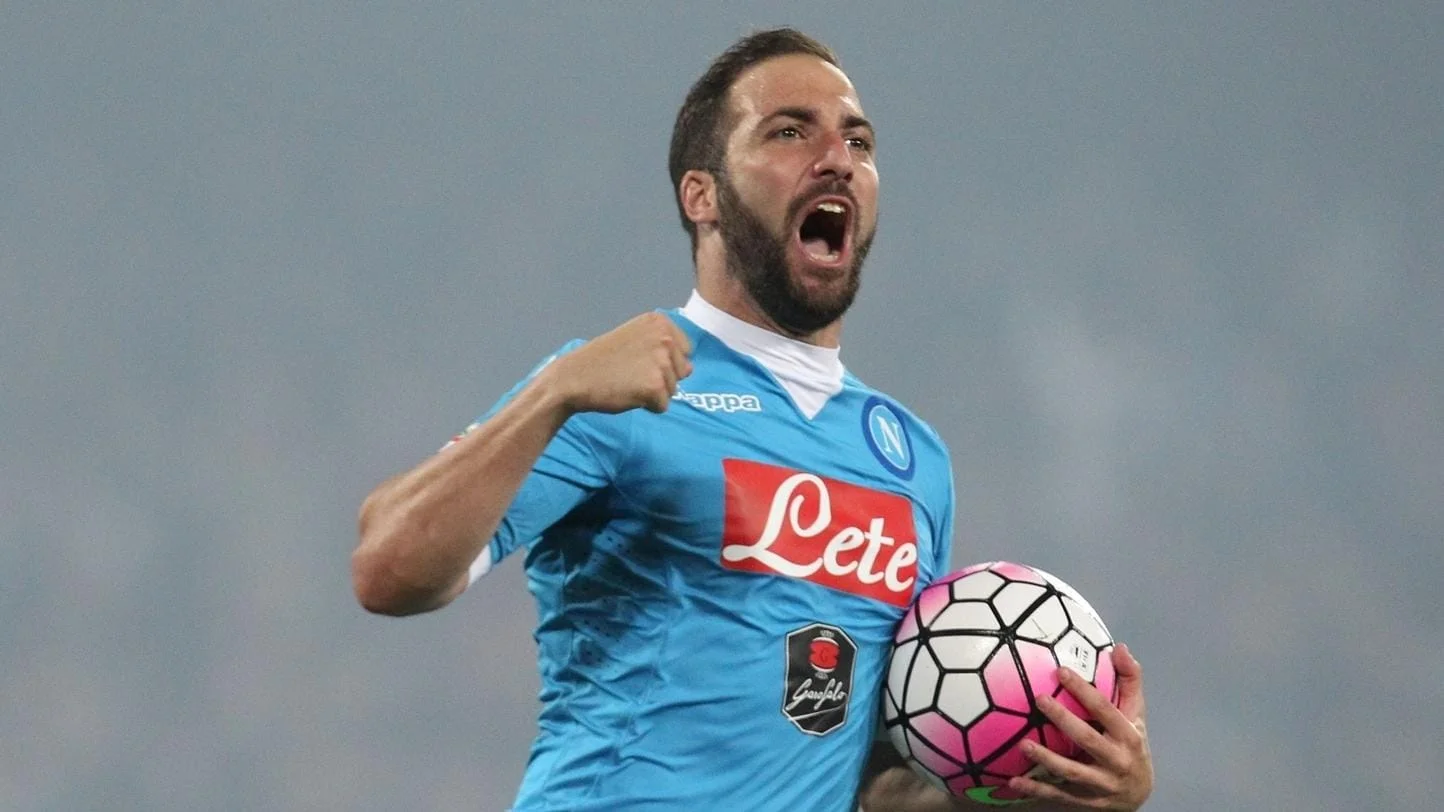
The most goals scored by one player in a single Serie A season is 36, shared by Gonzalo Higuain and Ciro Immobile. Their campaigns broke and matched a benchmark Gunnar Nordahl had held for decades. The answer becomes more interesting when the final matches, earlier championship formats and the difference between individual scoring and team success are placed alongside the number.
Who holds the Serie A single-season scoring record?
Gonzalo Higuain and Ciro Immobile share the Serie A record with 36 league goals in one season. Higuain reached that total for Napoli in 2015-16; Immobile matched it for Lazio in 2019-20. The Guinness World Records entry names both players. The relevant competition is the single-group Serie A championship, rather than every form of the Italian championship played before that structure began.
“League goals” is an essential qualification. Goals in the Coppa Italia, European competitions or internationals do not belong in this total. Neither do goals from the previous or following campaign, even when matches take place in the same calendar year. A search for “most goals in 2020” can therefore produce an answer to a different question from “most goals in the 2019-20 Serie A season”. The season label is the proper unit for this record.
| Player | Club | Season | League goals |
|---|---|---|---|
| Gonzalo Higuain | Napoli | 2015-16 | 36 |
| Ciro Immobile | Lazio | 2019-20 | 36 |
| Gunnar Nordahl | AC Milan | 1949-50 | 35 |
This is a table of the record's defining landmarks, not an exhaustive list of every great scoring season. Nordahl is included because his 35 was the benchmark that Higuain finally exceeded. A list of annual leading scorers would answer who finished first each season; this comparison asks how high an individual total has reached across seasons. A player can win the capocannoniere award with a much smaller tally and still have been the best scorer in that particular championship.
The shared figure also should not be turned into a claim that the two campaigns were identical. Availability, penalties, service from teammates and the timing of the schedule shaped each route to 36. Those factors help explain the performances, while the official league-goal total remains the basis for the record. Adjusting the number to suit a preferred comparison creates a different statistic; it does not change who jointly holds this one.
The useful next step is to look at how the number was achieved. Higuain's final match transformed a pursuit of an old record into a new benchmark. Immobile later showed that the benchmark could be reached again under a very different calendar. Nordahl's long-standing total supplies the historical scale that makes both modern campaigns remarkable.
Higuain in 2015-16: the finish that changed the record
Higuain entered the final league fixture with 33 goals. That placed him close enough to Gunnar Nordahl's 35 for the record to become part of the match's immediate drama. He needed two to draw level and three to move beyond it. This was not an achievement settled through a quiet statistical correction after the season: the final evening visibly changed what stood at the top of the record.
A final-day hat-trick against Frosinone
UEFA's contemporary account records Napoli's 4-0 victory over Frosinone and Higuain's three goals on 14 May 2016. The final finish was an acrobatic effort, an appropriately memorable image for a number that had waited decades to change. It turned a brace that equalled the record into a hat-trick that broke it. Those are different achievements within the same match, and the distinction explains the particular excitement around the third goal.
The hat-trick was also the conclusion of an entire scoring season. Treating the record as if it were created only against Frosinone loses the significance of arriving at 33 beforehand. A final opponent supplied the decisive opportunity, but it could not supply the previous months of finishing. The highlight is the point at which an accumulated performance becomes easy to remember, rather than a substitute for understanding the accumulation itself.
The scorer and the team around him
The same UEFA report makes the team consequence clear: Napoli secured second place and its place in the Champions League. Higuain's individual achievement therefore sat inside a successful league finish, though not a championship win. The final match had two visible rewards, one collective and one individual. A striker's record can help shape a club's season without making the club the best team in the division.
Higuain also credited Maurizio Sarri's confidence in him. That statement is useful evidence of the player's own explanation, rather than proof that one coaching decision caused all 36 goals. A scorer needs the ball delivered into workable situations, teammates to occupy defenders and enough continuity to keep arriving in the right spaces. The record names the player who finished the moves; it does not mean the surrounding football can be omitted from the story.
His 36 goals in 35 league appearances also mean slightly more than one goal per appearance when calculated as a simple average. That does not mean he scored once in every game. Braces and the final hat-trick concentrate the output, while scoreless appearances still count. The average describes the season's density, not a match-by-match pattern. That is why the historic final evening and the broader campaign belong together: one explains the breakthrough, and the other explains how a breakthrough was still possible with one fixture remaining.
Immobile in 2019-20: matching 36 in a different season
Immobile's final league goal of 2019-20 arrived against Napoli on 1 August 2020. It took him to 36 and into a share of Higuain's record. There is a neat geographical connection between the two achievements: Higuain finished his record campaign in Naples, and Immobile matched him there four years later. The connection should not conceal the difference in club, opponent and circumstances. These were separate performances, not two descriptions of one match.
Lazio's anniversary account of the Brescia match records Immobile reaching 35 on 29 July in the penultimate round. That sequence meant the final fixture still carried an attainable individual target even after much of the season's wider story had been settled. His final goal equalled the benchmark; it did not take him past Higuain. The distinction matters because a tie at the top remains a record, rather than a failed version of breaking it.
The Golden Shoe and the interrupted calendar
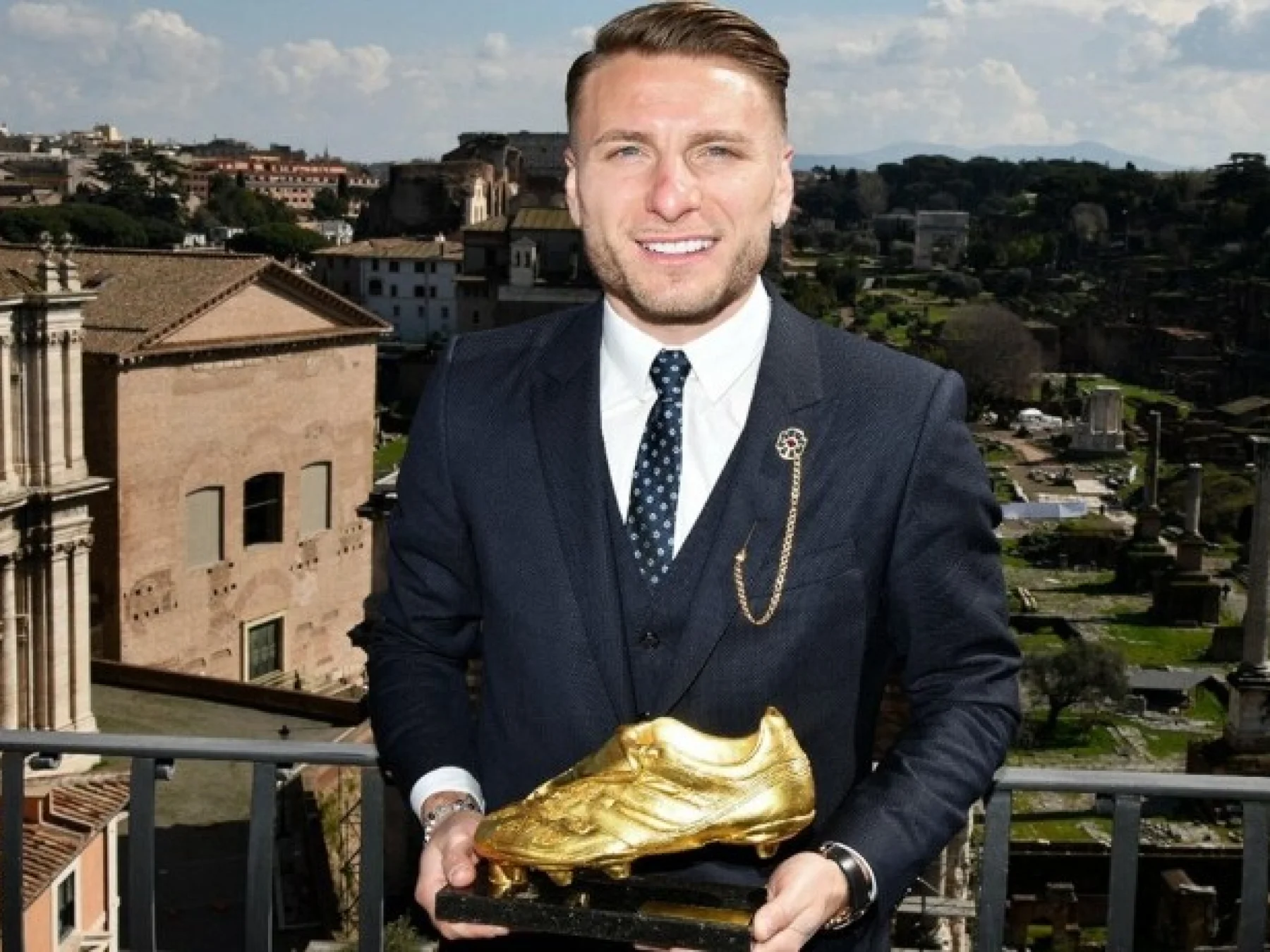
Lazio's official club history connects the 36 goals with the European Golden Shoe. The award broadened the significance of the season beyond Italy. The Serie A record compares a raw domestic league total across the competition's history, while the Golden Shoe is a separate European award with its own scoring framework. Immobile's campaign satisfied both, but the two labels describe different comparisons.
The unusually late finish also belongs to the evidence. Lazio's historical account explicitly identifies a season influenced by the pandemic. A league campaign normally described through autumn, winter and spring instead ran into an August conclusion after interruption. Calling these “2020 goals” without a season label can introduce matches from a different campaign. For the record, the proper comparison stays with 2019-20, irrespective of how unfamiliar its final date looks.
That interruption does not make the number unofficial, and it does not justify pretending the competitive experience was identical to a continuous season. It raises a different set of questions about rhythm, recovery and the concentration of fixtures. Those questions require specific evidence before any causal claim about the goals can be made. The defensible conclusion is narrower: Immobile achieved the same accepted total under a markedly different calendar.
The record is therefore stronger as a paired story than as an argument about which campaign deserves to be erased. Higuain set the target; Immobile reached it again. A fan can prefer one player's style or one route to the number while acknowledging the shared result. Historical comparisons become more useful when they preserve both the official count and the surrounding conditions, instead of forcing every achievement into one imagined standard season.
Nordahl and the earlier championship record
Gunnar Nordahl's 35 for AC Milan in 1949-50 survived as the single-group Serie A benchmark for 66 years. The league's historical account explicitly identifies that total and scope when explaining Higuain's achievement. The long wait matters: many excellent forwards won scoring titles during those decades without reaching the same number. A season can be exceptional relative to its rivals while still falling short of an unusually high historical mark.
AC Milan's official Nordahl biography places his arrival in January 1949 and links his period at the club with fellow Swedes Gunnar Gren and Nils Liedholm. That context gives the record a recognisable football setting rather than leaving it as an isolated line in a spreadsheet. A high-scoring centre-forward belonged to a team whose creative relationships also became part of the club's identity. The goal count records the finisher, but his arrival and teammates help explain why the season still has a place in Milan's memory.
There is another historical number that sometimes complicates the answer: Gino Rossetti scored 36 for Torino in 1928-29. The Italian Olympic committee's Rossetti biography records that achievement in 30 matches. It belongs to the Italian championship immediately before the single-group Serie A structure. That makes it important history, but it does not make it an interchangeable row in a record explicitly defined by single-group Serie A.
The correct response is to identify the boundary, not to hide Rossetti or remove Higuain and Immobile. “Italian top-flight championship” and “Serie A on a single-group basis” are overlapping historical categories with different starting points. A headline that drops that distinction can produce an apparent contradiction: one source says Higuain was the first to reach 36, while another says Rossetti had already done so. Each can be describing a different competition frame.
That boundary also prevents a misleading comparison of raw appearances. Rossetti's earlier competition had a different structure, while Nordahl's and the modern co-holders' records belong to the league category used here. A numerical rate can be calculated across them, but it cannot by itself account for opposition, qualification stages or how the competition was organised. The useful historical lesson is continuity with change: Italy had formidable goalscorers before 1929, and single-group Serie A developed its own record whose defining benchmark moved from 35 to 36.
Comparing great scoring seasons without flattening their differences
The raw record gives a clear answer; a comparison of performances needs more questions. Total goals, efficiency, contribution to team results and the difficulty of sustaining output are related measures, but they are not interchangeable. A sensible comparison starts with the same competition and season boundaries, then asks what an additional statistic can actually explain.
Matches, minutes and penalties
UEFA's final-day report gives Higuain 36 goals in 35 league appearances and Nordahl 35 in 37. Those figures can be used to calculate goals per appearance, but not goals per 90 minutes without the minute totals. An appearance can be a full game, a late substitution or a shortened outing. Treating every appearance as the same playing time would make a precise-looking rate less accurate than the simpler total it was intended to improve.
Availability is also part of what makes a season total difficult to build. A player has to keep returning to the pitch and keep finding chances as opponents change, injuries occur and the team's priorities shift. A high rate over a short run is impressive, but it does not answer the same question as a high total over a completed league campaign. The single-season record rewards the accumulated goals; an efficiency measure describes their concentration in the playing time observed.
Penalties count towards the accepted league-goal record. Fans may want to compare non-penalty scoring, and that can be a worthwhile separate analysis, but the method must be stated and the penalty figures verified from one consistent dataset. Removing penalties silently and still calling the result “the Serie A scoring record” changes the meaning halfway through the comparison. Likewise, a claim about open-play goals needs to distinguish them from free kicks and other set pieces, rather than assuming that everything outside a penalty is identical.
The same discipline applies to expected goals and chance quality. Those measures can help explain a contemporary season when the underlying data are available. They should not be invented for an older campaign to make a cross-era ranking look complete. Where equivalent evidence is absent, it is better to describe the limitation and keep the comparison to verified totals, appearances and historical context.
A scoring record is not a championship guarantee
Napoli finished second in Higuain's record campaign; Lazio's 2019-20 season likewise did not end with the league title. The contemporary UEFA final-round account places Higuain's achievement alongside Juventus's championship. That is a useful reminder that one forward's total and a team's position measure different things. The league table rewards match results across the whole side's season, including games in which its principal scorer does not score.
A goal that extends a comfortable victory adds exactly one to the individual record, just as a late winner does. Their immediate effects on team points can be different. Explaining that difference is not a reason to dismiss either goal; it is a reason to avoid treating the scoring chart as a substitute for the standings. Defending, distributing goals across fixtures and taking points from difficult matches all shape the collective outcome.
The record's lasting appeal lies in holding these two perspectives together. Higuain and Immobile reached a remarkable shared number; their clubs' seasons supplied the opportunities and the limits around it. For the championship outcome, consult the verified winners list. For this individual question, the answer remains 36 league goals, achieved in two different campaigns whose distinctive stories deserve to be preserved.
Join the discussion
Comments
Sign in with Google to comment. Keep the conversation useful and football-focused. New comments are reviewed before they appear.
Loading comments…