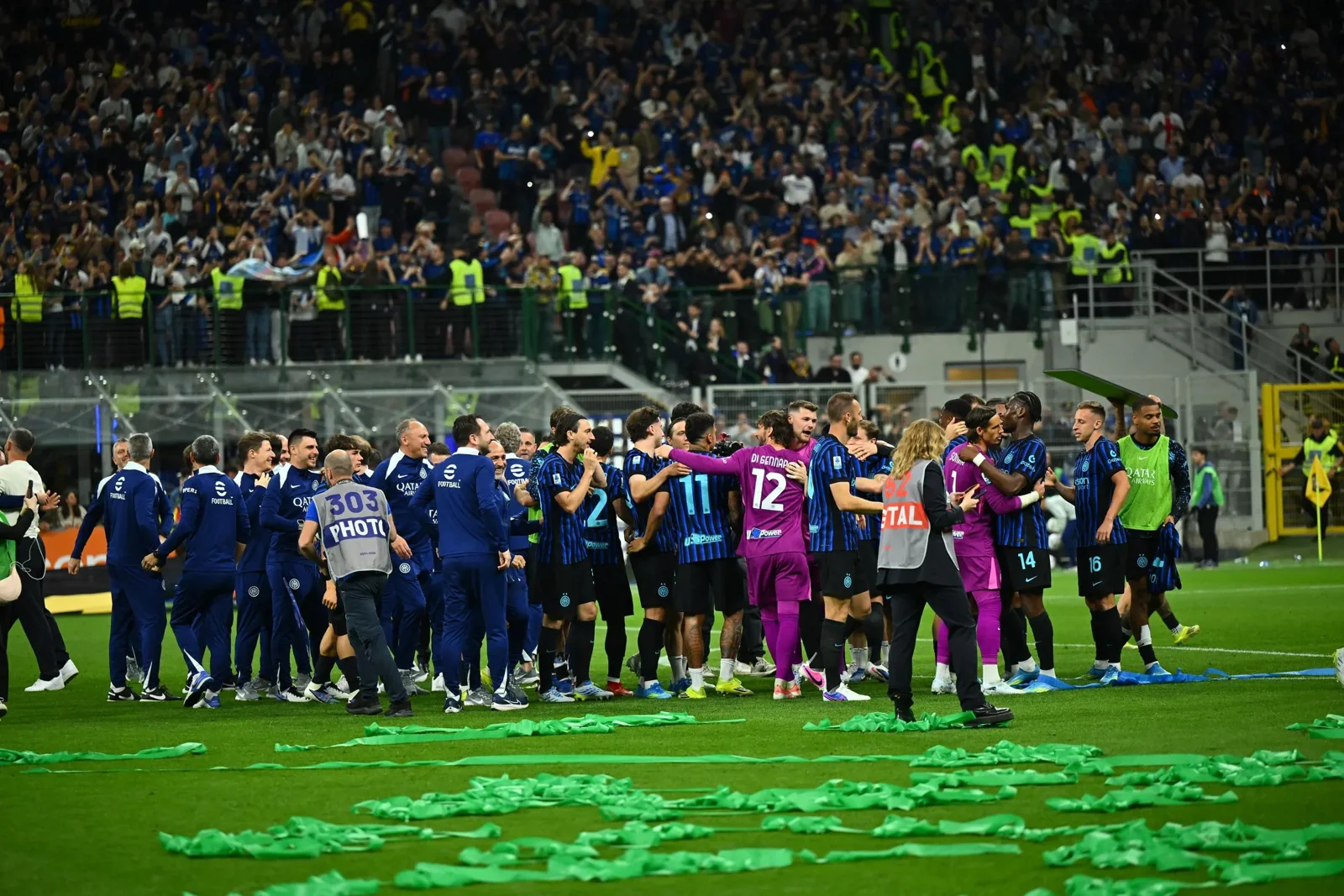
Inter won Serie A in 2025–26 with 87 points, ahead of Napoli, Roma and Como. Lautaro Martínez was the leading scorer with 17 goals; Cremonese, Hellas Verona and Pisa were relegated. Behind those headline verdicts lay a season of attacking dominance in Milan, a remarkable breakthrough by Como and a final-day reshuffle of the Champions League places.
This fixed-season review brings together the complete final table, the leading scorers and the matches that explain the outcomes. It covers the completed 2025–26 campaign, checked against official records on 5 September 2026. For the ongoing competition, use the current Serie A standings.
The complete 2025–26 Serie A final table
Inter finished first with 87 points, 11 ahead of Napoli, while Roma and Como completed the Champions League places. This is the final classification after all 380 matches, not a snapshot taken when the title was decided. The positions and figures below follow the Lega Serie A final season report; its separate 25 May classification notice confirms the official order.
| Pos | Club | P | W | D | L | GF | GA | GD | Pts |
|---|---|---|---|---|---|---|---|---|---|
| 1 | Inter | 38 | 27 | 6 | 5 | 89 | 35 | +54 | 87 |
| 2 | Napoli | 38 | 23 | 7 | 8 | 58 | 36 | +22 | 76 |
| 3 | Roma | 38 | 23 | 4 | 11 | 59 | 31 | +28 | 73 |
| 4 | Como | 38 | 20 | 11 | 7 | 65 | 29 | +36 | 71 |
| 5 | AC Milan | 38 | 20 | 10 | 8 | 53 | 35 | +18 | 70 |
| 6 | Juventus | 38 | 19 | 12 | 7 | 61 | 34 | +27 | 69 |
| 7 | Atalanta | 38 | 15 | 14 | 9 | 51 | 36 | +15 | 59 |
| 8 | Bologna | 38 | 16 | 8 | 14 | 49 | 46 | +3 | 56 |
| 9 | Lazio | 38 | 14 | 12 | 12 | 41 | 40 | +1 | 54 |
| 10 | Udinese | 38 | 14 | 8 | 16 | 45 | 48 | −3 | 50 |
| 11 | Sassuolo | 38 | 14 | 7 | 17 | 46 | 50 | −4 | 49 |
| 12 | Torino | 38 | 12 | 9 | 17 | 44 | 63 | −19 | 45 |
| 13 | Parma | 38 | 11 | 12 | 15 | 28 | 46 | −18 | 45 |
| 14 | Cagliari | 38 | 11 | 10 | 17 | 40 | 53 | −13 | 43 |
| 15 | Fiorentina | 38 | 9 | 15 | 14 | 41 | 50 | −9 | 42 |
| 16 | Genoa | 38 | 10 | 11 | 17 | 41 | 51 | −10 | 41 |
| 17 | Lecce | 38 | 10 | 8 | 20 | 28 | 50 | −22 | 38 |
| 18 | Cremonese | 38 | 8 | 10 | 20 | 32 | 57 | −25 | 34 |
| 19 | Hellas Verona | 38 | 3 | 12 | 23 | 25 | 61 | −36 | 21 |
| 20 | Pisa | 38 | 2 | 12 | 24 | 26 | 71 | −45 | 18 |
The gap between the first two sides was built primarily at the attacking end. Inter conceded only one fewer goal than Napoli but scored 31 more. Their additional four wins, rather than a uniquely impregnable defence, provided the decisive points advantage. Napoli and Roma both won 23 matches; Napoli's seven draws against Roma's four explain why the champions of the previous campaign held second place. Roma's season was less forgiving: they lost more often but rarely settled into the middle ground of a draw.
Como supplied the table's most striking combination. They had the best defensive record, conceding 29, and scored 65, more than every club except Inter. Their plus-36 goal difference was not a decorative detail attached to a lucky fourth place. Across the whole schedule, their balance at both ends belonged near the top. Milan matched Como's 20 victories but lost one more match and drew one fewer, leaving the smallest possible points gap between Champions League qualification and the Europa League.
Further down, the standings show how different routes can lead to similar outcomes. Torino scored 16 more goals than Parma but conceded 17 more; both finished on 45 points. The official order puts Torino twelfth and Parma thirteenth, so sorting this table by overall goal difference would change an established final position. Bologna won more matches than Atalanta, yet Atalanta's six additional draws offset their one fewer victory and produced a three-point advantage. Consistency carried a tangible European reward.
At the bottom, scoring totals alone did not separate safety from relegation. Lecce and Parma each managed 28 goals, but both survived; Cremonese scored 32 and went down. The crucial distinction was how often those goals became victories and how many points the defence protected. That contrast runs through this season: Inter overwhelmed opponents, Como combined threat with control, and the survival fight was decided by a much narrower margin for error.
Inter won by expanding their attacking range
Chivu's system and the spread of goals
Cristian Chivu's first league campaign in charge ended with Inter's twenty-first Italian championship, secured by a 2–0 home victory over Parma on 3 May. There were still three rounds to play. The final 87 points therefore describe the completed campaign, whereas the Parma match identifies the moment the race ceased to be a race. For supporters, the distinction matters: the decisive celebration and the season's complete statistical record are not the same event.
Chivu did not need to erase the team's established relationships to change its emphasis. In Inter's assessment of his work, the familiar 3-5-2 became more direct, with persistent pressing and an ambitious defensive line. Those elements fit together. Recover possession higher and the strikers have less ground to cover before threatening goal; move the ball forward quickly and an opponent has less time to assemble two compact defensive lines. The risk is space behind the press, but Inter's attacking rewards comfortably outweighed the cost across the league season.
The personnel made that approach more than a theory. Lautaro Martínez scored 17 league goals and Marcus Thuram 13, but the burden extended well beyond the starting forwards. Inter's final statistical review lists 17 different scorers, with Hakan Çalhanoğlu, Federico Dimarco, Francesco Pio Esposito and Piotr Zieliński also finishing above five. When midfielders and a wing-back contribute that regularly, opponents cannot defend simply by surrounding the two strikers. Space surrendered elsewhere becomes a scoring opportunity rather than harmless possession.
The comeback at Como and the clincher against Parma
The April trip to Como exposed the risks of that attacking bargain before demonstrating its rewards. Inter fell two goals behind against an opponent capable of pressing them aggressively, then won 4–3 through doubles from Thuram and Denzel Dumfries. The club's account of the comeback places Thuram's first goal just before half-time: an important interruption to Como's momentum before Inter accelerated after the interval. A striker and a wing-back supplied all four goals. That was the season's variety compressed into one restless evening, and a victory achieved against the league's eventual best defence.
The title-clinching match offered a quieter demonstration. Zieliński's forward pass released Thuram for the opener; later, substitute Lautaro supplied substitute Henrikh Mkhitaryan for the second. The decisive contributions crossed positional and selection boundaries. Inter could stretch a game with runners, attack through their established strike partnership, or add fresh intelligence from the bench. Their rivals might match individual spells of control, but nobody matched the volume of goals those options produced over 38 matches.
Roma and Como changed the Champions League picture
The title was settled early, but the Champions League race retained its tension until the final evening. The completed European qualification picture sent Inter, Napoli, Roma and Como into the 2026–27 Champions League, with Milan and Juventus taking Europa League places. Atalanta earned the Conference League route. These are the outcomes of this particular season, not a claim that Italy receives an identical allocation every year.
Roma's surge and Milan's missed chance
Roma finished the job with a 2–0 win at Verona. Donyell Malen scored after his penalty had been saved, with Paulo Dybala supplying the subsequent opportunity; Stephan El Shaarawy added the late second. There is a useful miniature of Roma's finish in that sequence: an initial setback did not become a lost evening. Gian Piero Gasperini's side found the next action, won the match and ended third, rather than waiting for another result to rescue their campaign.
The final-day breakthrough also had a substantial runway. Roma won each of their last five league games, including the derby against Lazio, collecting all 15 available points. Milan took only four across the same closing five fixtures, according to Sky's final results sequence. That eleven-point swing helps explain why the emotional shock at San Siro was not simply the product of one freak result. Roma kept converting pressure into victories while Milan's margin steadily disappeared.
Milan even began their last match in the right way, with Alexis Saelemaekers scoring almost immediately. But Cagliari responded through Borrelli and then Rodríguez to win 2–1. The club's own match report confirmed the consequence: Europa League football, not the Champions League. Juventus also finished outside the top four. The final table placed two of Italy's traditional heavyweights below a Como side that had turned an exceptional campaign into a concrete European destination.
Como's breakthrough and Atalanta's route
For Como, the 4–1 win at Cremonese supplied both the decisive last three points and an entirely new European destination. Their achievement was historic: the league confirmed a first European qualification, immediately at Champions League level. Fourth place should not obscure the quality underneath it. A side that combines the second-highest scoring total with the lowest number conceded has more than a romantic story to tell. Como forced the established clubs to meet a demanding football standard and held that standard through the final weeks.
Where Como were breaking new ground, Atalanta's seventh place sustained their European involvement through a different competition. They had already secured the Conference League berth against Bologna, despite losing that match, because their head-to-head advantage protected the position. The reward was entry into that competition's qualifying route, not automatic admission to its league phase. Bologna and Lazio finished immediately below the European places: close enough to feel the missed opportunity, but without a continental reward from their final league positions.
Lecce survived; Cremonese, Verona and Pisa went down
Lecce's decisive wins and lasting survival
Lecce finished seventeenth on 38 points, four clear of Cremonese. Hellas Verona ended with 21 and Pisa with 18, completing the relegated trio. The last-day scoreline at the Via del Mare was simple enough: Lecce 1–0 Genoa, Lameck Banda the scorer. The significance was larger. Eusebio Di Francesco's team protected an early advantage and secured another season in the top division through their own result, rather than spending the evening entirely dependent on events in Cremona.
The more dramatic intervention had arrived a week earlier. At Sassuolo, Lecce won 3–2 through Nikola Štulić's stoppage-time strike after a knockdown from Omri Gandelman. The league's penultimate-round report records the winner in the ninety-fifth minute. Two points transformed by one late action kept Lecce ahead of Cremonese, who were also winning that evening. For a team with only 28 goals across the entire campaign, finding three in a match of that importance was an unusually forceful answer to pressure.
For Lecce, survival also represented continuity, not simply relief from one difficult campaign. The club marked its fourth consecutive successful survival, earning a fifth straight Serie A season. That distinction matters for a club whose annual objectives differ from those of the title contenders. A seventeenth-place finish can look modest in an isolated table, yet maintaining top-flight membership repeatedly preserves the platform on which a smaller club recruits, develops players and plans its next campaign.
Why Cremonese, Verona and Pisa went down
Lecce's late wins mattered because Cremonese refused to let the survival contest fade away. Jamie Vardy's winner at Udinese kept them one point behind Lecce entering the last round, and their final match briefly reopened when Federico Bonazzoli's penalty reduced Como's lead to 2–1. But Como finished the match 4–1 winners, with Lucas Da Cunha adding the final two goals. Cremonese had sustained the contest deep into May without finding the last result required to escape it. Their late resistance deserves acknowledgment even though the final position remained eighteenth.
The completed records explain why that late push was necessary. Cremonese lost 20 matches, exactly as many as Lecce, but won two fewer. Lecce turned more of their remaining afternoons into three points, while Cremonese settled for two additional draws. At the other end of the survival contest, Verona and Pisa each drew 12 games but won only three and two respectively. Avoiding defeat occasionally was insufficient when victories arrived so rarely; there was no late sequence capable of bridging those much larger gaps.
Lautaro led the scoring; Malen transformed the chase
The final scoring table and Lautaro's opening goals
Lautaro Martínez won the 2025–26 scoring title with 17 goals, three ahead of Donyell Malen and Tasos Douvikas. The table includes every player who reached ten league goals, preserving shared positions rather than inventing a tie-break between equal totals. The final scoring list and the league's review of its leading forwards separate this completed race from the frequently circulated tables published earlier in the spring.
| Rank | Player | Club | Goals |
|---|---|---|---|
| 1 | Lautaro Martínez | Inter | 17 |
| =2 | Donyell Malen | Roma | 14 |
| =2 | Tasos Douvikas | Como | 14 |
| 4 | Marcus Thuram | Inter | 13 |
| =5 | Rasmus Højlund | Napoli | 12 |
| =5 | Nico Paz | Como | 12 |
| 7 | Giovanni Simeone | Torino | 11 |
| =8 | Federico Bonazzoli | Cremonese | 10 |
| =8 | Keinan Davis | Udinese | 10 |
| =8 | Nikola Krstović | Atalanta | 10 |
| =8 | Scott McTominay | Napoli | 10 |
| =8 | Riccardo Orsolini | Bologna | 10 |
| =8 | Gianluca Scamacca | Atalanta | 10 |
| =8 | Kenan Yıldız | Juventus | 10 |
The winning total was modest by recent standards, but Lautaro's influence was not. The league recorded ten goals that opened the scoring for Inter. Breaking a goalless game changes the opponent's task: a side defending deep must eventually commit more players forward, and Inter's other runners can attack the spaces that appear. A scorer's contribution cannot be reduced to how many times he added another goal after a match was already comfortable. Lautaro repeatedly helped create that comfort in the first place.
Malen's centre-forward role and immediate impact
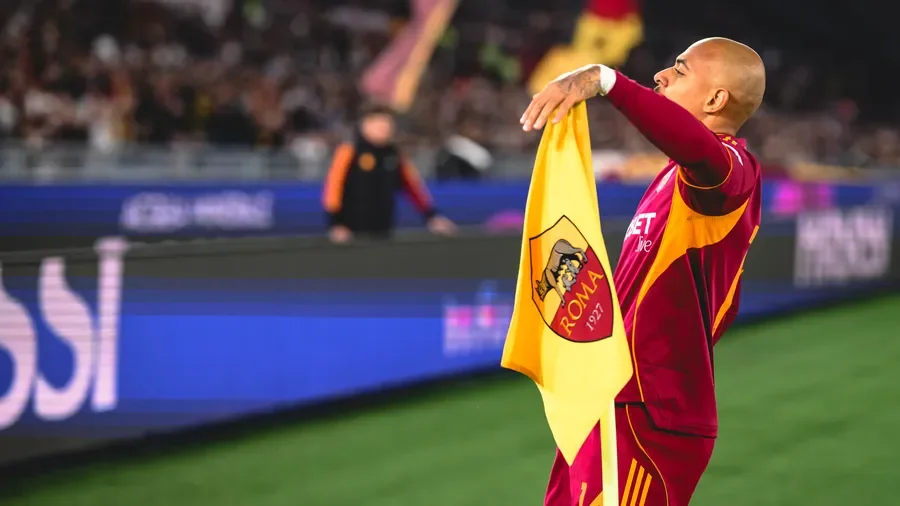
While Lautaro set the season's winning total, Malen compressed his challenge into a much shorter spell. His 14 goals came in just 18 appearances after arriving in the winter transfer window. Roma did not merely add another name to their forward rotation; they acquired a player whose preferred position matched a specific need. After the Pisa match, Gasperini explained that offering the centre-forward role helped persuade Malen to join. The coach stressed the player's existing quality rather than claiming to have manufactured it. Good recruitment and a clear role allowed that quality to become immediately useful.
The clearest example was his hat-trick in Roma's 3–0 win over Pisa on 10 April. He scored early, again before half-time, and once more shortly after the restart. Instead of leaving a vulnerable opponent within touching distance, Roma's new striker progressively removed the uncertainty. His final-season total accounted for almost a quarter of the team's 59 league goals despite his abbreviated stay. That concentration of production helps explain why January recruitment became central to Roma's eventual third-place finish.
Como's shared threat and the wider scoring picture
Where Roma's winter surge leaned heavily on Malen, Como's attacking story was more distributed. Douvikas and Nico Paz combined for 26 of the team's 65 goals, exactly 40 percent, giving the Champions League newcomers two prominent threats rather than one isolated finisher. The league highlighted Douvikas's pressing and runs behind the defence alongside his finishing. Those movements give an attack structure: the striker threatens the back line while the creative players gain room to receive and make decisions. The scoring table records the final touch, but the relationship between movement and invention explains why Como kept producing it.
There was also value far from the title race. Bonazzoli reached double figures for a relegated Cremonese side, while Davis did so for Udinese and Simeone scored eleven for Torino. Their goals arrived within different levels of team support and different competitive objectives. The common total is a useful starting point; the football around it determines what that total actually meant.
A lower-scoring league, and an MVP who created the openings
Fewer goals, but fewer draws
Across the division, the league's final figures recorded 922 goals in 380 matches: 2.43 per game, down from 2.56 in 2024–25. Yet there were fewer draws, not more. The season produced 281 matches with a winner and 99 draws, nine additional decisive results compared with the previous campaign. Lower scoring therefore did not mean an endless procession of shared points. More games ended with one side taking the entire reward, increasing the cost of failing to find the decisive goal.
Within that league-wide pattern, several clubs faced a more specific question: how to turn control, or at least survival within a match, into wins. Fiorentina drew 15 times, Atalanta 14 and Juventus 12. Those totals do not prove that each side played cautiously, because draws can emerge from comebacks, missed chances or surrendered leads. They do show the size of the opportunity. A handful of additional decisive attacking moments would have changed the shape of those campaigns, particularly in a European race where one point separated fourth and fifth.
Dimarco and the value of chance creation
The value of finding that decisive opening makes Federico Dimarco an appropriate figure around whom to frame the season's individual honours. The Inter wing-back won Lega Serie A's Best Overall MVP award. This was the league's own award, distinct from the players' association's honours, and its assessment excluded the final round. The announcement should not be used as a substitute for completed-season scoring statistics. Its central judgment nevertheless stands: one of the competition's most influential footballers operated from the flank, shaping chances rather than simply waiting to finish them.
Inter's account of Dimarco's campaign emphasised how much of their creation flowed through his left foot. A wing-back who can deliver early forces a defence to solve two problems at once: stop the supply without leaving a runner free inside. If the opposing wide player drops back to help, Inter can gain time in midfield; if the full-back steps out alone, the space behind becomes available. Quality delivery is not just a final action. The threat of it can alter how the opposition occupies the pitch.
The season's strongest lesson is therefore more specific than a claim that Italian football became defensive again. Inter won through the breadth of their attack; Como paired ambitious scoring with the division's strongest defensive record; Roma's late charge gained force from an outstanding winter arrival. Further down, Lecce found two very different winning moments when the season demanded them. The final table preserves those outcomes. The matches explain how clubs with such different resources and expectations reached them.
Join the discussion
Comments
Sign in with Google to comment. Keep the conversation useful and football-focused. New comments are reviewed before they appear.
Loading comments…