Inter won Serie A in 2020-21 with 91 points, twelve clear of second-placed Milan. Atalanta and Juventus completed the Champions League places, while Cristiano Ronaldo led the scoring chart with 29 goals. This season review brings together the complete final table, the decisive matches, European qualification and relegation, with the context needed to understand a campaign played largely without stadium crowds.
The complete Serie A 2020-21 final table
Inter finished first with 91 points, twelve ahead of Milan. The table below records the completed 2020-21 league campaign, with all twenty teams having played 38 matches. It can be checked against the TNT Sports season archive and the RSSSF results record. P means played, W wins, D draws, L losses, GF goals scored, GA goals conceded, GD goal difference and Pts points.
| Pos | Team | P | W | D | L | GF | GA | GD | Pts |
|---|---|---|---|---|---|---|---|---|---|
| 1 | Inter | 38 | 28 | 7 | 3 | 89 | 35 | +54 | 91 |
| 2 | AC Milan | 38 | 24 | 7 | 7 | 74 | 41 | +33 | 79 |
| 3 | Atalanta | 38 | 23 | 9 | 6 | 90 | 47 | +43 | 78 |
| 4 | Juventus | 38 | 23 | 9 | 6 | 77 | 38 | +39 | 78 |
| 5 | Napoli | 38 | 24 | 5 | 9 | 86 | 41 | +45 | 77 |
| 6 | Lazio | 38 | 21 | 5 | 12 | 61 | 55 | +6 | 68 |
| 7 | Roma | 38 | 18 | 8 | 12 | 68 | 58 | +10 | 62 |
| 8 | Sassuolo | 38 | 17 | 11 | 10 | 64 | 56 | +8 | 62 |
| 9 | Sampdoria | 38 | 15 | 7 | 16 | 52 | 54 | -2 | 52 |
| 10 | Hellas Verona | 38 | 11 | 12 | 15 | 46 | 48 | -2 | 45 |
| 11 | Genoa | 38 | 10 | 12 | 16 | 47 | 58 | -11 | 42 |
| 12 | Bologna | 38 | 10 | 11 | 17 | 51 | 65 | -14 | 41 |
| 13 | Fiorentina | 38 | 9 | 13 | 16 | 47 | 59 | -12 | 40 |
| 14 | Udinese | 38 | 10 | 10 | 18 | 42 | 58 | -16 | 40 |
| 15 | Spezia | 38 | 9 | 12 | 17 | 52 | 72 | -20 | 39 |
| 16 | Cagliari | 38 | 9 | 10 | 19 | 43 | 59 | -16 | 37 |
| 17 | Torino | 38 | 7 | 16 | 15 | 50 | 69 | -19 | 37 |
| 18 | Benevento | 38 | 7 | 12 | 19 | 40 | 75 | -35 | 33 |
| 19 | Crotone | 38 | 6 | 5 | 27 | 45 | 92 | -47 | 23 |
| 20 | Parma | 38 | 3 | 11 | 24 | 39 | 83 | -44 | 20 |
The clearest pattern is the distance between first place and the chasing group. Inter could absorb occasional dropped points without returning to a close title race. The next four sides occupied a much narrower band: Milan, Atalanta, Juventus and Napoli finished within two points of one another. That contrast matters when interpreting the season. The champion's final advantage was substantial, while a single draw or win could still reshape the contest for the remaining Champions League places.
Reading across the rows also explains why points and goals should be considered together. Atalanta scored one more league goal than Inter, but conceded twelve more. Napoli had a better overall goal difference than Milan or Juventus and nevertheless finished below both. Those comparisons do not prove that one system was inherently better than another. They show that a league rewards the distribution of results across individual matches: a large victory does not compensate fully for losing another game.
The wins and draws columns reveal another distinction. Napoli won as often as Milan, yet recorded two fewer draws and two more defeats. Torino survived with seven victories, the same number as Benevento, because its sixteen draws supplied four more points than Benevento's twelve. These are calculations from the final records, rather than claims that drawing is always a preferable strategy. They help explain how clubs with similar win totals could end on different sides of a qualification or survival threshold.
For equal points, retain the final positions shown rather than sorting automatically by overall goal difference. Atalanta's head-to-head advantage over Juventus mattered, while Roma and Sassuolo remained level through their two drawn meetings before overall goal difference separated them. The season's European and relegation outcomes are explained below. For the ongoing campaign, use our current Serie A standings; this archived table is a completed historical record and will not change with today's results.
How Inter ended Juventus' nine-season title run
Antonio Conte's Inter displaced a Juventus side that had won the previous nine league championships. This was Inter's nineteenth Scudetto and its first since 2009-10. The achievement combined a powerful attacking partnership with the league's best defensive record. Inter's completed-season statistics recorded 35 goals conceded and fourteen clean sheets, alongside 89 goals scored. The title therefore depended on controlling both ends of the pitch, rather than simply outscoring every rival in an open contest.
Conte's structure and the Lukaku-Martinez partnership
The back three and wing-backs gave Conte a recognisable framework, with Romelu Lukaku and Lautaro Martinez working as a pair. Lukaku could receive with a defender close behind him or attack space directly, while Martinez offered movement around and beyond him. Achraf Hakimi added a threat on the right, and the midfield work of Nicolo Barella and Marcelo Brozovic helped connect recovery of possession with the next attack. In football terms, the benefit was several ways to advance the ball without leaving the two forwards isolated.
There was also adaptation within that structure. In their May interview about the campaign, Lukaku described the team becoming more compact after the Sassuolo match, and both forwards discussed their understanding. Their final league totals were 24 and seventeen goals, a combined 41. That partnership supplied a dependable destination for attacks, but the contribution was wider: seventeen Inter players scored in the league. Defenders and wing-backs could decide tight matches when the usual scoring route was closed.
The results that turned a challenge into a runaway title
The decisive sequence included different kinds of victory. Inter's account of the season's key moments highlighted the 2-0 win against Juventus and the 3-0 return derby against Milan, in which Martinez scored twice and Lukaku once. It also recalled Milan Skriniar's winner against Atalanta and Matteo Darmian's goals in separate 1-0 wins over Cagliari and Verona. Those narrow victories were as valuable in the table as the derby's emphatic scoreline. A title challenge becomes much harder to catch when spectacular wins are followed by efficient ones.
Inter won the first eleven matches of the league's return half and accumulated fifty points over that half as a whole. The championship became mathematically secure on 2 May, after Inter had beaten Crotone the previous day and Atalanta drew with Sassuolo. The club's announcement confirmed four matches remained. Looking back, that combination of sustained winning, defensive protection and several sources of decisive goals explains why a race that once involved Milan ended with a twelve-point gap.
The European race and a dramatic final evening
With Inter clear at the top, much of the final drama concerned entry to the following season's European competitions. Milan, Atalanta, Juventus and Napoli were separated by two points at the finish, but fifth place brought a different tournament from fourth. The league table should therefore be read alongside the final night's match reports. The narrow margins explain how a campaign containing many successful performances could still be judged very differently once the last results arrived.
Milan and Atalanta secured Champions League places
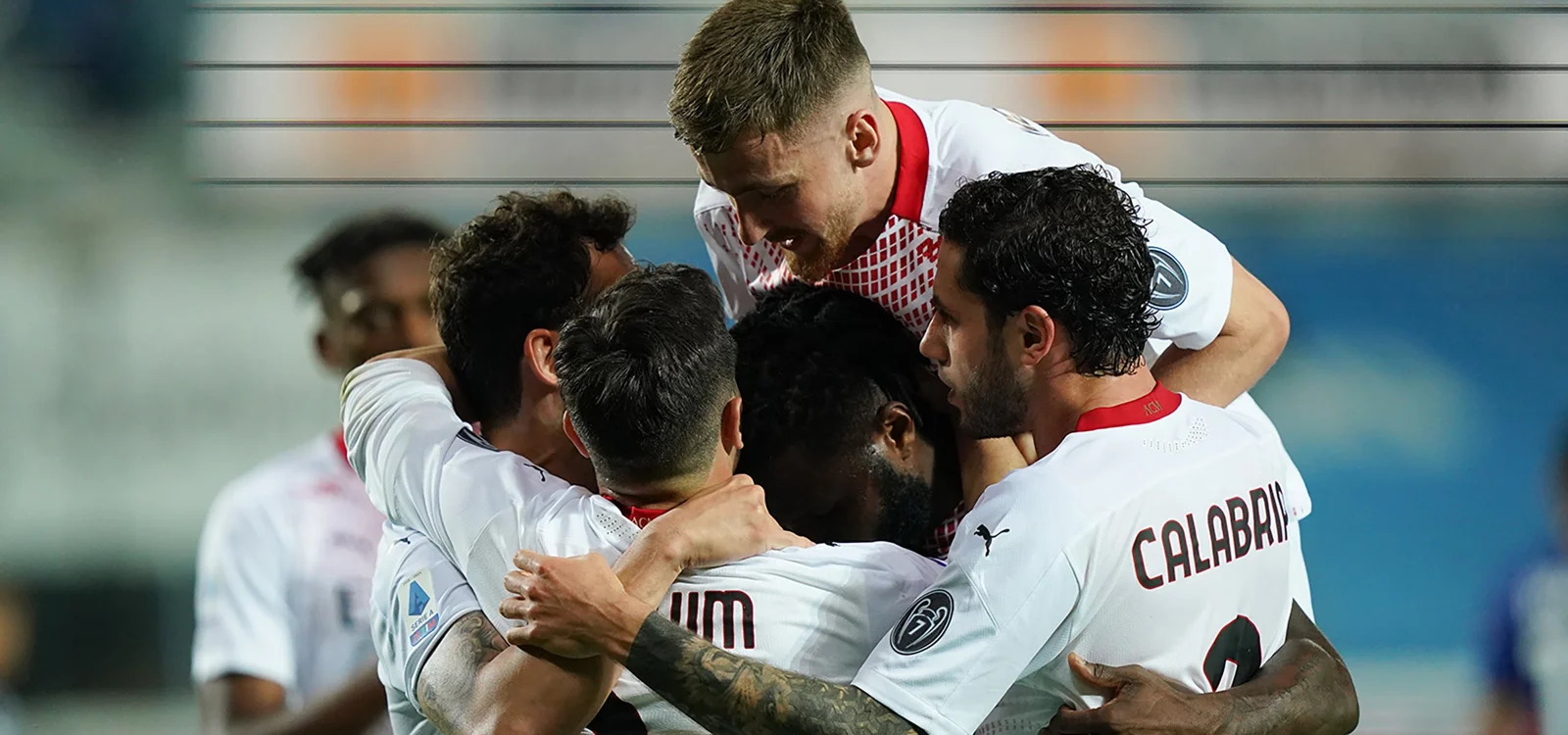
Stefano Pioli's Milan finished second after winning 2-0 at Atalanta on 23 May. Franck Kessie's two penalties delivered the result that secured qualification. The club's match statistics marked Milan's return to the Champions League after seven seasons away and recorded sixteen away league victories. The latter number is particularly revealing: Milan's path to second place depended heavily on succeeding outside San Siro, so the decisive trip to Bergamo continued an established strength.
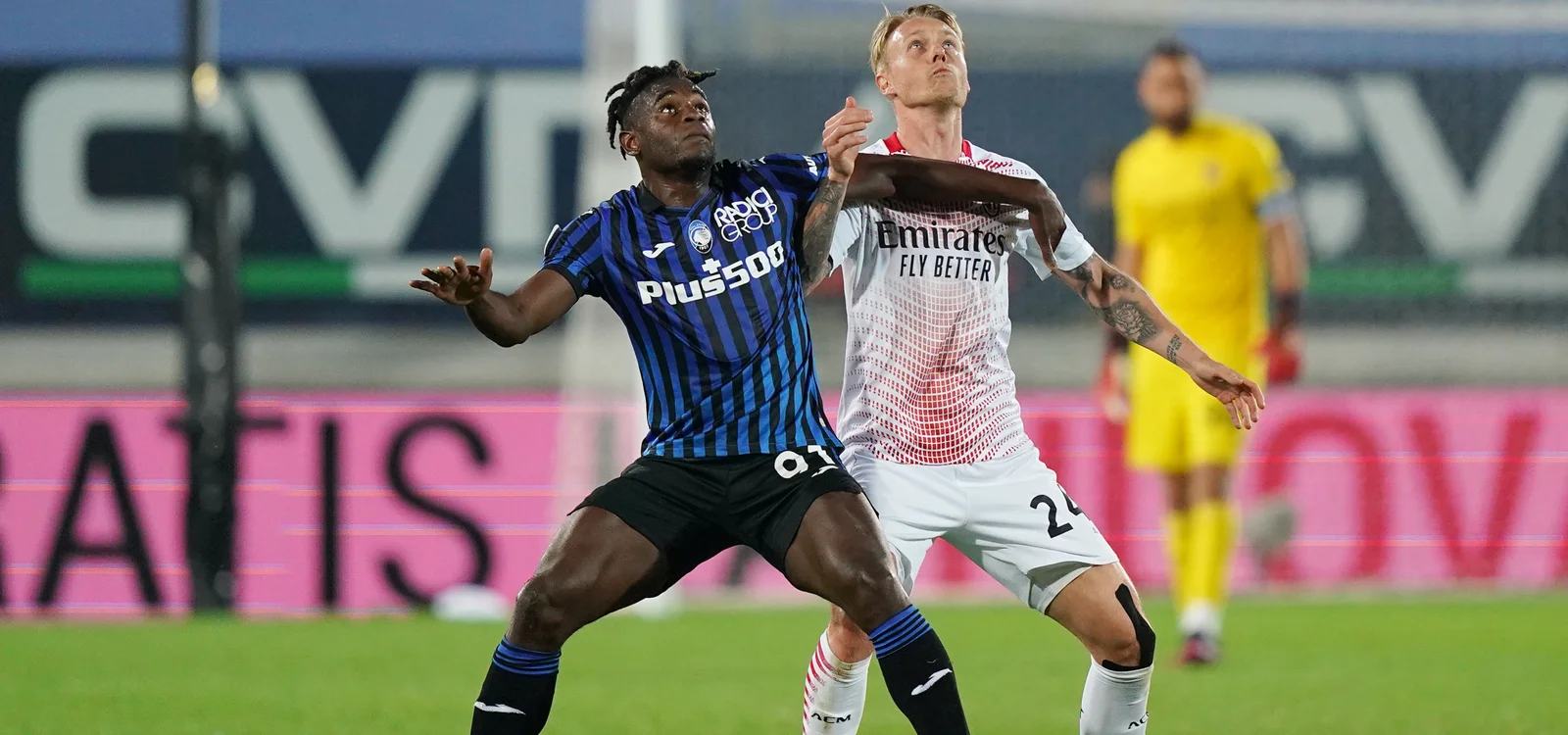
Gian Piero Gasperini's Atalanta had already secured its third consecutive Champions League qualification with a 4-3 victory at Genoa on matchday 37. Losing the last game did not undo that achievement. Third place and ninety league goals showed the continued value of an attacking model with several threats arriving around the central forwards. The identical points totals of Atalanta and Juventus conceal different scoring profiles, and Atalanta's advantage in their direct meetings gave it the higher final position.
Juventus escaped as Napoli missed out
Andrea Pirlo's Juventus did its part by beating Bologna 4-1. The official report records goals from Federico Chiesa, Adrien Rabiot and twice from Alvaro Morata, with qualification following Napoli's draw. Juventus could control its own performance but needed help from elsewhere. That distinction captures the uncertainty of entering the final round outside a secure position: even a commanding victory must be measured against a rival's result.
Napoli drew 1-1 with Verona after Amir Rrahmani's opener was cancelled by Davide Faraoni. Sky's contemporary report documents the lost lead. Two additional points would have lifted Napoli to 79, above both Juventus and Atalanta; instead Gennaro Gattuso's side ended fifth on 77. Napoli and sixth-placed Lazio entered the next Europa League group stage, as recorded in UEFA's competition results. Juventus' Coppa Italia win did not create an extra Champions League place.
There was another close finish below them. Roma recovered from 2-0 down at Spezia, with Henrikh Mkhitaryan's 85th-minute equaliser securing seventh, according to the club's report. That point kept Roma ahead of Sassuolo on the final tiebreaker and supplied entry to the new Europa Conference League's play-off round. The evening thus settled more than one club's future: small changes in scorelines altered both the prestige and the route of the European opportunity.
Relegation, survival and the teams in between
Benevento, Crotone and Parma were relegated, while Spezia, Cagliari and Torino remained in Serie A. The final totals show that these were different kinds of unsuccessful campaign. Parma won only three matches and finished with twenty points. Crotone scored more goals than several surviving teams but conceded 92, leaving a defensive problem that its attacking output could not resolve. Benevento's 33 points put it closer to safety, although the final gap to seventeenth was four points. Treating all three as equally distant from survival would hide that difference.
Spezia's achievement deserves particular attention because this was its first season in Serie A. Vincenzo Italiano's side guaranteed survival by beating Torino 4-1 with one round remaining, a match recalled in the club's history of its top-flight debut. The final record was fifteenth place and 39 points. Spezia conceded heavily across the year, yet produced enough effective attacking performances to stay ahead of the bottom three. The win against Torino was decisive because it converted a promising position into an outcome that no final-day result could reverse.
Cagliari's recovery included one of the season's most dramatic survival matches. The contemporary account of its 4-3 win over Parma records Gaston Pereiro and Alberto Cerri scoring in added time to overturn a 3-2 deficit. Leonardo Semplici's team later beat Benevento 3-1 in another direct meeting. Such results have an unusual weight in a relegation race: the winner adds points while denying them to an immediate competitor. Cagliari ultimately finished sixteenth on 37, so these late swings mattered to the final margin.
Torino reached safety through a different decisive result, a goalless draw at Lazio on 18 May. The score appears in the club's season record, and the match report confirms that it secured survival and relegated Benevento. Sixteen draws over the completed campaign made Torino difficult to distinguish by wins alone. That record supplied enough points to survive, even though the side remained seventeenth and had conceded 69 goals.
Above the survival contest, Sampdoria finished ninth with 52 points under Claudio Ranieri, closing with a 3-0 victory over Parma. It was ten points behind eighth but seven ahead of Verona in tenth, a distinct position between the European contenders and the lower group. Genoa, Bologna, Fiorentina and Udinese then occupied a narrow band from 42 to forty points. The middle of the table therefore combined one relatively isolated ninth-place finish with a cluster of teams whose league positions were separated by small margins.
Cristiano Ronaldo led the scoring chart
Cristiano Ronaldo won the 2020-21 Capocannoniere with 29 Serie A goals, five more than Romelu Lukaku. Juventus' farewell to Ronaldo in August 2021 records his first Italian league scoring title. The ranking below uses league goals only, with totals cross-checked against the StatMuse historical scoring table. Goals in the Champions League, domestic cups and the Supercoppa belong to different totals.
| Rank | Player | Club | League goals |
|---|---|---|---|
| 1 | Cristiano Ronaldo | Juventus | 29 |
| 2 | Romelu Lukaku | Inter | 24 |
| 3 | Luis Muriel | Atalanta | 22 |
| 4 | Dusan Vlahovic | Fiorentina | 21 |
| =5 | Ciro Immobile | Lazio | 20 |
| =5 | Simy | Crotone | 20 |
| 7 | Lorenzo Insigne | Napoli | 19 |
| =8 | Domenico Berardi | Sassuolo | 17 |
| =8 | Lautaro Martinez | Inter | 17 |
| 10 | Joao Pedro | Cagliari | 16 |
The equals signs identify players tied on league goals; they do not suggest a separate tiebreaker for this simple list. A scoring chart is useful for identifying the most productive finishers, but it does not measure every part of attacking contribution. It also does not tell us how many points a goal earned. An equaliser in a tight match and another goal in a comfortable victory each add one to the individual tally while having different consequences for the league table.
What the leading scorers tell us about their teams
Ronaldo's first place and Juventus' fourth place underline the gap between individual output and collective league performance. A team can possess the division's leading scorer and still struggle to establish enough consistency around him. Inter's two leading forwards finished below Ronaldo individually, but together supplied 41 goals within a side that conceded fewer than anyone else. The football lesson is that a productive scorer becomes part of a title-winning advantage when his contribution is supported across the rest of the team.
Simy's twenty goals offer an even stronger example. Crotone's official account of his departure confirms that total in the completed Serie A season, following a separate twenty-goal campaign in Serie B. His finishing was a substantial individual achievement in a relegated team. Crotone's final defensive record explains why it could not translate that achievement into safety. Vlahovic's high placing for thirteenth-placed Fiorentina similarly shows why the scoring chart should not be read as a ranking of the strongest clubs.
Atalanta supplied another pattern: Muriel led its scorers, yet the team's ninety goals were distributed well beyond one player. Its 5-0 victory over Bologna in April had five different scorers, including Muriel, Duvan Zapata and Ruslan Malinovskyi. That match illustrates the threat of an attack in which defenders must follow several runners and passing combinations. For a useful season review, place the scorer list beside the team table: together they reveal both exceptional individuals and the different collective circumstances in which those goals were scored.
A season shaped by the pandemic and European commitments
The league season ran from September 2020 to May 2021, following a previous campaign that had been suspended and completed in the summer. The Lega's historical account describes the late September restart and the compressed calendar required before the postponed European Championship. For clubs, that meant preparing for another full domestic campaign after an unusual summer. For readers comparing historical tables, it is a reminder that a familiar thirty-eight-match format can sit within very different conditions for preparation, recovery and travel.
Stadium conditions also need precise description. The FIGC's 2021 Management Report records a limited opening for up to one thousand spectators in September 2020, followed by a return to closed stadiums from late October. The Coppa Italia final on 19 May 2021 then marked a partial reopening at twenty percent capacity. Much of the league therefore took place without the usual crowd, but describing the entire season as uniformly closed from beginning to end would overlook the early exception. This affected the setting in which football was played; the table alone cannot measure its effect on a particular team's results.
The European calendar produced another difference between contenders. Inter's 0-0 draw with Shakhtar Donetsk on 9 December left it fourth in its Champions League group and out of Europe. Roma, by contrast, remained in the Europa League until the semifinals, losing 8-5 on aggregate to Manchester United after matches on 29 April and 6 May, as UEFA's results archive confirms. The schedules offered different opportunities for training and recovery during the spring. That is relevant context, although it is not proof that European elimination caused Inter's domestic improvement or explains the full twelve-point winning margin.
Reading the final table in its historical context
The strongest interpretation starts with what the completed competition actually establishes. Inter combined the highest points total with the fewest goals conceded. Its success rested on a team structure that connected a productive front pair, active wing-backs and an organised defensive unit. Those football qualities remain visible without reducing the championship to an advantage in rest days. The decisive league wins and the consistency of the return half give the title a sporting explanation that the unusual circumstances can supplement.
Below the champion, the table describes a competition with very little separation between three Champions League qualifiers and the first team outside that group. Milan's 79 points, Atalanta and Juventus on 78, and Napoli on 77 created a final evening in which one goal elsewhere could alter a club's destination. That tension coexisted with the comfortable title margin. Both belong in a season review: the championship had been settled weeks earlier, while a major qualification question remained open until the end.
Use this archive for the completed 2020-21 season and the current Serie A standings for today's league. Inter's return to the summit, Milan's Champions League comeback, Ronaldo's scoring title and Spezia's successful debut together explain why this particular final table remains useful. It records a change in the league's hierarchy as well as the outcome of an exceptional year.
Join the discussion
Comments
Sign in with Google to comment. Keep the conversation useful and football-focused. New comments are reviewed before they appear.
Loading comments…