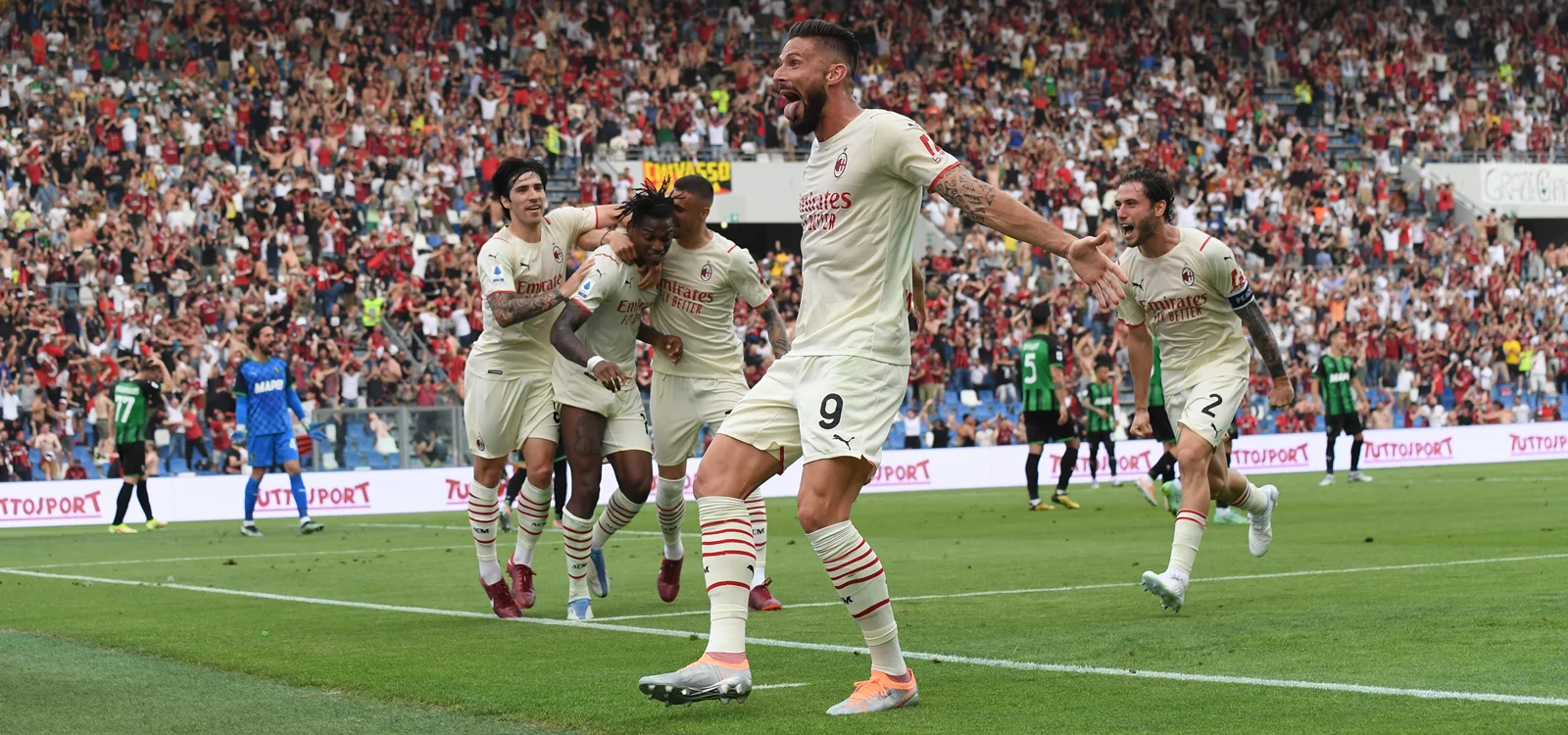
Milan won Serie A in 2021-22 with 86 points, two ahead of Inter. Napoli and Juventus completed the top four, Salernitana survived by one point, and Lazio's Ciro Immobile won the scoring title with 27 goals. This review includes the complete final table and the football behind it: Milan's defensive foundation, the title race's decisive results, European qualification and the final-day relegation drama.
The complete Serie A 2021-22 final table
Milan finished first with 86 points, Inter second with 84, Napoli third with 79 and Juventus fourth with seventy. This is the completed 2021-22 league table, with all twenty clubs having played thirty-eight matches. The figures follow Milan's official historical standings and have been checked against an independent season archive. They describe the final competition rather than the order at a particular point during the title race.
| Pos | Club | P | W | D | L | GF | GA | GD | Pts |
|---|---|---|---|---|---|---|---|---|---|
| 1 | Milan | 38 | 26 | 8 | 4 | 69 | 31 | +38 | 86 |
| 2 | Inter | 38 | 25 | 9 | 4 | 84 | 32 | +52 | 84 |
| 3 | Napoli | 38 | 24 | 7 | 7 | 74 | 31 | +43 | 79 |
| 4 | Juventus | 38 | 20 | 10 | 8 | 57 | 37 | +20 | 70 |
| 5 | Lazio | 38 | 18 | 10 | 10 | 77 | 58 | +19 | 64 |
| 6 | Roma | 38 | 18 | 9 | 11 | 59 | 43 | +16 | 63 |
| 7 | Fiorentina | 38 | 19 | 5 | 14 | 59 | 51 | +8 | 62 |
| 8 | Atalanta | 38 | 16 | 11 | 11 | 65 | 48 | +17 | 59 |
| 9 | Verona | 38 | 14 | 11 | 13 | 65 | 59 | +6 | 53 |
| 10 | Torino | 38 | 13 | 11 | 14 | 46 | 41 | +5 | 50 |
| 11 | Sassuolo | 38 | 13 | 11 | 14 | 64 | 66 | -2 | 50 |
| 12 | Udinese | 38 | 11 | 14 | 13 | 61 | 58 | +3 | 47 |
| 13 | Bologna | 38 | 12 | 10 | 16 | 44 | 55 | -11 | 46 |
| 14 | Empoli | 38 | 10 | 11 | 17 | 50 | 70 | -20 | 41 |
| 15 | Sampdoria | 38 | 10 | 6 | 22 | 46 | 63 | -17 | 36 |
| 16 | Spezia | 38 | 10 | 6 | 22 | 41 | 71 | -30 | 36 |
| 17 | Salernitana | 38 | 7 | 10 | 21 | 33 | 78 | -45 | 31 |
| 18 | Cagliari | 38 | 6 | 12 | 20 | 34 | 68 | -34 | 30 |
| 19 | Genoa | 38 | 4 | 16 | 18 | 27 | 60 | -33 | 28 |
| 20 | Venezia | 38 | 6 | 9 | 23 | 34 | 69 | -35 | 27 |
P means matches played; W, D and L are wins, draws and losses; GF and GA are goals scored and conceded; GD is their difference. Each win contributes three points and each draw one. Milan and Inter lost the same number of matches, but the champion recorded one more win and one fewer draw. That difference produced the two-point margin. Inter's larger goal difference and fifteen additional goals did not override the points total, an essential distinction when judging why the most prolific attack finished second.
Teams level on points require a closer look at the ranking criteria. The season's results archive records Torino beating Sassuolo 1-0 away and drawing 1-1 at home, giving Torino the better record in their direct meetings. Sampdoria and Spezia each won one meeting, with an equal aggregate score; Sampdoria then had the superior overall goal difference. The completed order should therefore be retained rather than casually resorting tied clubs by goals scored or their names.
The gaps elsewhere help explain the shape of the season. Napoli was nine points ahead of Juventus, while the three clubs from fifth to seventh were separated by only two points. Atalanta finished three points below that group, with Verona another six behind. The table contains several distinct competitive bands: a close championship contest, a more separated final Champions League berth, and a much tighter fight for the other European positions. Those differences matter more than treating every adjacent place as equally close.
At the bottom, Salernitana survived with 31 points, just one ahead of Cagliari. Its goal difference was worse than that of every relegated club, yet it accumulated the necessary points. This is a useful parallel with the title race: both ends of the table reward results across individual matches, rather than the most attractive aggregate scoring balance. The following sections explain the matches and football decisions behind those final numbers.
Why Milan became champions again
Stefano Pioli delivered Milan's nineteenth league title and its first since 2011. The achievement followed second place a year earlier, so it represented another step in a developing side rather than a sudden leap from the bottom half. The champion's identity combined defensive assurance with several ways to create a decisive moment. It did not require one forward to match the league's highest individual scoring totals: Leao and Olivier Giroud each finished with eleven league goals, supported by contributions from elsewhere.
Defensive control gave Pioli's side a foundation
Milan conceded 31 goals across the campaign, sharing the league's best total with Napoli. The club's title retrospective records just nine conceded from matchday twenty onwards. That improvement gave tight attacking performances a chance to become victories. A team that can keep the score level while an opponent resists does not have to force every attack; it can remain patient until a winger, midfielder or set piece supplies the opening.
The title-clinching lineup placed Mike Maignan behind Pierre Kalulu and Fikayo Tomori, with Sandro Tonali and Franck Kessie in midfield. Their roles illustrate the balance of Pioli's 4-2-3-1: centre-backs could defend space behind the team, while the midfield supported attacks and protected the central approach to goal. Maignan also made decisive interventions. The club's account of the Fiorentina match highlights his stop from Arthur Cabral in the 76th minute, before Leao scored the winner. Defensive contributions could preserve the opportunity for a late three points.
Leao and Giroud supplied different attacking solutions
Leao threatened defenders through acceleration and carries from the left, whereas Giroud provided a reference point closer to goal. Those qualities complemented each other: beating an opponent on the outside is much more valuable when a teammate arrives in the space created inside the penalty area. The final match report provides a clear example, with Leao setting up Giroud's two goals before helping create Kessie's third. Winning possession high up the pitch also contributed to those opportunities.
There was a more direct route when a game demanded it. Maignan's long pass released Leao for the only goal against Sampdoria in February, a moment recalled in the club's season assist review. Milan could therefore use the goalkeeper to exploit space beyond a defensive line as well as building through midfield. The final-day statistics credit Leao with three goals and five assists across the last six league matches. His influence during the run-in helps explain why the champion's attack cannot be judged simply by its total of 69 goals.
The matches that separated Milan and Inter
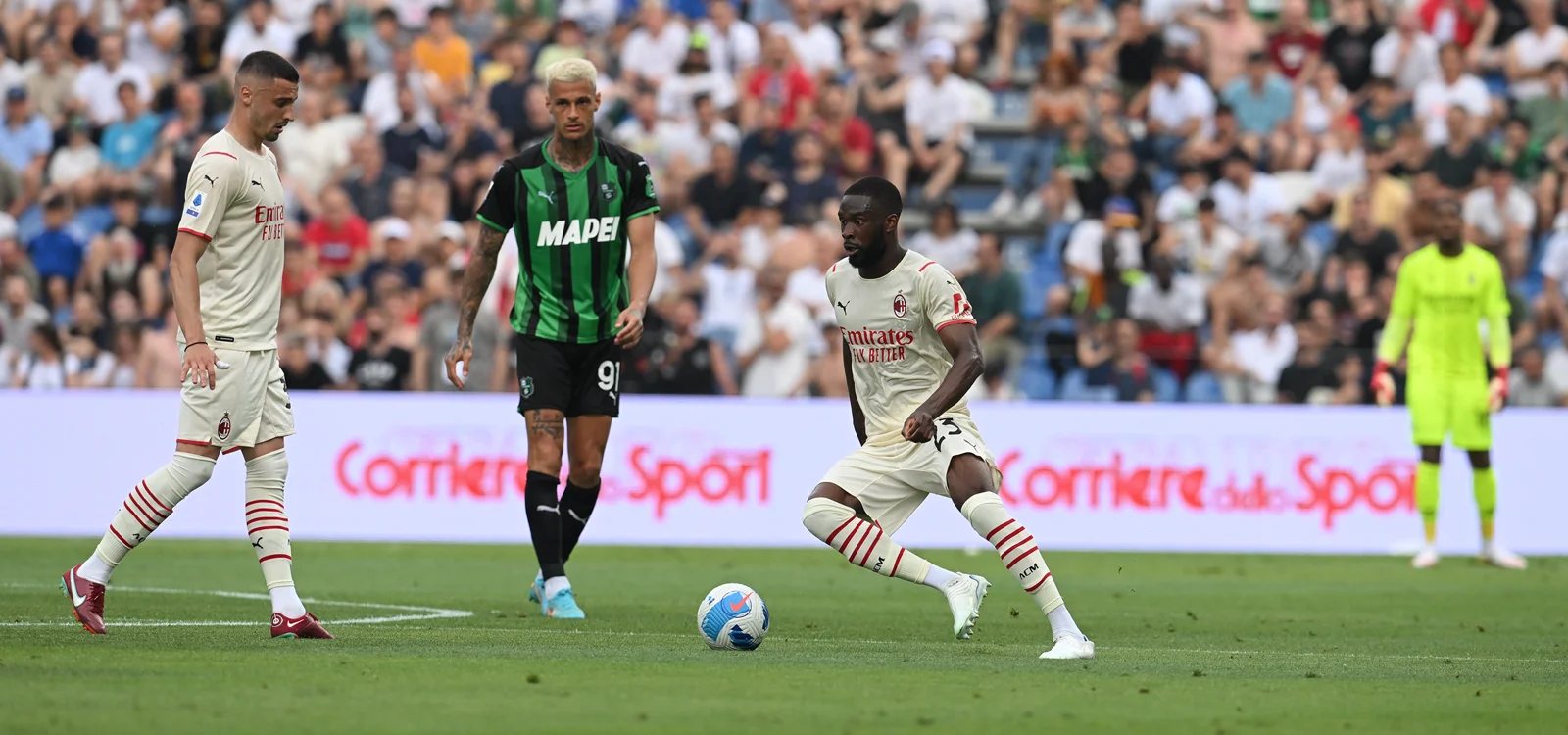
The derby on 5 February was one of the clearest changes in the direction of the race. Inter led through Ivan Perisic and had created the stronger first-half chances, but Giroud scored twice late in the game to give Milan a 2-1 victory. Inter's own contemporary report explains the influence of substitute Brahim Diaz in unsettling its defence. The result showed that control over much of a match did not guarantee control over its outcome, especially against a forward capable of turning a small opening into a goal.
Milan had to keep finding those opportunities well beyond the derby. At Lazio on 24 April, it recovered from Ciro Immobile's early goal through Giroud's equaliser and a Sandro Tonali winner in added time. The official report records Zlatan Ibrahimovic's headed contribution to the winner. A draw would have left two points behind in Rome. Instead, a midfielder's late arrival supplied three, demonstrating the value of maintaining pressure and involving players beyond the main attackers.
Three days later, Inter lost its rearranged match at Bologna 2-1. Perisic's opening goal was cancelled by Marko Arnautovic before Nicola Sansone scored after an error by Ionut Radu, as the club's match account confirms. The defeat removed the opportunity to overtake Milan through the game in hand. Radu's mistake became a memorable image of the title race, but the match had already been level for a long period. Inter's inability to restore its lead also belonged to the story; an entire season should not be reduced to one goalkeeper's misjudgment.
The final round on 22 May still required Milan to complete the job. It won 3-0 at Sassuolo, with Giroud scoring twice and Kessie adding the third. Inter also won 3-0, beating Sampdoria through Perisic and two Joaquin Correa goals in its last league match. Both challengers supplied convincing final performances, but Milan's existing advantage held. The title was secured by the club that arrived at the last day ahead and then delivered its own result.
These turning points explain how fine the margin was without suggesting that Inter had a poor campaign. Eighty-four points and the league's strongest scoring total made it a formidable runner-up. Milan's success lay in converting enough difficult matches into victories, including games where the decisive action came late. The final two-point difference rewards the accumulation of those moments across the year.
Champions League and the other European places
The top four clubs entered the 2022-23 Champions League group stage: Milan, Inter, Napoli and Juventus. UEFA's qualified-clubs list confirms those entrants. The distinction between the league campaign and the following European season is useful here: the 2021-22 final table determined the domestic places, while the resulting group-stage football began later in 2022. Finishing fifth did not provide another Champions League berth.
Napoli and Juventus completed the top four
Luciano Spalletti's Napoli recovered a place in the leading European competition after finishing fifth the previous season. Its 79 points, 74 goals scored and 31 conceded describe a side with substantial quality at both ends. A 6-1 win over Sassuolo on 30 April underlined that attacking strength late in the campaign. Third place was a meaningful improvement, even though Napoli did not sustain a championship challenge through the final round. Its nine-point advantage over fourth also distinguishes this finish from a qualification secured by the smallest margin.
Juventus guaranteed Champions League football before the last day. Leonardo Bonucci scored twice in the 2-1 victory over Venezia on 1 May, and Roma dropping points against Bologna later that evening confirmed a top-four finish. Massimiliano Allegri's side ultimately ended six points ahead of fifth-placed Lazio. The early confirmation reduced the uncertainty around qualification, but fourth place and a sixteen-point deficit to Milan still showed how far Juventus had finished from the championship standard.
Lazio, Roma and Fiorentina found different routes to Europe
Lazio finished fifth on 64 points and Roma sixth on 63, with both appearing in the next Europa League group-stage draw. Roma secured its league route by winning 3-0 at Torino on 20 May, with Tammy Abraham scoring twice and Lorenzo Pellegrini adding the other goal. The narrow gap between the capital's clubs makes the standings a useful measure of their league consistency, even though their wider seasons followed different paths.
Five days later, Jose Mourinho's Roma beat Feyenoord 1-0 in Tirana through Nicolo Zaniolo to win the inaugural Europa Conference League, as UEFA's final report records. That trophy carried a Europa League place, but Roma had already earned one through the league. It did not add a Champions League place or turn eighth into another automatic Italian Europa League position. The cup triumph explains why sixth place alone cannot capture Roma's achievement.
Fiorentina took seventh with 62 points after beating Juventus 2-0, with Alfred Duncan and Nico Gonzalez supplying the goals in the final league match. That result secured Conference League qualification and left Atalanta eighth on 59. Vincenzo Italiano's team therefore finished the domestic campaign with a European opportunity despite sitting below the two Roman clubs. The difference between sixth and seventh was one point; the difference in the competition and its entry route was more substantial.
Salernitana survived as Cagliari, Genoa and Venezia went down
Salernitana finished seventeenth with 31 points, one ahead of Cagliari, three ahead of Genoa and four ahead of Venezia. Their survival was particularly striking because they conceded 78 goals, more than any other team, and finished with a goal difference of minus 45. Those figures describe the scale of their difficulties, but the points column decided their place. Seven victories were enough to stay up when the three clubs below them won six, four and six respectively.
Davide Nicola was appointed in February, and the late revival became tangible in April. Salernitana won at Sampdoria, won at Udinese and then beat Fiorentina at home: nine points from three successive league matches against different kinds of opponent. The Udinese victory came through Simone Verdi's stoppage-time finish after a counterattack. A side that had repeatedly struggled to collect points was now converting decisive moments into wins. That sequence explains the escape more directly than assuming that a change of coach instantly repaired every weakness.
The final-day escape and the wider lower table
The final evening delivered an extraordinary mismatch between the result and the celebrations. Salernitana lost 4-0 at home to Udinese, leaving their survival dependent on Cagliari. The Sardinian club could not find a winner in a 0-0 draw at Venezia. Salernitana therefore stayed above them despite a heavy defeat. Their earlier recovery had given them enough points to survive a final-day defeat; the final score alone gives a misleading impression of how safety was earned.
The relegated clubs had different statistical problems. Genoa drew 16 times but won only four, and their 27 goals were the division's lowest total. Avoiding defeat frequently could not compensate for failing to turn close matches into victories. Venezia lost 23 matches, while Cagliari's six wins and 34 goals left little margin when the final opportunity arrived. Each finished within four points of safety, yet none had accumulated enough to survive without help.
Above that struggle, Sampdoria and Spezia both reached 36 points despite suffering 22 defeats each. Their ten wins apiece made the difference. Empoli finished another five points higher, on 41, in fourteenth place. The lower table is therefore a useful reminder that survival has no single statistical profile: an uneven season containing enough victories can outperform a more draw-heavy campaign, and a poor goal difference does not automatically settle the final order.
Ciro Immobile won the scoring title
Ciro Immobile finished as Serie A's leading scorer with 27 goals for Lazio, three ahead of Dusan Vlahovic and six ahead of Lautaro Martinez. It was his fourth scoring title, as Lazio's subsequent award announcement confirmed. His total represented approximately 35 percent of Lazio's 77 league goals. That concentration of finishing responsibility helps explain why the fifth-placed side could produce the division's most prolific individual even while finishing well below the two Milan clubs.
The chart below counts Serie A goals only, checked against the historical scoring record. Coppa Italia and European goals are excluded, and players level on goals share a rank. All five players tied on 13 are included, so the list extends to fourteen names rather than cutting arbitrarily through equal tenth place. The club column identifies where the goals were scored; a player's current club is irrelevant to this historical record.
| Rank | Player | Goals club(s) | Goals |
|---|---|---|---|
| 1 | Ciro Immobile | Lazio | 27 |
| 2 | Dusan Vlahovic | Fiorentina / Juventus | 24 |
| 3 | Lautaro Martinez | Inter | 21 |
| =4 | Tammy Abraham | Roma | 17 |
| =4 | Giovanni Simeone | Hellas Verona | 17 |
| 6 | Gianluca Scamacca | Sassuolo | 16 |
| 7 | Domenico Berardi | Sassuolo | 15 |
| =8 | Marko Arnautovic | Bologna | 14 |
| =8 | Victor Osimhen | Napoli | 14 |
| =10 | Edin Dzeko | Inter | 13 |
| =10 | Gerard Deulofeu | Udinese | 13 |
| =10 | Mario Pasalic | Atalanta | 13 |
| =10 | Joao Pedro | Cagliari | 13 |
| =10 | Andrea Pinamonti | Empoli | 13 |
Vlahovic's split season and the league's other leading forwards
Vlahovic's 24 goals require a distinction that many abbreviated charts lose: he scored 17 for Fiorentina and seven for Juventus. His January transfer changed his shirt without resetting his league total. The club-by-club record preserves that split. Crediting all 24 to Juventus would exaggerate the scoring contribution they received and erase a substantial part of Fiorentina's season.
Tammy Abraham's 17 came in his first league campaign with Roma; the club's final-match interview recorded that total after his brace at Torino. Giovanni Simeone matched it at Verona. These were important contributions to clubs finishing sixth and ninth, illustrating that the scoring race extended beyond the title contenders. Sassuolo also placed both Scamacca and Berardi prominently, with different attacking roles producing a combined 31 goals.
Milan won the league without a player in this top group: Leao and Giroud each scored 11. Their decisive contributions were complemented by goals elsewhere in the team and the defensive consistency discussed earlier. The contrast makes the scorer list useful alongside the standings rather than as a substitute for them. Joao Pedro's 13 could not keep Cagliari up, just as Lazio's possession of the leading scorer did not make them champions. Individual finishing and a team's capacity to collect points are connected, but they measure different parts of a season.
What the 2021-22 table says about Italian football
Milan's return to first place, eleven years after their previous title, confirmed that the championship was no longer following the pattern of Juventus's long winning sequence. Inter had taken the crown in 2021; Milan now finished above them, while Napoli remained close enough to give the race another major challenger. Juventus's fourth place still delivered Champions League football, but a sixteen-point gap to the champions represented a substantial distance to recover. The table captured a redistribution of domestic success without establishing a permanent new hierarchy.
The wider competition was more varied than a simple contest between two city rivals. Lazio, Roma and Fiorentina finished within two points of one another, and Atalanta missed those places despite another productive attack. Verona combined a ninth-place finish with 65 goals. At the other end, a single point separated survival from relegation. These differences show why each column matters: goals scored reveal attacking output, goals conceded describe defensive exposure, and points record how those strengths and weaknesses were converted into results across the schedule.
The season also belonged to an unsettled period for stadium attendance. FIGC's pandemic chronology records the league beginning in August with 50 percent capacity, rising to 75 percent in October and returning to tighter restrictions in January. Lega Serie A's history notes two January rounds capped at 5,000 spectators. Capacity expanded again later. Crowds had returned, but a photograph of an occupied stand cannot establish that every match took place under normal conditions.
That setting matters when recalling the atmosphere and commercial circumstances of the campaign. It does not provide a reliable calculation of which team gained or lost league points because of restrictions. Milan's football, Inter's missed opportunities, Salernitana's recovery and Roma's European success each require their own evidence. The final standings are the shared record that connects those stories while preserving the distinction between league achievement and results in other competitions.
Use this table as a fixed account of 2021-22: Milan champions on 86 points, Immobile the leading scorer, and Salernitana surviving the final evening. For the season being played now, consult the current Serie A standings. Comparing a completed campaign with a live table is useful only when the season labels remain clear and the older figures retain their original meaning.
Join the discussion
Comments
Sign in with Google to comment. Keep the conversation useful and football-focused. New comments are reviewed before they appear.
Loading comments…