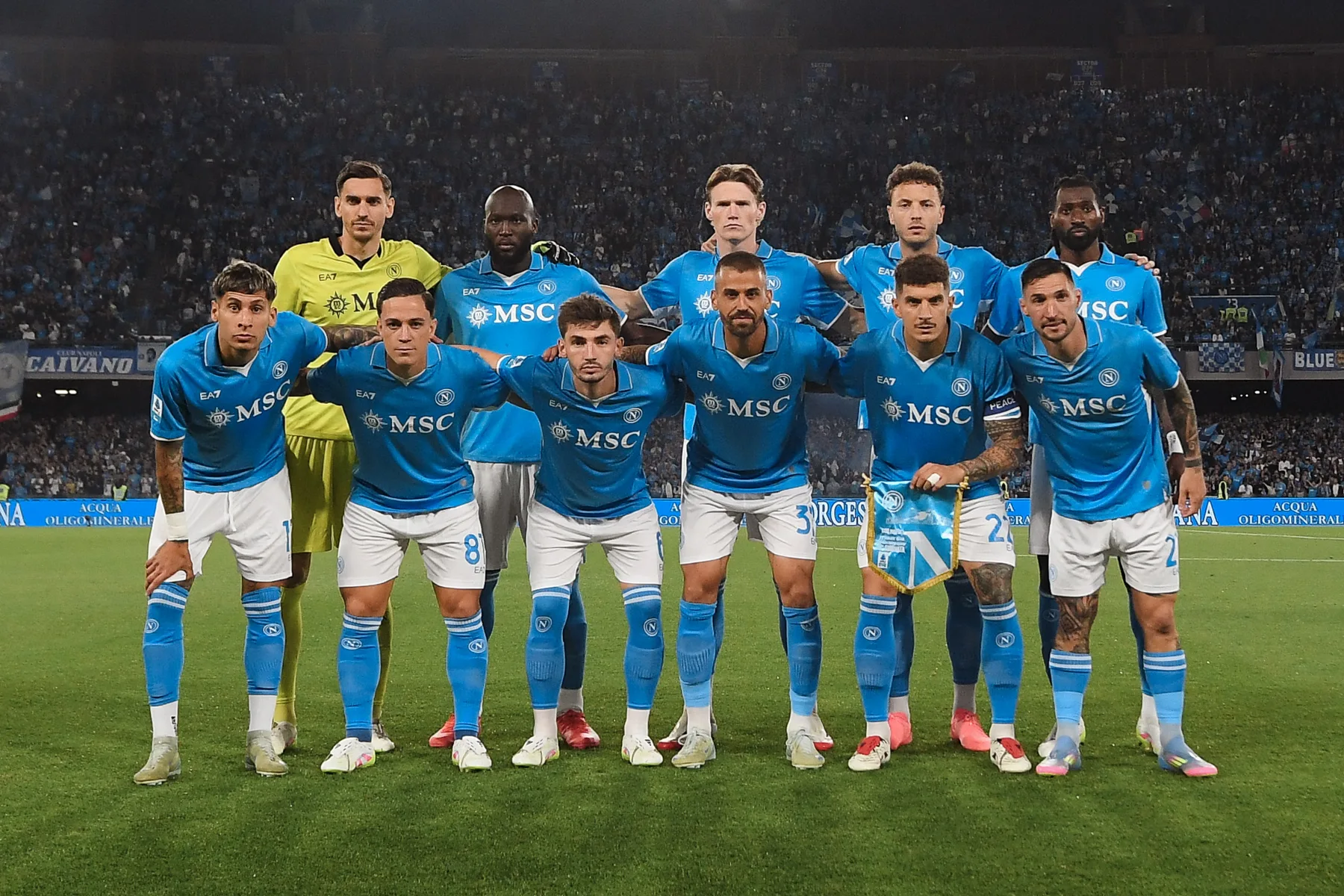
Napoli have won four Serie A titles: 1986–87, 1989–90, 2022–23 and 2024–25. Two belonged to the Maradona era; the latest two established different modern champions. The most recent Scudetto came under Antonio Conte in 2025. Behind those dates lies a richer story of exceptional players, reconstruction and coaches who found different routes to first place.
Four titles, two eras: the complete Napoli record
Napoli have won the Italian league four times: in 1986–87, 1989–90, 2022–23 and 2024–25. The club's official honours list separates those championships from its cup successes, and the league's Napoli record lists the same four seasons. Their latest Scudetto is therefore the 2024–25 title, won in the calendar year 2025. This record is checked through 5 September 2026; “latest Napoli title” should not be confused with “latest completed Serie A season.”
| Season | Title number | Place in the story |
|---|---|---|
| 1986–87 | 1 | First championship |
| 1989–90 | 2 | Second Maradona-era title |
| 2022–23 | 3 | End of the 33-year wait |
| 2024–25 | 4 | Second championship in three seasons |
All four came after the creation of the modern single-division Serie A in 1929. Napoli's total therefore does not require the distinction between early national championships and later Serie A seasons that matters when discussing some older Italian clubs. Four Italian top-flight titles and four Serie A titles describe the same set of Napoli achievements. The important distinction here is between competitions: a domestic cup or European trophy does not become another Scudetto simply because the same squad won it.
That separation is particularly useful with the Maradona years. Napoli also won the UEFA Cup in 1988–89. That was a European success in a different competition, not a third league championship for Diego Maradona and not a European Cup or Champions League win. Supporters can celebrate the breadth of that team’s achievements without merging the records. A trophy cabinet tells several stories at once; a league-title list follows one specific thread through it.
The spacing of the dates is almost as revealing as the number. Two championships arrived within four seasons, followed by a wait of 33 years before the third. Then the fourth came only two years later. That pattern invites a better question than whether Napoli were simply “great again”: what allowed two different generations to turn strong football into a season-long first-place finish? The answer involves exceptional players, certainly, but also recruitment, supporting roles and coaches who found workable relationships between them.
It also protects each winning side from being reduced to a comparison it cannot satisfy. The modern champions did not need to reproduce Maradona to deserve their place in the club's history. They needed to solve their own league. Reading the four seasons together reveals continuity in ambition, while the football behind those ambitions changed considerably.
1986–87: Maradona's brilliance needed a team
Napoli's first championship became certain with a 1–1 home draw against Fiorentina on 10 May 1987. Ottavio Bianchi was the coach, and Maradona was the player around whom the story would be remembered. The City of Naples' historical account records both the clinching result and the accompanying Coppa Italia triumph. The first Scudetto was part of a domestic double, a distinction that reflects sustained achievement across different competitive demands.
Maradona's ability to create an advantage where none appeared to exist was indispensable. A defender could position himself correctly and still be beaten by the next touch; a compact line could be undone by a pass that arrived before it expected danger. Yet calling the championship a one-man achievement makes the football harder to understand. An outstanding creator still needs teammates to occupy defenders, offer a next pass, finish chances and defend when possession changes. Those tasks do not become optional because the number ten is extraordinary.
One useful example is the 2–1 victory over Milan on 26 April 1987. In UEFA's retrospective of the rivalry, Andrea Carnevale opens the scoring before Maradona adds the second. Napoli were responding after a heavy defeat at Verona. The match contains both sides of their title story: an exceptional individual intervention and a team recovering its competitive footing. The championship was not secured by avoiding every setback, but by preventing a setback from becoming the season's defining event.
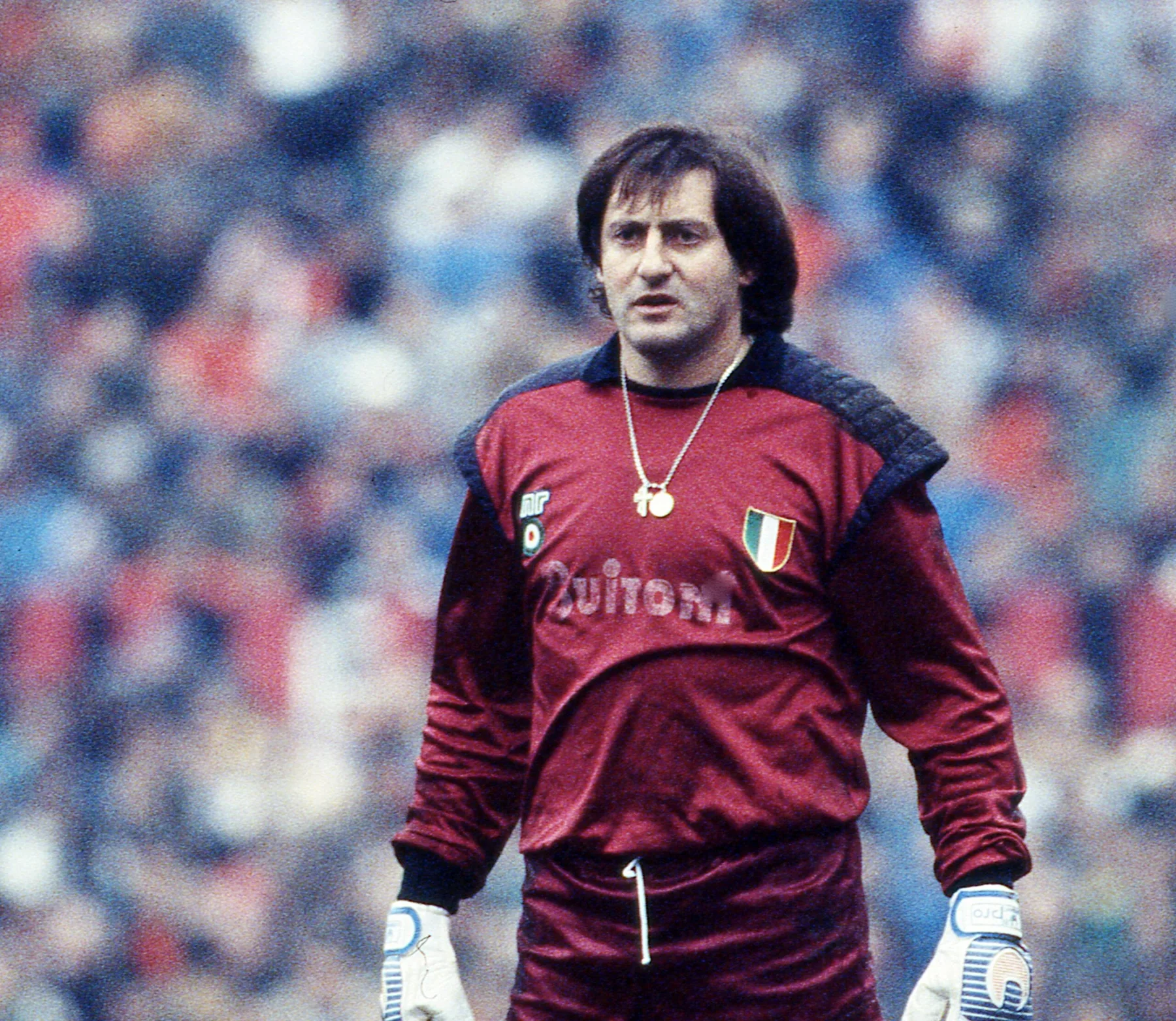
Claudio Garella supplies another corrective to the simplified legend. The goalkeeper had already won the league with Verona in 1985 before joining Napoli that summer. The club's tribute to Garella identifies him as a major figure in the first championship. His previous experience is relevant without needing to romanticise it: Napoli's squad included someone who had already helped a club reach a league summit it had never occupied. Maradona was not surrounded exclusively by players encountering serious competitive responsibility for the first time.
The most productive way to appreciate Bianchi's side is therefore to hold individual genius and collective work together. The creative player changes the opponent's problem; the surrounding team ensures that advantage has consequences. A runner who pulls a defender away or a goalkeeper who preserves a narrow lead may be less visible in the retelling, but those contributions allow brilliance to become points. The first title remains inseparable from Maradona without requiring everyone else to disappear from the picture.
1989–90: winning again was a different challenge
The second championship came under Alberto Bigon rather than Bianchi. Maradona remained central, but the personnel around him had evolved, with Careca and Alemão among the important figures alongside established Italian teammates. Napoli were no longer trying to demonstrate that a first title was possible. They were competing with the experience of having won one, against rivals who had also developed. Familiarity with success did not remove the need to find a fresh competitive balance.
The final seal was Marco Baroni's goal in the 1–0 victory over Lazio on 29 April 1990. The league's historical match notes identify that game as the clincher. A defender supplying the decisive goal is a useful image for the entire discussion: the most famous attacking player could shape an era while another member of the side delivered its final league-winning moment. Championship responsibility is distributed more widely than championship mythology.
Nor did Napoli win by proving superior in every confrontation with their chief rival. Milan beat them 3–0 at San Siro on 11 February 1990, a result recorded in UEFA's account of the clubs' meetings. Napoli nevertheless finished the season as champions. The lesson is not that head-to-head matches are unimportant. It is that a league asks a broader question: who can collect enough results across the entire field, including afternoons without the prestige or intensity of the biggest fixture?
This distinction often gets lost when supporters debate which historical team was “better.” One side can impose its game decisively on a particular day without settling the championship. Opponents, fitness, available players and game state change from week to week. Winning the league requires enough answers to that changing examination. Napoli's second title should be understood as an achievement over a full campaign, not rewritten as either proof of permanent superiority over Milan or an accident because one direct meeting went badly.
The different profiles around Maradona matter for a similar reason. A striker such as Careca gives a creator another way to threaten the space beyond defenders; midfield support can make the supply of possession more reliable and help recover balance when an attack ends. These are complementary jobs, not competing claims to greatness. The city's historical review rightly remembers several members of Bigon's squad alongside its star. Two Scudetti belong to Maradona's Napoli, but the second was not simply the first played again with a new date.
The 33-year gap was not empty history
Rebuilding a top-flight club
Between 1990 and 2023, Napoli did not merely spend three decades narrowly missing another championship. The club experienced a much deeper rupture. Aurelio De Laurentiis took over in 2004 following bankruptcy, and the team restarted in the third tier before returning to Serie A within three years. Those milestones are recorded in the club's account of its reconstruction. For part of the title drought, the relevant question was not how to beat Italy's strongest clubs to first place. It was how to rebuild a team capable of sharing their division.
Promotion and championship contention are different stages of development. A returning top-flight side needs enough reliable performances to establish itself, then enough quality and depth to raise its expectations. Treating every season without a Scudetto as the same kind of failure ignores that changing starting point. Napoli's eventual third title gains meaning when the distance travelled is understood, without pretending that every decision across the intervening years formed one seamless plan.
Ezequiel Lavezzi, who arrived in 2007, represents the excitement of the return. The club's Opta-supported profile describes a forward whose running with the ball created opportunities for others as well as himself. That kind of player changes how a newly promoted team can escape pressure. Instead of needing a perfect sequence of passes, it can sometimes advance through an individual carry that forces opponents to turn and retreat. Lavezzi's five league seasons at Napoli belong to the recovery story even though they do not appear in the championship table above.
Contending is not the same as winning
Once Napoli had rebuilt their place among the contenders, the standard of success changed. Maurizio Sarri's side made the gap between outstanding football and the actual title painfully clear. Napoli finished 2017–18 with 91 points but remained behind Juventus. A match-analysis thesis hosted by FIGC records that final total. Meanwhile, UEFA's contemporary assessment had examined Sarri's midfield choices and attacking structure. Napoli were already a serious footballing proposition well before the drought ended.
The distinction matters when judging the modern title teams. They were not emerging into an environment untouched by high expectations or attractive football. Earlier players and coaches had helped restore the standard against which later squads would be measured. Still, progress does not retroactively award a championship to a team that finished second. Supporters can value the reconstruction, the exhilarating players and the strong challenges while recognising that winning in 2023 required a further step. The 33-year wait contains several chapters, not one long blank page.
2022–23: Spalletti gave Napoli several ways to attack
Osimhen and Kvaratskhelia: complementary threats
The long wait ended in Udine on 4 May 2023. Victor Osimhen's equaliser earned the 1–1 draw that made Luciano Spalletti's Napoli champions. The club's match report captures the essential result: a third Scudetto, secured away from home, with the centre-forward delivering the decisive league goal. Osimhen would finish the campaign as Serie A's leading scorer with 26, a total recorded by the Paolo Rossi award organisers.
Osimhen and Khvicha Kvaratskhelia offered complementary threats. A winger who can beat the first defender makes covering players choose whether to move towards the ball. A centre-forward threatening the space behind them makes that choice more expensive. Step across to help against the winger and the middle may open; retreat towards the striker and the player on the ball gains room. Their partnership was not simply two exciting individuals taking turns. Its value lay in the problems each could create for the defenders trying to contain the other.
Midfield support and the space behind the attack
The front pair's complementary skills needed a supply line and protection behind them. The midfield helped make those attacking situations possible. A useful documented example comes from Napoli's 4–2 Champions League win over Ajax in October 2022. UEFA's technical observers described Lobotka controlling play from deeper positions, with Anguissa and Zieliński advancing. The full-backs also moved forward, while the wide attackers stretched the opposition. This is a European case study of the same season's team, not a claim that every Serie A match followed an identical script.
The distinction between width and support is important. Leaving a winger wide can stretch a defensive line, but it can also isolate him from his own teammates. A nearby midfielder or overlapping full-back offers a combination; a run inside the defender offers another route. Napoli could make the opponent defend the ball and a second movement at the same time. In the Ajax example, the supporting relationships mattered even with Giacomo Raspadori starting centrally and Osimhen initially on the bench. The attacking mechanism was broader than one fixed front three.
There is a risk attached to committing extra players forward: an opponent who escapes can attack the space they have left. That is why the deeper midfielder and the defenders cannot be treated as a separate, less interesting part of the team. Their positioning affects how boldly everyone else can play. The title's attacking personalities deserve their prominence, but the football becomes more convincing when the support behind them remains in view. Spalletti's champions did not recreate the first Maradona team. They established a modern identity of their own, with enough connected threats to make the long-awaited third title a practical achievement rather than merely an emotional wish.
2024–25: Conte's latest Scudetto was an act of reinvention
Napoli's fourth and most recent league title was secured on 23 May 2025 with a 2–0 home win over Cagliari. Scott McTominay scored before halftime and Romelu Lukaku added the second. The club's contemporary report records the final-day success under Antonio Conte. Two players who had arrived in the preceding summer supplied the goals that completed another championship. That made the evening a fitting conclusion to a season built on change as much as continuity.
Replacing stars by changing the attacking roles
The final-day scorers reflected a wider change in how Napoli generated their threat. The team could not simply preserve the 2023 formula: Osimhen had departed, and Kvaratskhelia moved to Paris Saint-Germain during the January transfer window. The league's account of the campaign describes Conte adapting his structure to the available players, including a back four and midfield roles that encouraged McTominay's late runs into the penalty area. The point is not to attach one formation to every match. It is to recognise that the coach was finding different ways for a changed group to threaten opponents.
A late-arriving midfielder poses a particular marking problem. Defenders are already watching the striker and the ball, while opposing midfielders must decide how far to follow a runner towards their own goal. The arrival can exploit the gap between those responsibilities. Timing matters more than simply standing high up the pitch: arriving after the defensive line has adjusted can be harder to track than waiting beside the centre-forward from the start. McTominay's role illustrates why a team's goal threat can grow without adding another conventional striker.
Lukaku offered a different reference point from Osimhen, making it sensible to judge the new attack by its own relationships. Recruitment is not always about finding a player who reproduces every action of the departing star. It can also involve changing where support comes from and which teammates benefit. Conte's task was to make those relationships functional within a side that still needed to protect itself. McTominay's importance received formal recognition when he won the Lega Serie A best-overall MVP award for 2024–25.
From the Verona setback to the fourth Scudetto
Finding those relationships took place within a season that began badly, not a frictionless march to the title. Napoli began with a 3–0 defeat at Verona, yet reached the final day in a position to finish the job themselves. An opening result can expose problems without determining the limits of an entire season. The Cagliari win was the answer produced months later, after the personnel and their responsibilities had been worked into a competitive team. It is a more substantial explanation than treating the championship as the automatic effect of appointing a famous coach.
Across all four titles, that is the recurring footballing thread: talent becomes a championship when enough other pieces make it usable, week after week. Maradona's two winning sides, Spalletti's modern champions and Conte's reinvention deserve distinct identities. For the changing present, consult the Serie A standings. For Napoli's latest completed championship achievement, the fixed answer remains 2024–25, the fourth Scudetto in a history whose great moments have never all looked alike.
Join the discussion
Comments
Sign in with Google to comment. Keep the conversation useful and football-focused. New comments are reviewed before they appear.
Loading comments…