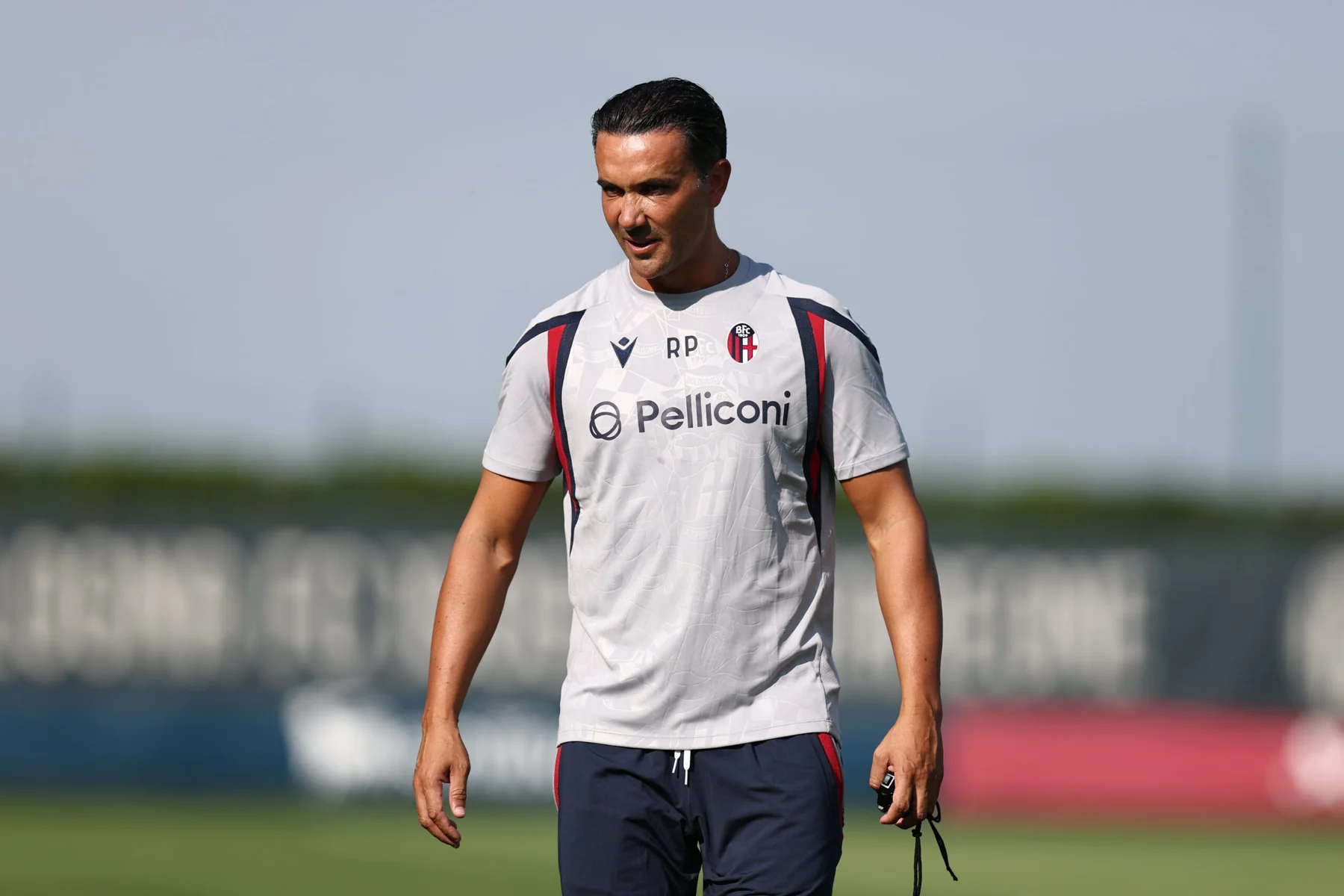
Bologna’s difficult start to 2026–27 has already brought a change of coach and a debate about what remains of the team after a summer of departures. Raffaele Palladino’s task is to turn an unsettled group into a side with dependable attacking connections and enough control to win close matches. The results explain the concern; the first team selection and the club’s public explanations help identify what the rebuild involves.
Updated October 1, 2026: this analysis covers Bologna’s first five league games and Palladino’s first match. It distinguishes official results and reported statements from the coaching priorities that follow from them.
What Bologna's first five games actually show
Bologna have taken two of the first fifteen points available to them. As of October 1, 2026, the club's official season page places them 18th after five games, with no league victory. The immediate issue is a low scoring return: three goals across those fixtures, against six conceded. This is the evidence behind the anxiety, rather than a prediction about where the team must finish.
| Date | Fixture | Result |
|---|---|---|
| August 24 | Bologna–Lazio | 0–1 |
| August 31 | Atalanta–Bologna | 1–0 |
| September 6 | Bologna–Sassuolo | 2–2 |
| September 13 | Napoli–Bologna | 1–0 |
| September 19 | Bologna–Torino | 1–1 |
The results contain two different failures to turn competitiveness into points. Bologna lost three matches by one goal and scored in none of them. In their two scoring games, they still could not win. That puts both sides of the game on Palladino's agenda: generating an attacking response when behind and preserving enough control when Bologna have a chance to secure more than a draw.
The margins offer a reason for qualified hope. Bologna have remained within one goal of their opponents in every defeat. A modest improvement at a decisive moment could therefore change a result. But closeness on the scoreboard is an incomplete description of a performance. Without reliable chance-quality evidence, it would be misleading to turn narrow defeats into proof that Bologna were unlucky, or to insist that a finishing correction alone would solve the problem.
Low attacking output makes the defence's task especially unforgiving. A team that needs a clean sheet simply to have a realistic chance of winning cannot absorb normal match setbacks comfortably. Palladino needs attacking patterns that involve more than the final shooter: the pass that opens the defence, the supporting run that creates space and the teammates positioned to keep an attack alive.
The other constraint is the sample. Five games are a serious early warning; they cannot establish a season-long points rate or a certain relegation outcome. Local reporting after the fifth round reflected the alarm at the two-point return. The practical response is to identify which repeatable parts of Bologna's football can improve, then judge whether the next games deliver that change alongside a better position in the Serie A table.
Why Tedesco went and Palladino arrived
The club made its managerial change on September 16, after Tedesco's fourth league match. Its official announcement confirmed his dismissal and Palladino's appointment, with the successor taking training that afternoon. The chronology gives Palladino responsibility for the Torino draw, rather than for the opening four fixtures. He has inherited an early problem and an unusually useful period to work on it.
The decision was presented as more than a response to the points total. In Claudio Fenucci's September 17 explanation reported by CalcioBologna, the chief executive described doubts about how effectively Tedesco's ideas were reaching the team. He also pointed to the long break ahead and the availability of a coach Bologna had previously contacted. Fenucci said the players had cooperated professionally. His explanation supports a story about the club's assessment of technical fit, rather than evidence of a player revolt.
That combination explains the timing from management's perspective: change the instruction early enough to use the pause for training. It also creates a responsibility for the club. Having concluded that a different coach can get more from this group, Bologna must give the new staff a workable environment and judge progress through the players' understanding of their roles, as well as through results.
A four-game decision with a longer contract behind it
Palladino signed through June 30, 2029. This extends the appointment's intended horizon beyond an emergency run of fixtures. The length gives the project a stated direction; it cannot guarantee that the team will settle quickly or remove the present need for points. Bologna have to make immediate corrections while building habits that remain useful later in the season.
The club's presentation of the coach recalled his route from Monza's youth teams to senior management and his subsequent Fiorentina and Atalanta jobs. Experience provides a range of solutions to consider. It still needs to be translated into instructions suitable for these players: where a midfielder offers support, how an attacker finds space and when the defensive line moves together.
Changing the person delivering those instructions can restore attention and confidence. The harder work begins when an opponent disrupts the first plan. Palladino needs Bologna to recognise the next option without becoming hesitant or disconnected. Clear responsibilities and shared responses will give the contract a football meaning that its end date alone cannot supply.
The rebuild is also about replacing relationships on the pitch
A coaching explanation is incomplete without a squad explanation. In his September 26 Gazzetta interview, sporting director Giovanni Sartori argued that Bologna needed time to compensate for four departing starters, identified in the interview as Jhon Lucumí, Santiago Castro, Remo Freuler and Jonathan Rowe. He expressed confidence in the coach, the time available to work and the remaining players. Those are management's reasons for believing in recovery; supporters will reasonably want to see how they translate into matches.
Four departures change more than four names
The loss of several established players affects more than a list of individual abilities. A team also loses familiar passing relationships, knowledge of a teammate's movement and shared decisions under pressure. Replacing those connections is a football task even when a new arrival is talented. A midfielder can find a useful position and still receive the ball too late if the surrounding players do not yet recognise the same opening.
Bologna's August 17 announcement confirmed defender Lucumí's permanent move to Juventus. It is a concrete example of continuity changing within the back line. When defensive personnel change, the coach has to establish who steps forward, who covers and how the first pass reaches midfield. Those responsibilities involve teammates as much as the replacement defender himself.
Across the team, Palladino's challenge is to identify which existing connections can help new ones form. Keeping a familiar partnership may make one part of the pitch more reliable, while a change elsewhere allows a new player to contribute. The right balance need not be identical in every fixture. It should make the side increasingly recognisable in its decisions, even when the starting eleven changes.
Recruitment value has to become a working team
Roberto Piccoli provides a specific example of the integration work. Bologna confirmed his August arrival from Fiorentina on loan until June 2027, with a conditional obligation to make the move permanent. He started against Torino. For a striker to become an effective attacking reference, teammates need to understand when to pass into his feet, when to attack the space beyond him and where to position themselves for the next ball.
Those choices cannot be judged solely through a transfer's financial terms. The important match question is whether the striker's involvement helps the whole attack progress. If he receives with no nearby support, even a successful first touch may lead nowhere. If runners move before a teammate can deliver the pass, the attack may lose its timing. Building that coordination gives Bologna a route to improvement that the coaching change must actively develop.
What the Torino draw tells us about Palladino's starting point
Palladino's first league match supplied a useful but incomplete starting point. Bologna took the lead through Federico Bernardeschi in the 14th minute; Sandro Kulenović equalised in the 77th. Both goals appear in the club's official match record. An early lead and a late equaliser explain the disappointment of the draw. They also set up a specific next challenge: make a promising position last.
In his official postmatch comments, Palladino said he had wanted a strong collective reaction and felt he had seen it for roughly seventy minutes. He acknowledged aspects to improve and regretted the conceded goal. That is the coach's account of his team's response. It suggests encouragement about the group without a claim that the football was already complete.
The shape and the lead are facts; the diagnosis needs care
Torino's official report listed Bologna in a 3–4–2–1. Helland, Heggem and Theate formed the named defensive three; Zortea and Miranda occupied the wide positions, with Pobega and Ferguson centrally. Bernardeschi and Cambiaghi were listed behind Piccoli. The arrangement gives us a concrete framework for discussing what the coach can develop, while leaving the actual movement within that framework to match evidence.
For example, a pair of attackers behind a striker can offer central support and connections to either flank. The wide players can stretch the opponent, while the central midfielders help retain the ball after an attack is interrupted. Those are possibilities available within the shape. The team still has to coordinate distances and timing for them to become useful: being listed near another player on a team sheet does not guarantee that the two will find each other under pressure.
The same caution applies to the equaliser. A late conceded goal is a reason to review the team's final phase, but its timing alone cannot prove a fitness failure, a wrong substitution or a particular player's mistake. The staff can examine the sequence, the space around the ball and the decisions leading to it. Supporters should look for the resulting corrections in later games rather than treating the minute of the goal as a complete explanation.
For Bologna, the positive part is that Palladino has a real selection and a competitive match to build from. The limitation is equally clear: the first result did not supply the victory the team needed. A more reliable late phase would make the next early lead a stronger foundation.
Why the home drought has made supporters anxious
The Dall'Ara concern reaches back beyond the new season. Bologna's last home league victory came against Lecce on April 12, 2026. The club's historical results show the subsequent home defeat to Roma and draws with Cagliari and Inter. Add the new season's Lazio defeat and draws with Sassuolo and Torino, and the sequence becomes six home league games without a win.
This makes the September frustration easier to understand. A supporter remembers the experience of returning to the same ground and leaving without a victory, even when a summer has changed the squad and the coach. The new campaign's small sample is part of a longer sequence for that person. The feeling of waiting is real, although the games before and after the summer are not identical evidence about the present team.
CalcioBologna's September 25 report framed the drought through three coaches: Vincenzo Italiano, Tedesco and Palladino. These appointments span two seasons. It would be inaccurate to turn the headline into three managerial changes during 2026–27 or make Palladino responsible for all six results. He inherits the pressure surrounding the sequence, while his own opportunity to affect it has only begun.
The six comments displayed beneath that report offer a small glimpse of the discussion. Some blamed the departure of leading players or expressed fear of relegation; another retained faith in the team. They illustrate contrasting reactions in one comment section, rather than a representative survey of Bologna supporters. The more useful shared question is whether the club can show a credible connection between its decisions and better football.
Sartori offered a competing perspective in his Gazzetta interview, rejecting the surrounding pessimism and maintaining confidence in the project. Supporters do not have to accept confidence as proof. Management can make its argument stronger through a side that creates clearer chances, responds constructively to setbacks and turns home pressure into useful attacking intent.
A home win would offer immediate relief. Restoring trust also requires a performance that explains how the win was earned and can be repeated. The crowd's expectations make that task emotionally important; the football work still comes down to the players' choices and their ability to sustain them.
What Palladino can work on during the break
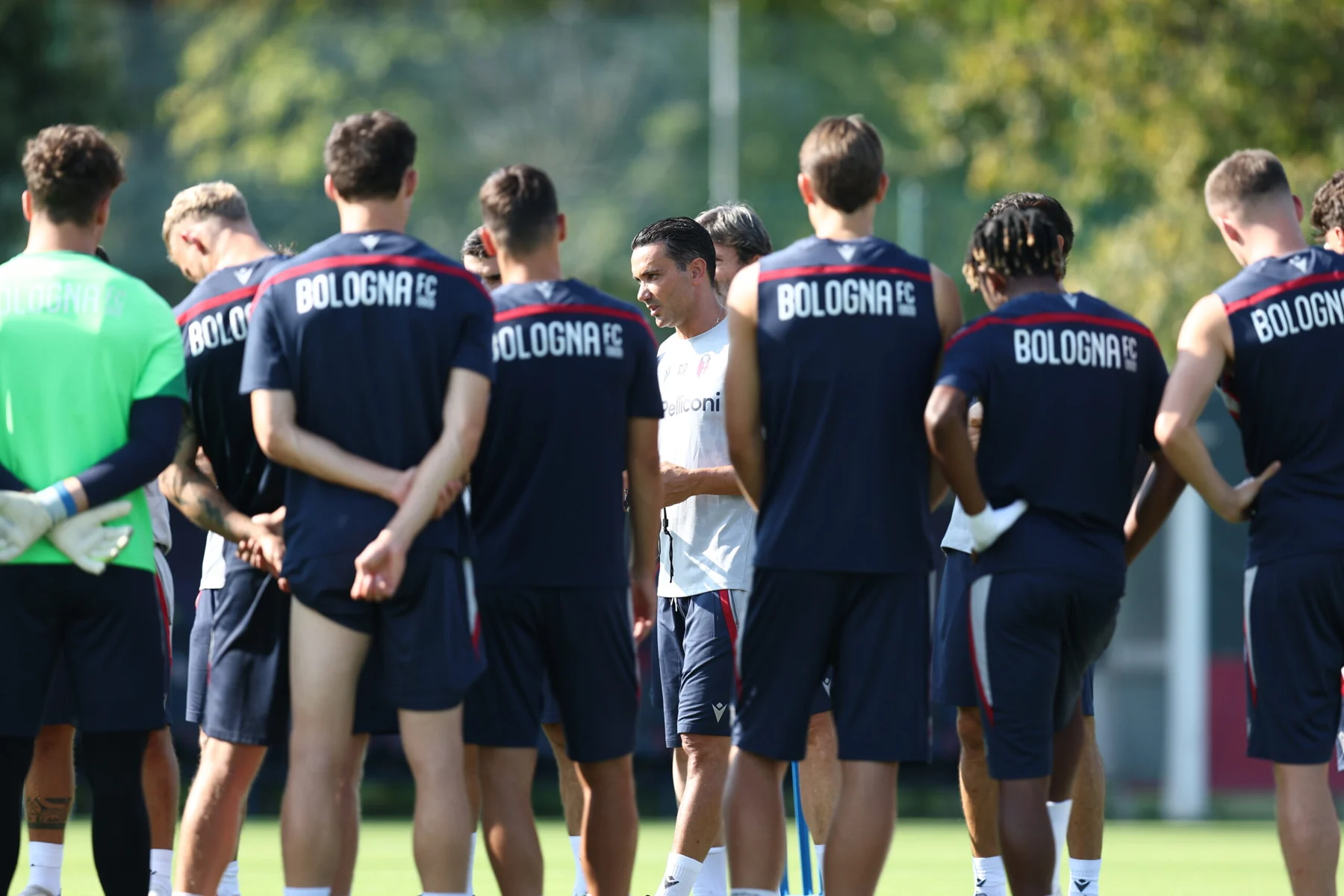
Palladino identified the three-week pause after Torino as a chance to introduce more work and his principles. That intention appears in his September 19 comments. It offers a useful opportunity, although an international break does not mean every player is available for every session. Coordination has to account for absences as well as time on the training pitch.
The club's September 30 training update described athletic activation and a small-sided game for players outside their national-team commitments, with Jens Odgaard training separately. That establishes the work's setting and a limit on who could participate. It supplies no promised return date for Odgaard and does not reveal every tactical instruction. The following priorities are a football framework for assessing the rebuild.
Give the attack repeatable routes to goal
Bologna need attacks that can produce a useful second action. One possible route is a pass into the striker with a teammate close enough to receive the layoff. Another is an attack down a flank with more than one target available for a cross or a pass back from near the byline. The point is to give the player on the ball options that the rest of the attack recognises.
In the shape selected against Torino, the two supporting attackers and the wide players have opportunities to combine around Piccoli. The coach must decide how many should move ahead of the ball and how many should remain available underneath it. Too few forward runners can make the attack easy to contain; too many at once can remove the passing support needed to reach them.
Supporters can watch whether the next games show better connections rather than simply more adventurous passes. Does an attacker receiving between the lines have a useful option? Can Bologna recover a blocked cross and continue attacking? Do several players reach scoring areas without all occupying the same space? These questions help make improved creativity visible even before every attack ends with a goal.
Protect the team when an attack ends
The defensive work begins before Bologna lose possession. If both wide players advance, the remaining players need positions that allow them to challenge a counterattack or delay it. The midfield's spacing matters because it determines whether the defensive line faces an immediate runner with no pressure on the passer.
Pressing also needs a shared decision. One player going forward to challenge can help when teammates close the next passes; it can open a gap when they remain detached. Palladino's task is to make those reactions recognisable and coordinated. A consistent response gives the team something dependable to do when an attack fails, reducing the temptation to retreat without any pressure or chase the ball individually.
These are linked priorities. Bologna should be able to attack with enough support to threaten an opponent and enough organisation to recover when the move breaks down. The break is valuable if it turns that balance into habits the players can use under match pressure.
October will test the rebuild in different ways
Bologna's official schedule, checked on October 1, sets out five October fixtures after the break. The sequence combines three away games with two opportunities to improve the home record. It will ask whether Palladino's work can survive changes of opponent, setting and recovery time, rather than whether one encouraging afternoon can transform the entire season.
- October 11: Lecce away
- October 17: Inter at home
- October 24: Cagliari away
- October 28: Milan away
- October 31: Monza at home
The trip to Lecce is the first opportunity to show what the training period has changed. Bologna should be judged on whether players find each other more readily and whether the attack has a useful response when its initial route is blocked. Those improvements can be assessed in a difficult spell as well as in a successful one. The team needs a way to regain control when a passage of play begins to favour the opponent.
The Inter match then brings the home drought back into focus. It would be unhelpful to make one fixture the final verdict on a contract that has barely begun. It will still reveal how Bologna respond to the demands of playing at the Dall'Ara while trying to secure their first win. Keeping clear attacking responsibilities under that pressure would be a meaningful step.
The late-month sequence is another kind of test. Cagliari, Milan and Monza arrive within eight days, with the first two away. Selection and substitutions will have to preserve the team's organisation through that run. If the shape works only with one exact set of players, it will be harder to maintain; if alternatives understand their roles, Palladino has a better chance of making changes without losing the side's connections.
There are several useful signs to watch across the month: more players contributing to attacks, fewer moves ending with an isolated striker, coordinated recovery after possession is lost and better control of the final phase. These do not replace the points total. They help explain whether a better result reflects progress Bologna can carry into another match.
The poor start has identifiable components: little scoring, a change of coach, lost squad continuity and a home sequence that has tested patience. Palladino now has time and a clear set of football tasks. The rebuild will become credible through how Bologna perform those tasks repeatedly, and through victories that turn that work into relief for supporters. Follow the Serie A schedule as the October tests arrive.
Join the discussion
Comments
Sign in with Google to comment. Keep the conversation useful and football-focused. New comments are reviewed before they appear.
Loading comments…