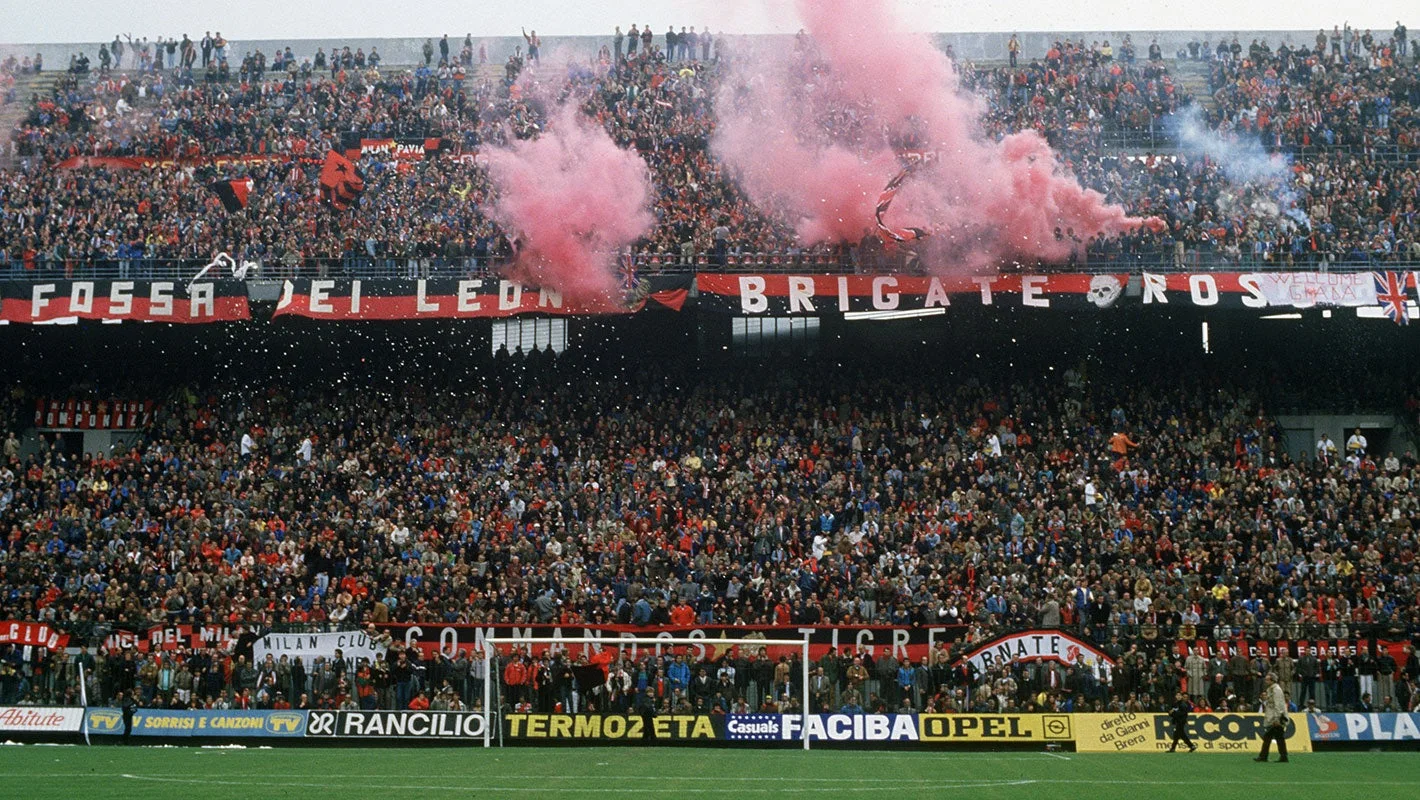
Serie A is Italy’s top division of men’s club football: twenty teams competing across a 38-match season for the national championship, known as the Scudetto. Its appeal reaches beyond the title race. Rivalries, relegation battles and sharply different tactical approaches give the league several stories at once. This guide explains the structure and the football behind it, with season-specific rules checked for 2026–27.
Italy's top division, and what the name means
Serie A is the highest division of men's club football in Italy. Think of it as the Italian counterpart to England's Premier League or Spain's La Liga: clubs compete across a domestic season to become national champions. The word calcio, which appears throughout Italian football coverage, means football. Neither name identifies a different version of the sport. The same game is being played, but the teams, institutions and competitive history belong to Italy.
Serie A Enilive is the sponsored name of that competition. The sponsorship announcement set out an agreement beginning in 2024–25 and lasting three seasons. A search for “Serie A Enilive standings” therefore refers to the league table, not a second tournament running alongside Serie A. This distinction sounds small until a new supporter encounters different names on television, a fixture app and a club website. Commercial branding changes more quickly than a competition's sporting identity.
There are also two different historical starting points. Italy's first national championship was contested in 1898, with Genoa winning a four-team tournament, as the FIGC's historical chronology records. The modern single national league began in 1929–30. That is why a club can legitimately include championships won before 1929 in its total Italian titles. Those victories belong to the national championship's history, even though their tournament structure differed from the modern schedule. Comparing clubs fairly means deciding whether the discussion concerns all Italian championships or only the single-league era.
Most crucially, Serie A is club football, not the Italy national team. An Argentine forward, a French goalkeeper and an Italian midfielder can all represent the same Italian club, then join different countries during an international window. Conversely, an Italian international can earn his living in another domestic league. “Italy match today” and “Serie A matches today” are consequently different questions. One concerns a national selection; the other concerns professional clubs.
For a supporter choosing where to begin, that club structure offers continuity. You follow a team through a whole campaign, learn how its midfield functions, recognise its rivals and notice which performances fit its wider trajectory. A single result becomes more interesting when it is part of that sequence. Serie A rewards this kind of attention: the league is simultaneously a competition between teams now and an ongoing conversation with their past.
How a Serie A season works
Points and the 38-match test
The league has 20 clubs. Each plays the other 19 twice, once at home and once away, producing 38 matches per club and 380 across the competition. A win earns three points, a draw one and a defeat none. Unlike a knockout cup, a loss does not eliminate a team. The challenge is to collect points consistently across changing opponents, injuries, transfers and stretches when performances are less convincing.
That arithmetic explains why a league table can tell a different story from a memorable head-to-head match. Imagine one side wins an emotional derby but draws its next two games: it has collected five points from three matches. Another loses the derby and wins its next two: it has six. The first team owns the night's celebration; the second has the better three-match return. A title race is full of these small exchanges, which is why supporters scrutinise an awkward away draw almost as fiercely as a glamorous victory.
Fixture order and confirmed kickoff dates
Knowing how points are earned is only half the calendar story: the order of opponents shapes the difficulty of earning them. The first and second halves of the schedule contain the same opponents, but their order is different. The official 2026–27 calendar criteria confirm an asymmetric fixture list. You cannot look at the opening month and assume its reverse fixtures will arrive in the same sequence after halfway. That matters when comparing a run of results: five consecutive fixtures against strong opponents can make a team's short-term position look worse than its longer-term prospects.
For 2026–27, the announced season framework runs from the weekend of 23 August 2026 to 30 May 2027. The opening games were actually scheduled across 22–24 August. This illustrates an essential distinction for anyone following from abroad: a round's nominal date is not every match's final appointment. The full opponent list and the detailed kickoff schedule are separate pieces of information, with international and European commitments shaping available slots.
Read the fixture-confirmation guide before treating an early calendar entry as a travel commitment. For ordinary viewing, check the confirmed local date and your own time zone, particularly around daylight-saving changes. Then look beyond who plays whom. Has one team just returned from a continental away game? Does it have enough depth to change the midfield without changing its entire approach? Those questions turn a list of dates into a sporting story. Over 38 games, managing recovery and squad roles is part of winning the league, not background administration.
The Scudetto, the table and the relegation fight
The Scudetto is the Italian league championship and, literally, the small shield associated with winning it. The green, white and red emblem appears on the champions' shirt in the following season. Genoa's official history dates its first appearance on the club's kit to 1924–25. It is not the club badge and it is not the physical league trophy. When a commentator calls a match decisive for the Scudetto, the subject is the championship race, not a separate cup final.
How tied teams are separated
The shield identifies the prize; the ranking rules determine who earns it when points alone do not settle the race. Under the FIGC's 2026–27 rules, two clubs tied for first normally play a single title decider. A tie across 17th and 18th normally produces a two-legged survival playoff. Neither uses extra time: penalties resolve a remaining tie. If a UEFA competition finalist is involved, however, the specified mini-table criteria replace the playoff. That exception matters when domestic and European seasons reach their conclusions together.
For other tied positions, head-to-head points come before head-to-head goal difference, then overall goal difference, overall goals scored and finally lots. A mini-table also identifies the playoff participants when more than two clubs are tied. Consequently, an attractive-looking overall goal difference does not by itself settle every position. During the season, provisional table order is particularly easy to overinterpret when the tied clubs have not completed their meetings.
Why survival changes the game
Those tie rules matter because the stakes extend well beyond first place. Three clubs leave Serie A for Serie B at the end of the campaign. This makes the lower end of the table an active competition rather than a waiting room. A point away to a title contender can be valuable to a relegation-threatened side even when its fans have spent most of the evening watching it defend. The same draw can feel damaging to the favourite. The result has not changed; the clubs' objectives and remaining fixtures have given it different meanings.
Watch a survival match with that context in mind. A team protecting a narrow advantage may send fewer players forward because a turnover would expose defenders with little cover. Its opponent may accept that risk because a draw scarcely improves its position. This is not proof of an inherently cautious national style. It is football responding to incentives. To judge whether a performance achieved anything, read the table alongside the score, and ask what each club needed before kickoff. The Scudetto race attracts the loudest headlines, but the consequences below it can be just as sharp.
Clubs, cities and rivalries give the league its shape
Milan: one ground, two clubs
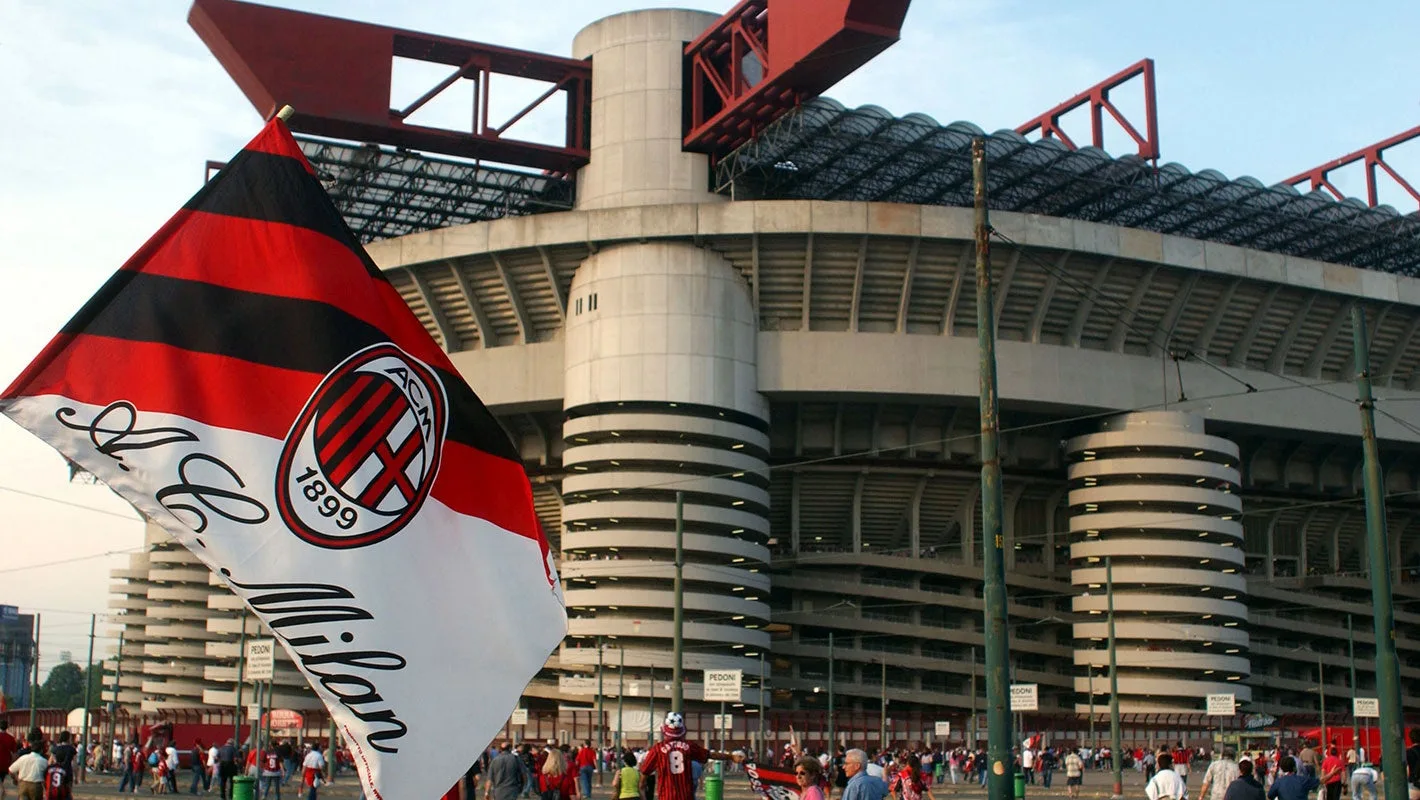
AC Milan and Inter are different clubs from the same city. Their shared stadium makes that distinction unusually visible: the building remains recognisable while colours, songs and the meaning of home advantage change with the fixture. Milan's stadium history traces San Siro's opening to 1926 and Inter's arrival as a fellow home team to 1947–48. A Milan derby therefore places two separate sporting identities inside a physical space both know intimately.
San Siro and Stadio Giuseppe Meazza also refer to the same ground. As Inter's stadium page explains, the first name comes from the neighbourhood and the second honours the former player. For someone learning the league, recognising these alternate names is more useful than memorising a long list of capacities. You begin to connect a television image to a city, a city to its clubs, and a fixture to the relationship that gives it significance.
Naples and the roots of club identity
Where Milan's shared ground makes a rivalry visible, Napoli's stadium name connects the present team to an earlier footballing achievement. The club's official stadium history records a ground inaugurated in 1959 and renamed for Diego Maradona in December 2020. A stadium name can carry the memory of a player long after his playing career. That does not mean every present-day Napoli match should be reduced to a Maradona comparison. It means the current team works in a place where previous footballing achievement is part of the public language surrounding it.
These are useful entry points, not a complete social map of Italian support. It is tempting to explain every rivalry through a simple contrast between rich and poor, north and south, or establishment and outsider. Such labels quickly become misleading when they are applied to whole fanbases. Start with something more concrete: where the clubs play, which matches their supporters anticipate, what they have won and which setbacks remain part of their history. A rivalry becomes intelligible through particular events, not a national stereotype.
The current team directory provides the season's membership, but a club's significance is not measured only by its present table position. Promotion and relegation change who appears in Serie A; they do not erase local attachments. For a new fan, choosing a club through a player or an attractive style is perfectly reasonable. Staying with it reveals something deeper: why a familiar away ground feels difficult, why a former captain still draws a reaction, or why an ordinary league win can mean more than its three points. Those connections are what turn casual viewing into following a league.
What to watch on the pitch
Calling Serie A “a defensive league” is a poor substitute for looking at how a team actually defends. Defending near your own penalty area, pressing high and following opponents across the pitch are different strategies, with different risks. A formation graphic does not tell you which one a coach has chosen. Watch where the first pressure arrives, who follows a midfielder dropping towards the ball, and what happens to the space that player has vacated.
Atalanta's 3–0 victory over Bayer Leverkusen in the 2024 Europa League final is an instructive example from an Italian club. UEFA's technical observers highlighted the defensive positioning and man-for-man approach that disrupted Leverkusen's build-up. The point was not simply that Atalanta worked hard. Close attention to passing options made it difficult for the opponent to receive, turn and progress with comfort. Defensive organisation was being used proactively to interfere with possession.
There is a trade-off in that approach. If a defender follows an opponent away from his original position, a different attacker may try to run into the newly opened space. The team pressing must coordinate its cover, while the team in possession can use movement to pull markers apart. UEFA explored precisely this kind of contest in its later analysis of Atalanta's draw at Barcelona. Aggressive marking is a problem posed to an opponent, not a system guaranteed to win.
Individual quality still supplies the decisive action. Ademola Lookman scored all three goals in that Dublin final, as UEFA's match report records. An organised team creates circumstances in which its attackers can hurt an opponent; it still needs players capable of exploiting them. Reducing the match either to a tactical masterclass or to a brilliant hat-trick misses the relationship between the two. Systems and individual execution are partners.
Use that example as a viewing method, not as a description of every Serie A club. In your next match, follow one midfielder for several possessions instead of following only the ball. Notice whether he offers a passing angle, pins an opponent in place, or protects against a counterattack while others advance. Then watch what changes after the opening goal. The score often alters which spaces a team is willing to leave exposed. Understanding these decisions makes a quiet passage meaningful and a sudden chance less mysterious. You do not need elaborate terminology; you need to see how one movement changes another player's choices.
How Serie A connects to Europe and international football
A Serie A club can play domestic league football at the weekend and European football during the week. These results belong to separate competitions. Winning a Champions League match does not add three points to the Italian table, and losing in Europe does not erase domestic points. The overlap is in personnel, preparation and qualification: the same squad has to manage both challenges, while domestic success helps establish which continental tournament it enters next season.
European tables and qualification
The first distinction to make is between qualifying for Europe and competing in it. The Champions League itself now has a league phase with 36 clubs, each facing eight different opponents, as UEFA's format explanation sets out. That table is not a larger version of Serie A. It includes clubs from different associations and uses a different schedule. A search combining “Serie A standings” and “Champions League table” may therefore be asking either about Italian qualification positions or an Italian club's current European campaign. The two answers should never be mixed.
Qualification also needs a season attached. Positions earned during a domestic campaign generally determine entry into the following European season. Additional places can depend on continental performance: UEFA confirmed England and Spain as the European Performance Spot recipients for 2026–27, based on their 2025–26 association club coefficients. Italy did not receive one of those two bonuses. Never assume that a qualification arrangement remembered from an earlier campaign is permanent.
Separate trophies, shared workloads
European qualification is only one reason a club's season cannot be read from a single table. Domestic cups add another layer: the Coppa Italia is a separate knockout competition, and the Supercoppa is another distinct trophy. A club can succeed in a cup while finishing below its ambitions in the league, or win the league after a disappointing cup exit. These are different tests. A knockout tie concentrates risk into very few matches; a league rewards a sustained return. Neither achievement should be described using the other's title, particularly when comparing a club's honours.
To start following Serie A, choose a team and watch several consecutive league games, then add a major rivalry and a match involving clubs outside the title race. Use the weekly fixtures to see the sequence and the results to follow its consequences. Pay attention to how a coach adapts when players return from international duty or when a European tie changes the week's workload. The league becomes easier to read when its competitions remain distinct but their effects are connected. You are following twenty clubs competing for points, with different ambitions, different histories and different ways of solving the same football problems.
Join the discussion
Comments
Sign in with Google to comment. Keep the conversation useful and football-focused. New comments are reviewed before they appear.
Loading comments…