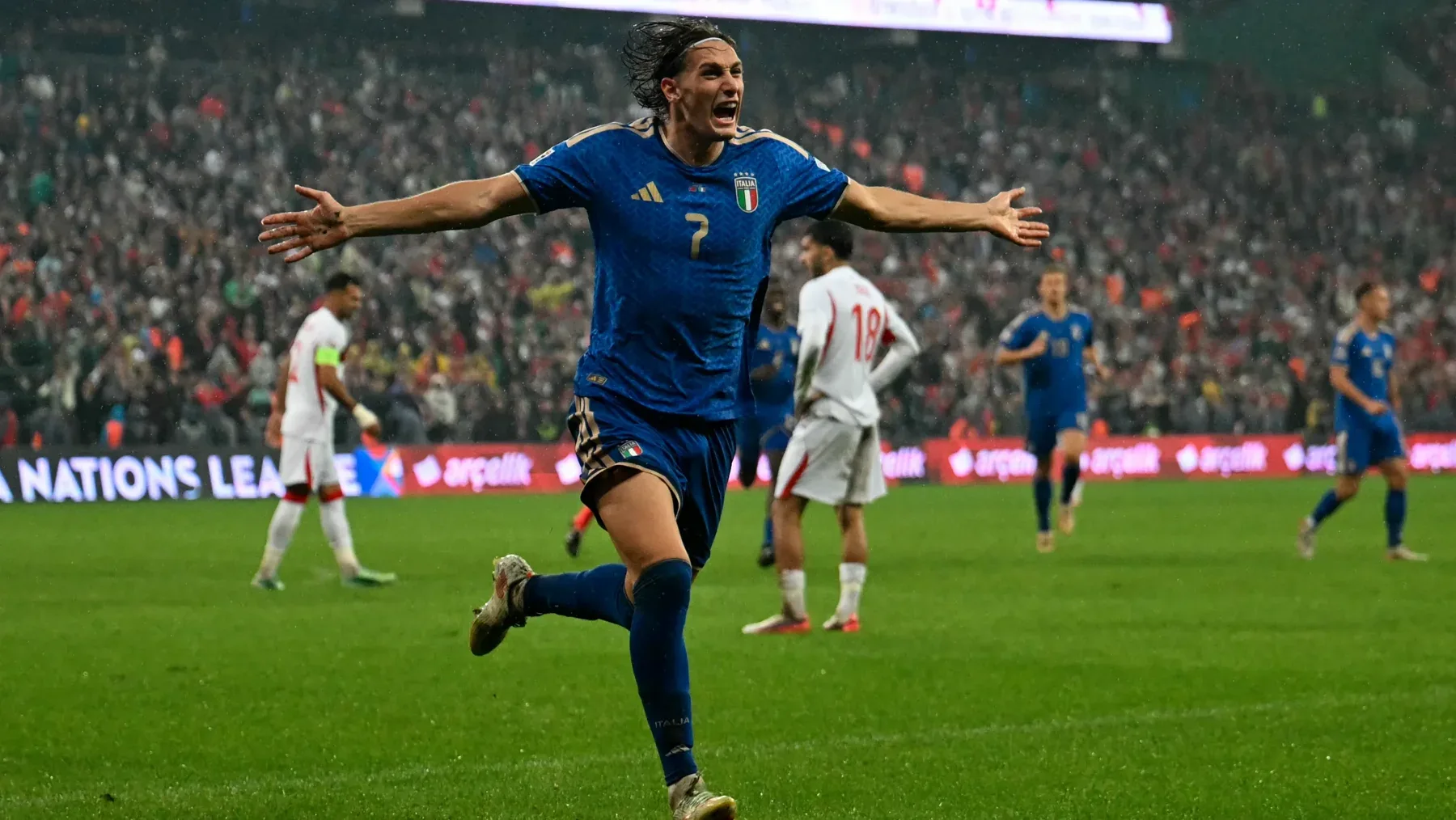
Serie A is on a long international break because FIFA merged the September and October men’s windows from 2026. The international period runs from September 21 to October 6, and the league resumes on October 10. That leaves two consecutive weekends without Serie A and a longer wait between club matches than the sixteen-day window alone suggests. This explainer, checked on October 1, 2026, covers the reform, confirmed return examples and what the pause means for players and the busy programme afterwards.
Why September and October became one international window
Serie A’s long pause follows a change to the men’s international football calendar. FIFA combined the separate September and October windows into one longer period from 2026. That creates a single extended absence from club competition in early autumn, replacing the pattern of stopping, restarting and stopping again a few weeks later. The Italian league has incorporated that international window into its 2026–27 programme.
The decision predates this season. In its March 14, 2023 announcement, FIFA set out a late-September/early-October window lasting sixteen days, with room for four matches, beginning in 2026. Its calendar retained two separate nine-day, two-match windows for September and October 2025. This is therefore a planned reform reaching implementation, with a published adoption history that helps explain why the change appears in several leagues at once.
The basic exchange is easy to understand. National teams receive a longer continuous camp, while clubs release their internationals in one block. Four available match slots are concentrated within that period. They do not mean every country must play four matches or that every selected player will complete four full games. Competition schedules, selection and substitutions still determine the actual workload. The calendar describes the space available for international football.
One logistical argument is fewer separate departures. The Premier League’s explanation of the same global reform highlights the aim of reducing repeated journeys across continents. That rationale is relevant to Italian clubs whose players also travel abroad, although England’s own fixture restrictions should be kept within their English context. A longer camp can reduce the number of times a player leaves and rejoins his club without necessarily reducing how much football he plays.
For a club supporter, the practical trade-off is concentrated interruption. The familiar weekly thread of a campaign disappears for longer, but a second separate autumn interruption is removed. A team building momentum may find the extended absence frustrating; a national coach may value the additional continuity. Those experiences can coexist within the same calendar. The reform changes the distribution of time between club and national football, and its success should be judged through that whole pattern rather than the length of this single wait.
Why a 16-day window leaves two empty league weekends
The official international window runs from September 21 to October 6, 2026. Those dates cover sixteen days when counted inclusively, as reflected in the Lega Serie A season framework. The weekends of September 26–27 and October 3–4 both fall inside that interval. A supporter looking for league games on either weekend will find the same interruption, spanning the change from one month to the next.
That is why the pause has attracted descriptions of almost three weeks without Serie A. Calcio e Finanza’s September 21 explanation identifies September 20 as the end of the fifth league round and October 10 as the beginning of the sixth. There are twenty days between those dates. The sixteen-day international period and the longer interval between league fixtures measure different parts of the same calendar.
The international end date is earlier than the league restart
October 6 is the end of the international window; October 10 is the start of Serie A’s return. A club does not automatically play a league match on the day the window closes. Returning players have to rejoin the squad before its next appointment, and the individual match date determines how much time is available. Calling October 6 the league restart would send supporters looking for games before the domestic programme actually resumes.
The gap also looks different through a single team’s calendar. The league’s last match before a pause and its first match afterwards belong to particular clubs. Other clubs can finish their previous round earlier or begin their next round later. Their supporters experience a slightly different wait, even though everybody is following the same international window. A nominal round date helps describe the league programme, but a team’s confirmed match date supplies the exact appointment.
For fans who organise their weekends around club football, two consecutive blank weekends are a substantial change in rhythm. A league story that had been developing every few days is left suspended: a promising performance has to wait for its next test, while a disappointing one has longer to dominate the conversation. National-team matches create their own stories during that interval, but their results do not add points to the Serie A table. The feeling of an unusually long domestic absence comes from that broken weekly continuity as well as the calendar arithmetic.
When Serie A returns and which dates are confirmed
Serie A resumes on Saturday, October 10, 2026. A particular club’s first match can fall later in the round, so October 10 should be understood as the league’s return rather than the date every supporter’s team plays. The strongest evidence for an individual appointment is a dated league or club announcement specifying the opponent, venue and kickoff. A general season calendar answers a broader question.
Inter and Milan provide concrete return examples
Inter’s official post-break programme confirms Inter–Parma at San Siro on October 10 at 18:00 CEST. Milan’s official 2026–27 calendar places its return away to Sassuolo at the MAPEI Stadium on Sunday, October 11, also at 18:00 Italian summer time. These two examples show why the first day back and a team’s first game back must remain distinct.
The same Milan calendar lists the home match against Atalanta on October 18. That is a further useful distinction for anyone asking when home football returns: an away league appearance ends the competitive pause, while the next home appearance ends the wait for that club’s stadium crowd. The opponents and venues make the answer specific. Simply saying that “Milan returns in October” leaves both practical questions unresolved.
These are confirmed appointments available at the October 1 cutoff. Later readers should use the current weekly Serie A fixtures for the live programme and the fixture confirmation guide to understand the difference between a round allocation and a detailed kickoff. Keeping this explainer tied to its stated dates allows it to answer the present interruption without suggesting that an article can permanently replace an updated match calendar.
Italian local time matters when October’s clocks change
The return weekend is still in CEST, which is UTC+2. Italy’s clocks go back on October 25, 2026, as the country’s daylight-saving calendar confirms. After the change, Italian local time is CET, or UTC+1. Milan’s October 31 derby listing correctly shows 20:45 GMT+1. A late-October fixture should therefore be converted using its own date, rather than an offset copied from the October 10 return.
For viewers abroad, this can change the apparent gap between familiar kickoff slots and their own local clock. The match’s Italian appointment is the starting point; the viewer’s time zone on that date supplies the conversion. This matters during an October programme that crosses the clock change. An unchanged local evening slot can appear at a different time elsewhere, even though the football schedule itself has stayed in place.
The pause gives different players very different weeks
An empty Serie A weekend tells us little about an individual player’s rest. The club fixture has disappeared, but an international may be training, travelling and competing elsewhere. Inter’s current national-team report gives a concrete example: Alessandro Bastoni played the full ninety minutes for Italy against Türkiye, while Pio Esposito was replaced after seventy-five minutes. Both were active during the domestic interruption.
Even players in the same national camp can return with different workloads. A starter’s match minutes, a substitute’s involvement and a player’s absence through suspension all create different situations. The longer window provides room for that variation across several fixtures. A club coach assessing his options afterwards needs the individual record, rather than a simple assumption that the entire squad has enjoyed the same break. The calendar’s length alone cannot establish who is freshest.
Club training time depends on who is still available
The players remaining at their club face a different programme. Inter’s September 28 training report describes an afternoon session at Appiano Gentile under Cristian Chivu, with a reduced group because other players were away on international duty. It is evidence of continuing preparation inside the club. It also shows why the apparent opportunity for uninterrupted training has to be considered alongside the absence of important teammates.
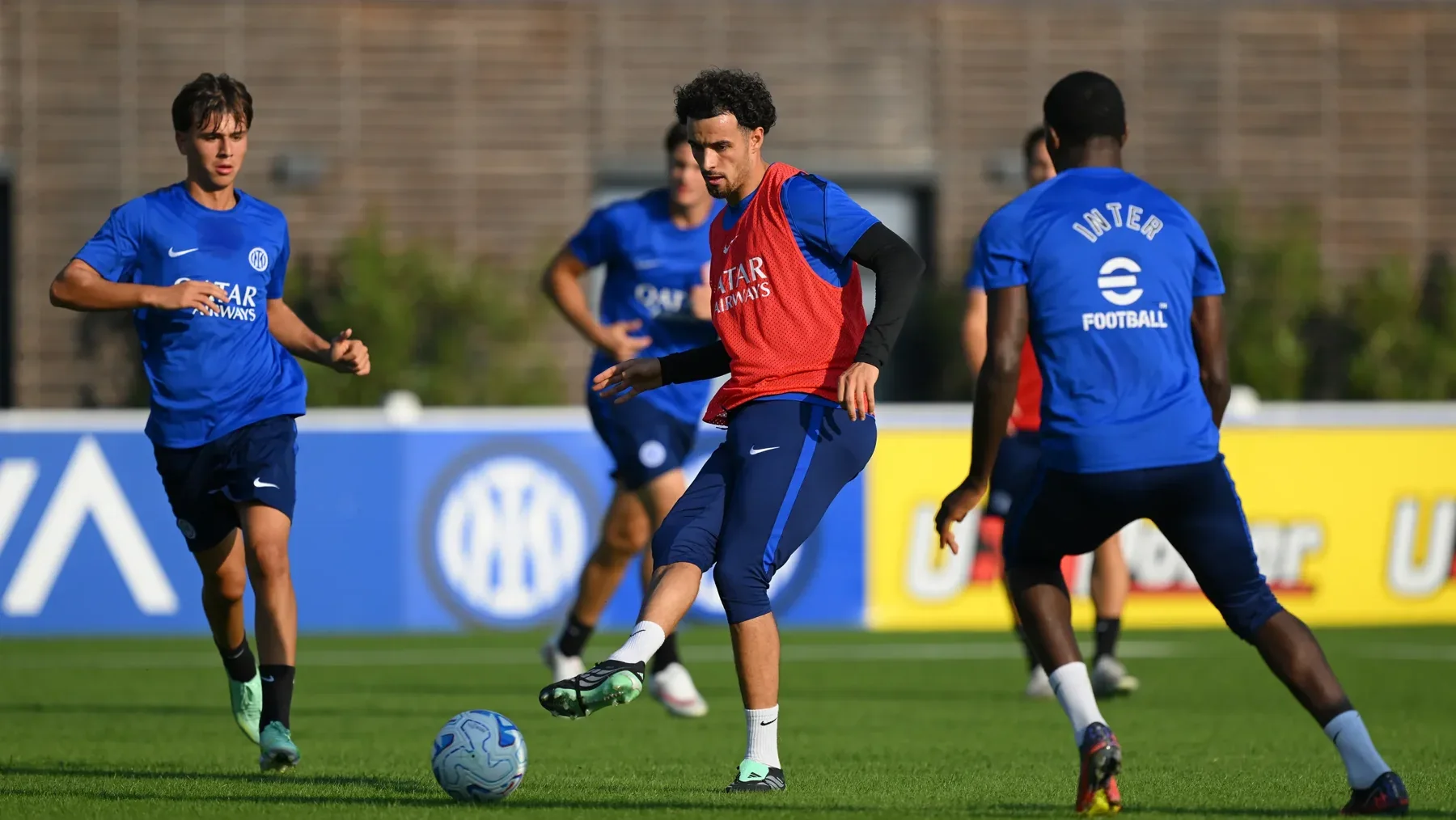
A smaller group can work on individual technique, conditioning and relationships between the players who are present. The limitation comes when an exercise needs the combinations that will appear in the next competitive lineup. Building a coordinated press requires players to recognise one another’s triggers; practising an exit from defence requires the relevant passing options. Those are coaching mechanisms, rather than a claim to have observed the detailed content of Inter’s session. The availability of the group shapes which improvements can be rehearsed together.
Inter have also announced a friendly against Lumezzane for October 3 at 11:00 CEST at the training centre. The club explicitly says it will be behind closed doors. At this article’s cutoff it is an upcoming match, with no result to report. Such an appointment can provide football activity during an otherwise empty domestic weekend, while remaining separate from the league’s points and public matchday programme.
The useful question after the pause is therefore how each player spent it. Some will bring competitive minutes and national-team confidence; others will bring time with the club staff and a different level of match involvement. Returning internationals then have to fit back into the collective plan. A long interruption can offer opportunities, but the benefits depend on the actual players available and the way their separate weeks are brought together before the next game.
Why the return can feel faster than the break feels long
The long wait ends with a busy programme for clubs involved in Europe. Inter’s September 30 schedule announcement describes nine matches in twenty-nine days after the return: six in Serie A and three in the Champions League. Parma on October 10 is followed by Club Brugge on October 13 and the trip to Bologna on October 17. That sequence shows how quickly a club moves from the interruption into repeated competitive demands.
Milan face a similar change of rhythm through the Europa League. Their official calendar puts the Sassuolo return on October 11 before Salzburg on October 15 and Atalanta on October 18. Later in the month, the Bologna home game on October 28 precedes the October 31 derby. The league’s announced October 28 midweek round adds another domestic appointment to a period already shaped by European matches.
The football problem changes with those intervals. During a pause, the available training group has time between appointments; during a crowded run, the work between games increasingly has to fit around recovery and preparation for the next opponent. A coach can explain a pressing adjustment on video or rehearse it briefly, but extended collective work requires more room. That makes the quality of the preparation completed earlier valuable, while also exposing the limitations caused by having internationals absent.
Squad depth matters through the ability to preserve roles. Replacing a midfielder is easier when the next player recognises the same passing options and defensive responsibilities. Replacing a defender is easier when the surrounding line can keep its spacing and communication. These are reasons to examine how a team uses its options across the run. They are not a prediction that either Milan club will make a particular substitution or that rotating automatically improves a result.
The same calendar also makes one dramatic conclusion after the first game back premature. A poor performance may involve a tactical problem, an opponent’s strengths or individual errors; the existence of an international window does not identify the cause. A convincing return can likewise be followed by a different challenge a few days later. Watching the sequence provides a better test of the squad’s preparation than treating one match as proof that the long pause either solved or created everything.
Supporters consequently move between two frustrations: waiting for their club to play and then trying to keep pace with a rapidly changing competition. For teams in Europe, the return is a sustained stretch with several kinds of opposition. The break’s end restores the league story, but it also begins a test of how well separately prepared players can become a coherent, adaptable side again.
The remaining breaks in 2026–27 are shorter
The extended autumn interruption is followed by shorter international windows. The Lega Serie A framework lists November 9–17, 2026, and March 22–30, 2027. Each is nine days when counted inclusively. Those dates fit the nine-day, two-match November and March windows in FIFA’s published calendar structure. They should not be assumed to reproduce the length of the current September–October pause.
The club-football interval around either window can still extend beyond the international dates, according to the last league appearance before it and the first afterwards. That is the same distinction used for October’s return. November 17 identifies the window’s end; it does not, by itself, give every Serie A club’s next kickoff. A confirmed match notice remains necessary to answer that narrower question for a particular team.
The merged autumn arrangement also belongs to a calendar extending beyond 2026. FIFA’s announcement sets it within the men’s 2025–2030 framework, with implementation from 2026. Supporters should therefore understand this season’s long wait as the introduction of a scheduling pattern. The useful comparison is how the new distribution works across the year, including the shorter windows, rather than treating September and October as an isolated exception caused by one recent event.
Christmas is a separate pause in the club calendar
Serie A has also announced a pause for December 26–27, 2026. That is listed separately from the international windows. It answers a different seasonal scheduling question and should not be presented as another national-team camp. The same league framework includes a January 6, 2027 midweek round during the Epiphany period. The festive programme has its own structure, which requires its own fixture checks.
That distinction helps fans interpret future empty weekends. Sometimes the explanation is an international release period; sometimes it is a separate domestic-calendar decision. The cause determines which dates and announcements answer the return question. Applying the September–October explanation to every gap would obscure those differences and make the schedule harder to follow.
For the current pause, the answer is clear: Serie A is waiting through the new combined international window and returns on October 10. The frustration of two empty league weekends is understandable through the rhythm supporters have lost. The benefit proposed by the reform is fewer separate autumn interruptions and journeys. Whether clubs use the pattern well will emerge through their players’ actual workloads and performances across the returning programme, beginning with the confirmed fixtures.
Join the discussion
Comments
Sign in with Google to comment. Keep the conversation useful and football-focused. New comments are reviewed before they appear.
Loading comments…